

You found a buyer. You shook hands. Then the deal just sat there. Weeks slipped past, and the closing date kept sliding while your holding costs kept ticking. Most of the time, the hold-up is not the price. It is the buyer’s financing. The way your buyer plans to pay shapes the whole sale timeline, from the first signed offer all the way to the final signature at the table.
What Buyer Financing Really Means
Buyer financing is a simple idea wearing a fancy suit. It just means how the buyer pays for the property. Some buyers bring all cash to the table. Most use a loan from a bank or a special government-backed lender. A few ask the seller to carry part of the deal and get paid over time. Each of these paths moves at its own speed, and that speed becomes your speed.
Here is the part many sellers miss until it stings. A cash purchase can close in about 2 to 4 weeks. A financed deal usually takes 45 to 90 days, and sometimes it runs longer than that. That gap of a month or two is not small. It can be the difference between a clean transaction and a deal that slowly falls apart while both parties lose patience.
Think of it like buying a car. Pay cash, and you drive off the lot today. Ask for a loan, and you wait while the bank checks your papers, your credit, and your history. Commercial real estate works the same way, only with much bigger numbers and a much taller stack of documents. The buyer’s money source is the engine that sets the pace for everyone.
So when an offer lands on your desk, look past the dollar amount for a second. Ask one plain question first. How is this buyer paying? The answer tells you more about your timeline than almost any other line in the agreement. Price is loud, but financing is the quiet part that decides when you actually get paid.
Why the Buyer’s Money Source Sets the Clock
I’ve handled cases exactly like this before. The second a buyer says “I’ll need a loan,” I quietly add 30 to 60 days to the calendar in my head. Not because the buyer is slow or careless. It is because the lender now runs the show, and the lender moves on its own schedule.
A bank does not hand over millions on a friendly handshake. It wants proof, and lots of it. It orders an appraisal to confirm the property is worth the price. It runs underwriting, which is just the bank double-checking every single number the buyer gave them. It reviews leases, tenant payment records, rent rolls, and years of financial papers. Each of these steps quietly eats days off your calendar.
In the deals I’ve helped close, roughly 7 out of 10 delays trace straight back to financing, not to the buyer or seller getting cold feet. One missing tax return can stall underwriting for a full week. An appraisal that lands below the sale price can send both parties back to the negotiating table, or blow up the deal entirely. The money is real, but so is the paperwork behind it.
Cash buyers skip almost all of this. No bank appraisal. No loan committee meeting on a Thursday. No waiting on a lender’s final green light. That is exactly why an all-cash offer, even one that is slightly lower, can be worth more to a seller who needs speed and certainty. Fast money has value. Sure money has even more.
Cash vs. Loan: How Each Path Changes the Timeline
Let’s put the two main paths side by side so you can see them clearly. Cash is fast and simple, with very few moving parts. A loan adds steps, and each step adds time to the process. But true cash is fairly rare in large commercial deals, so most transactions end up living on a lender’s schedule whether the seller likes it or not.
| Deal type | Typical time to close | Main timeline drivers |
|---|---|---|
| All cash | 2 to 4 weeks | Title search, due diligence |
| Conventional bank loan | 45 to 60 days | Appraisal, underwriting, approval |
| SBA loan | 60 to 90+ days | Two-lender review, extra paperwork |
| Seller financing | 2 to 5 weeks | Negotiated terms, less red tape |
Look at the spread in that table. A seller-financed deal can wrap up in 2 to 5 weeks, almost as fast as cash. An SBA deal can stretch well past 90 days. Same building, same agreed price, same eager buyer — but the financing choice alone can swing your closing date by two full months. That is a wide range for one decision.
This is why sharp sellers ask about the money source before they ever pick an offer. The highest bid is not automatically the best bid. A buyer who is already pre-approved and ready to move can save you weeks of stress, plus real money in taxes, insurance, and upkeep while the property waits. Time on the market is not free, and every extra week has a price tag.
The Main Ways Buyers Pay — and How Long Each Takes
In my professional experience, most sellers only learn the real difference between these paths after a deal has already gone sideways. Let’s fix that right now, so you understand what you are dealing with before you ever sign the purchase agreement. Each path has a trade-off between speed and reach.
Cash Buyers
Cash is king when it comes to speed. There is no lender, no loan approval, and no long wait for a bank’s blessing. Once due diligence and the title work clear, you can close in 2 to 4 weeks. The catch is real, though. True all-cash buyers for large properties are not common, and the ones who exist often expect a discount for the speed and certainty they bring.
Conventional Bank Loans
This is the most common path by far. A bank lends most of the money, and the buyer puts down somewhere around 20% to 35%. The bank orders an appraisal, runs underwriting, and studies the buyer’s financial health from top to bottom. Plan on 45 to 60 days, and add more if the property has many tenants, odd leases, or any complexity that makes the file harder to read.
SBA Loans (504 and 7(a))
These government-backed loans help smaller, owner-user buyers get in with a low down payment, sometimes as little as 10%. The trade-off is time. Two separate lenders often review the same file, which stacks up extra steps and extra documents. Expect 60 to 90 days, and sometimes longer. The terms are great for the buyer, but the clock runs slow, and I’ll share the official numbers a little later.
Seller Financing and Installment Sales
Here the seller steps into the bank’s shoes. The buyer pays over time, often with a larger balloon payment down the road. This path can skip the slow lender review and close quickly. It also spreads the seller’s tax hit across several years instead of one, which many owners quietly love. For the right seller, steady monthly income beats a lump sum.
| Financing type | Down payment (typical) | Speed | Best when |
|---|---|---|---|
| Cash | 100% | Fastest | Buyer wants full certainty |
| Bank loan | 20%–35% | Medium | Buyer has strong credit |
| SBA loan | 10%–15% | Slowest | Smaller owner-users |
| Seller financing | Negotiable | Fast | Seller wants income plus speed |
Notice the pattern hiding in that chart. Lower down payments usually come with more lender rules, and more rules always mean more time. A 10%-down SBA buyer may be a joy to work with as a person. But that thin down payment brings extra government checks that can add real weeks to your timeline.
How Long Does a Financed Commercial Deal Take, Step by Step
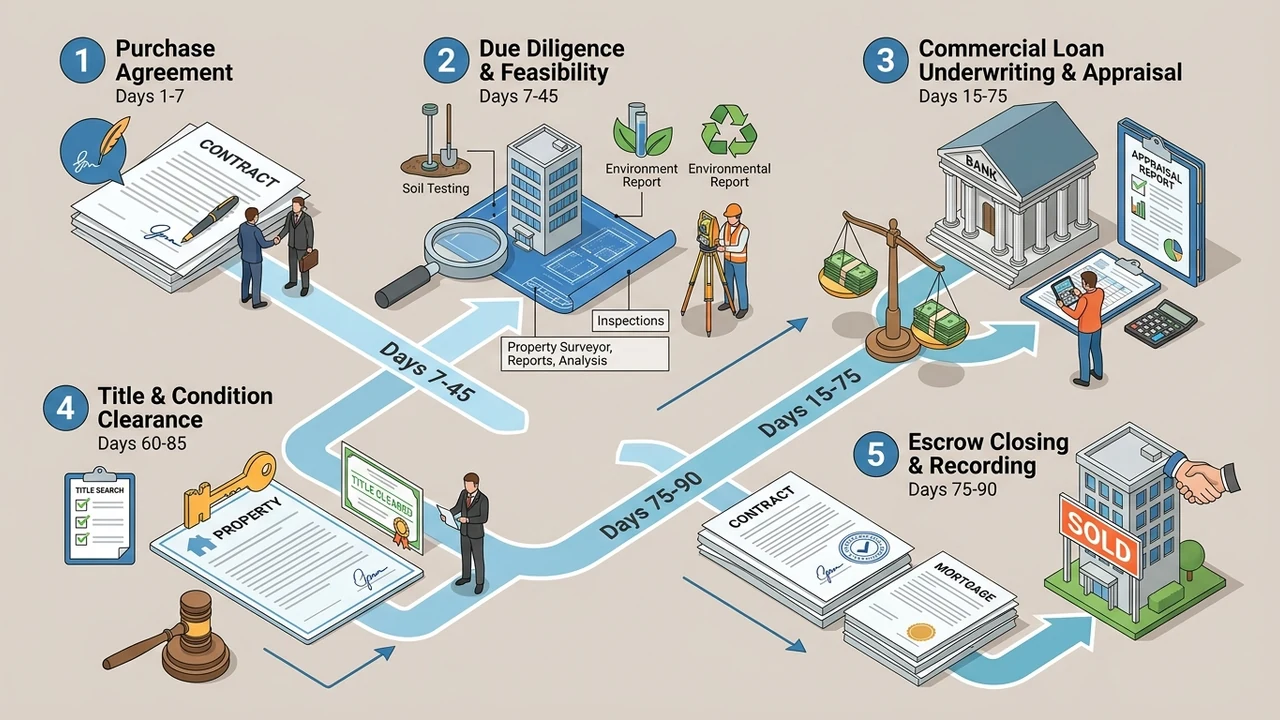
Let’s walk through a normal financed deal from the first handshake to the recorded deed. Every sale has its own quirks, but the shape stays the same. Here is the path most transactions follow once an offer is accepted, broken into plain stages you can actually track on a calendar.
Step 1: Offer and Purchase Agreement (Days 1–7)
Both parties sign the purchase agreement. This sets the price, the contingencies, and the target closing date. Earnest money goes into escrow as a sign of good faith. This part moves fast when both sides are motivated, usually inside a week.
Step 2: Due Diligence (Days 7–45)
Now the buyer digs in. This is due diligence — the buyer’s homework on the property. It covers inspections, lease review, a title search, a zoning check, and often an environmental report. Most agreements allow 30 to 60 days for this window, and the buyer can usually walk away and get the deposit back if something ugly turns up.
Step 3: Loan Underwriting (Days 15–75)
The lender runs underwriting at the same time, which is good news for your timeline. This stage includes the appraisal, the credit review, and a tall stack of documents from the buyer. This is where delays love to hide, quietly, waiting for one more form nobody remembered to send.
Step 4: Clear Conditions and Final Approval (Days 60–85)
The buyer clears the lender’s remaining loan conditions one by one. The title company clears any issues it found, like old liens or county tax questions. Both sides review and sign the final loan papers. The finish line is close now, but this is no time to relax.
Step 5: Closing (Days 75–90)
Funds move through escrow. The deed records at the county office. Keys change hands, and the deal is officially done. After weeks of waiting, the last step often takes just a single afternoon.
| Stage | Typical window | Who drives it |
|---|---|---|
| Purchase agreement | Days 1–7 | Buyer and seller |
| Due diligence | Days 7–45 | Buyer |
| Loan underwriting | Days 15–75 | Lender |
| Final approval | Days 60–85 | Lender and title |
| Closing | Days 75–90 | Escrow and county |
Add it all up and you land near 75 to 90 days for a clean financed deal with no big surprises. Notice how due diligence and underwriting run side by side. That overlap is your friend. When those two stages do not line up well, your timeline stretches fast, and a 90-day deal quietly becomes a 120-day headache.
Where Financing Quietly Slows a Deal Down
I’ve seen this pattern many times in my work. The agreement is signed, everyone is smiling, and then the lender’s file hits a snag nobody planned for. The deal does not die. It just crawls, and every party starts wondering what went wrong.
Bank lending sits at the very center of most commercial real estate sales, and the scale of it is hard to picture. Banks held about $3.13 trillion in commercial real estate loans in 2026, according to the U.S. Federal Reserve’s H.8 report (federalreserve.gov). With that much money on the line across the country, lenders check every tiny detail before they release funds. That caution protects the bank, but it quietly costs you time.
Most financing delays come from a short list of usual suspects. Once you know them, you can watch for them early and head them off before they cost you weeks.
- Appraisal gaps — if the appraisal comes in below the agreed price, the loan shrinks and the deal stalls while both sides scramble.
- Underwriting requests — one more tax return, one more tenant estoppel letter, and the clock quietly resets.
- Low buyer down payment — thin buyer equity makes the lender look harder and much longer at the file.
- Rate changes — a jump in interest rates can force a buyer to re-qualify from scratch.
- Missing documents — plain and simple, this is the single most common cause of delays I run into.
Government-backed loans add their own timing quirks on top of all this. The SBA’s popular 504 loan offers long-term, fixed-rate financing of up to $5.5 million for buildings and land, according to the U.S. Small Business Administration (sba.gov). The SBA’s own turnaround runs about 5 to 10 business days once a lender submits a complete file. But the full path — the bank plus the Certified Development Company — often pushes the whole transaction past 90 days. Wonderful terms for the buyer, slower clock for the seller.
If financing is the sticky part of your sale, our team can help you and your buyer line up the right lender and set a realistic closing date you can actually trust. A little planning here saves a lot of pain later.
The Quiet Deal-Killers: Title, Zoning, and Environmental Checks
Financing rarely slows a deal all by itself. It usually trips over problems that the buyer’s checks uncover along the way. A title cloud, a zoning mismatch, or an environmental red flag can freeze a lender in place. No bank on earth will fund a property sitting under a messy or unclear title.
Environmental review is one of the biggest hidden slowdowns. Under the U.S. EPA’s All Appropriate Inquiries rule (40 CFR Part 312), a buyer usually needs a Phase I environmental site assessment to earn liability protection under federal law (epa.gov). That report often stays valid for about 180 days. If it flags a real concern, a follow-up Phase II study can add weeks or even months while the lender waits with its checkbook closed.
Title issues are just as common and just as frustrating. Old liens, unpaid property taxes, or a boundary dispute filed at the county level can all stall escrow until they are cleared. A zoning problem can be even worse. If the building’s current use does not match the local zoning rules, the lender may pause the whole loan until someone fixes the paperwork with the city.
Here are the quiet issues that stall the most deals I see, so you can spot them before they spot you.
- Title liens — old debts tied to the property must be cleared before any bank will fund.
- Zoning conflicts — the building’s use has to match the local rules on the books.
- Environmental flags — a Phase I concern can trigger a slow, costly Phase II study.
- Survey gaps — unclear boundaries make lenders nervous and cautious.
The funny part is that many of these problems show up late, deep into due diligence, right when everyone feels the finish line is almost in reach. That is exactly why early checks matter so much. A little digging in week one can save you a month in week eight.
How to Keep Your Sale on Track
I’ve solved this problem more times than I can count. The deals that close right on time all share one simple habit. The seller gets fully prepared before the buyer even shows up. You can copy that habit starting today, and it costs you almost nothing but a little effort.
Get your papers ready early, before you list. Pull together leases, tenant records, tax bills, service contracts, and any past environmental reports. When the lender finally asks for them, you hand everything over in a day instead of a week. That one habit alone can save 10 to 15 days on a normal transaction, and it makes you look like a pro.
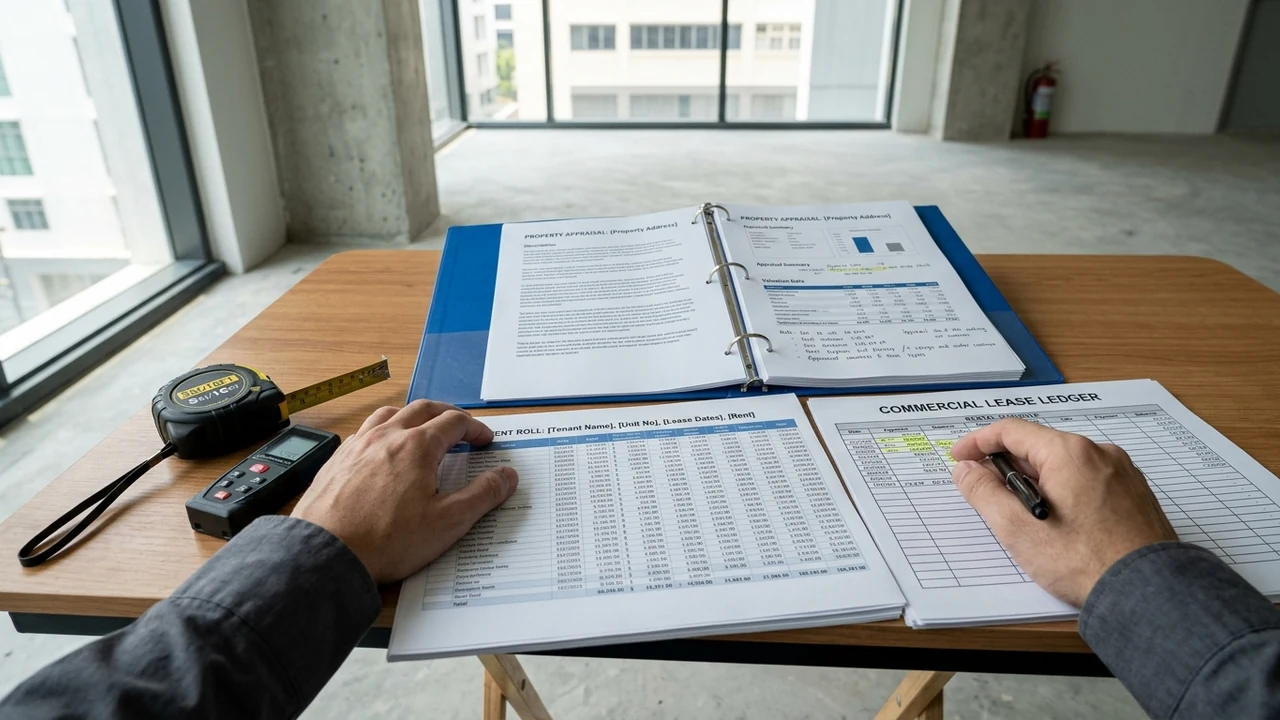
Use this quick checklist to keep your deal moving before it ever slows down.
- Gather all leases and tenant estoppel letters early.
- Order a title search before you even list the property.
- Fix small zoning or permit gaps up front, not at the table.
- Ask buyers for real pre-approval letters, not just friendly promises.
- Build a realistic closing date right into the agreement.
Screen your buyers, too, because not every offer is what it looks like. A pre-approved buyer with 25% to 35% down is a far safer bet than a higher offer sitting on shaky financing. From what I’ve seen over the years, a strong down payment is the single best early sign that a deal will actually reach the closing table instead of dying in underwriting.
If a title or zoning surprise pops up mid-deal, let’s look at it together. We can run the checks, sort out the issues, and map a clear path to closing before it quietly costs you weeks of lost time.
Cash Is Not Always Faster: A Reality Check
Most guides swear that cash always wins the race on speed. From what I’ve actually seen, that is not always true. A cash buyer still needs due diligence. They still want a clean title and a solid property. And plenty of cash buyers move slowly on purpose, poking at every crack in the building to talk you down on price before they commit.
I once watched a financed deal beat a cash deal to the closing table, which surprised everyone involved. The bank buyer was organized and pre-approved, and they closed in about 50 days flat. The cash buyer, meanwhile, dragged due diligence out for 11 weeks, hunting for reasons to shave the price. The money source matters, sure. But the person standing behind that money matters just as much.
So please do not judge an offer by the single word “cash.” Judge it by readiness instead. Is the buyer truly prepared? Are their documents in order and ready to go? Do they have a real track record of closing deals they start? A ready buyer with a solid loan can beat a picky buyer with a fat checkbook nearly every time.
Not sure which financing path fits your buyer best? We can help you weigh cash, a bank loan, or seller financing side by side before you sign anything you might regret. A short talk up front beats a stalled deal down the road.
The Bottom Line on Financing and Your Timeline
Buyer financing is the hidden hand resting on your closing clock. Cash moves fast, often inside a month. Conventional bank loans take 45 to 60 days once you factor in appraisal and underwriting. SBA loans can run past 90 days with their two-lender review. Seller financing can move almost as quickly as cash. Once you know the path, you can finally plan the pace with confidence.
The smartest move here is refreshingly simple. Ask how your buyer plans to pay, and ask it early, before you fall in love with a number. Prepare your documents ahead of time. Screen every offer for real readiness, not just a big headline price. Do those three things, and you turn a shaky, stressful sale into a smooth one that closes on schedule.
Every commercial real estate deal has its own bumps, its own delays, and its own personality. But when you understand how financing shapes the timeline, you stop guessing and start steering. You see the slow spots coming. You prepare for them. And that steady, informed control is exactly where good deals get done and good sellers get paid.
Frequently Asked Questions
How does buyer financing affect a commercial property sale timeline?
The buyer’s money source sets the whole pace of the deal. An all-cash buyer can close in 2 to 4 weeks. A conventional bank loan adds appraisal and underwriting, which pushes you toward 45 to 60 days. SBA loans can run 60 to 90+ days because two lenders review the file. Simply put, the more lender steps involved, the longer your timeline gets.
What is the fastest way for a buyer to finance a commercial purchase?
Cash is the fastest by a wide margin, since it skips the lender completely. After cash, seller financing is often the quickest path, sometimes wrapping up in just 2 to 5 weeks. Both of these avoid the slow bank underwriting and loan committee steps that stretch out most standard transactions for months.
Why do financed commercial deals take so long?
Because a lender checks nearly everything before releasing money. That includes the appraisal, the title, the leases, the tenant records, and the buyer’s full financial history. Missing or late documents cause most of the delays I run into. The bank is protecting a large sum, so it moves carefully, and that care always costs time.
Can a seller speed up the closing process?
Yes, and often by a lot. Prepare your papers early, order a title search before you list, fix any small zoning gaps up front, and accept offers from pre-approved buyers. These simple habits can shave 10 to 15 days off a normal closing. A prepared seller almost always closes faster than an unprepared one.
Is an all-cash offer always better for the seller?
Not always, though it looks that way on paper. Cash buyers still run full due diligence, and some move slowly on purpose to push your price down. A ready, pre-approved buyer using a bank loan sometimes closes faster than a picky cash buyer chasing a discount. In the end, buyer readiness beats the label on the offer.
