
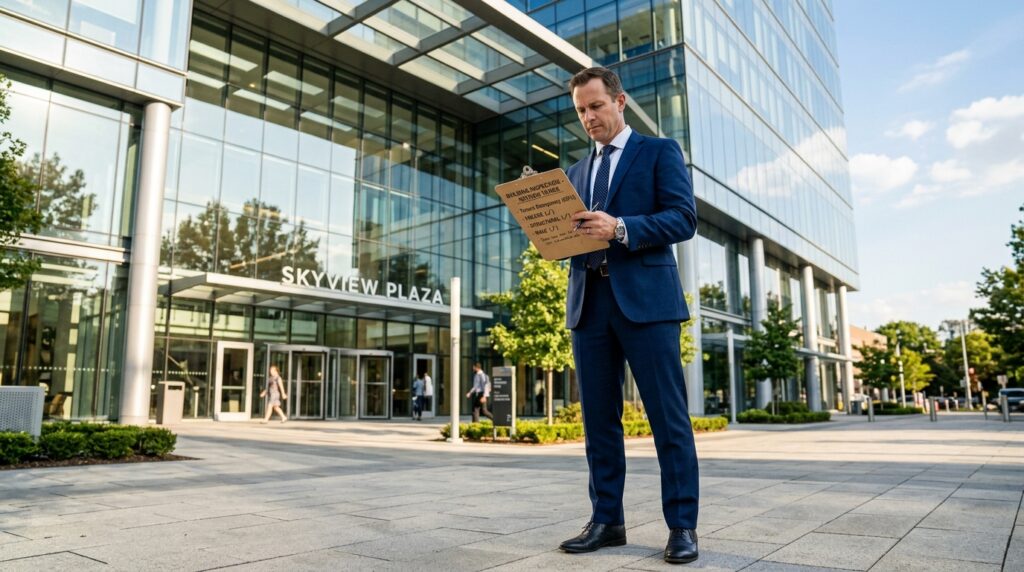
A commercial property due diligence checklist is the one tool that stands between a smart investment and a very expensive mistake. I have seen buyers skip this step and pay for it later in hidden liens, bad leases, and surprise repair bills. Don’t be that person.
What Is Commercial Property Due Diligence?
The Simple Definition You Actually Need
Commercial real estate due diligence is the process of checking everything about a property before you buy it. You look at legal papers, money records, the physical building, and who is renting inside.
Think of it like a doctor’s checkup before a big surgery. You want to know exactly what you are working with. A full due diligence period usually runs between 30 and 90 days. For bigger or more complex deals it can stretch to six months.
Why Skipping It Can Cost You Everything
I once talked to a buyer who skipped the environmental checks on a small warehouse. Weeks after closing, he found out the soil was contaminated. The cleanup alone cost more than he paid for the building. That story still stays with me.
A proper commercial property due diligence checklist helps you find these problems early. You get time to walk away or ask the seller to fix things before money changes hands. That is real power as a buyer.
Title and Legal Due Diligence
Documents to Review for Clear Ownership
The first thing you check is who really owns the property and whether there are any hidden claims against it. You need the title report, the ALTA/NSPS Land Title Survey, and the legal description of the land.
The title report shows current ownership and lists any liens, claims, or title defects that could stop you from getting clean ownership. The survey confirms the property boundaries match what the seller told you.
| Document | What It Tells You |
| Title policy/title commitment | Confirms legal ownership and any liens |
| ALTA survey | Confirms property boundaries and improvements |
| Legal description | Exact land boundaries in legal language |
| Easements and encumbrances | Access rights or restrictions on the land |
| Zoning compliance certificate | Confirms legal permitted use |
| KYC / AML compliance check | Verifies seller is legitimate |
Zoning and Permitted Use
Even if a building looks perfect, the zoning laws control what you are allowed to do inside it. You need to check the zoning compliance certificate and all approved variances. According to the U.S. Small Business Administration, zoning rules define the permitted-use categories for every commercial property type.
Also look at covenants, conditions, and restrictions (CC&Rs). These are rules attached to the land that stay even after you buy it. They can limit how you use or change the building.
Financial Due Diligence for Commercial Properties

Checking the Numbers Before You Trust Them
Honestly, this is where most deals fall apart or get renegotiated. The seller will give you income numbers that look great on paper. Your job is to check them against real records.
You want three years of operating statements, the current rent roll, and all capital improvement schedules. A rent roll shows every tenant, what they pay, when their lease ends, and how much is in security deposits.
Key financial items to request from the seller: three years of income and expense reports, real estate tax bills for the last three years, utility bills for the last two years, a certified rent roll, all service contracts, and any pending insurance claims.
Net Operating Income and What It Really Means
Net Operating Income (NOI) is what the property earns after paying all running costs, but before your mortgage. It tells you the true earning power of the building. Two properties with the same rent can have very different NOIs because of cost differences.
Check for rent delinquencies, past CAM reconciliations, and whether tenants have been paying on time. A tenant who is 60 days late every month is a red flag no matter how big the company looks on the surface.
Physical Condition and Building Systems Checklist
What a Proper Building Inspection Covers
You need an expert to walk through the entire property and look at every system. This inspection is usually documented in a Property Condition Assessment (PCA) report. It covers structural systems, electrical, plumbing, gas, HVAC, the roof, windows, drainage, fire protection, and elevators.
Do not skip the smaller things either. Check parking lots, load limits, curtain walls, and common area amenities. A broken HVAC in a commercial building can cost tens of thousands of dollars to fix. Finding it before closing gives you negotiating power.
Building Code Compliance and ADA Requirements
The building must meet current local building codes and Americans with Disabilities Act (ADA) requirements. If it does not, you could be the one paying for the fixes after you close. Also check for any open building permits or unresolved code violations.
I always say: ask for copies of all permits and certificates of occupancy. If the seller hesitates, that tells you something important right there.
Environmental Due Diligence
Phase I and Phase II Environmental Site Assessments
Environmental due diligence is one area where buyers try to save money and later pay much more. A Phase I Environmental Site Assessment (ESA) reviews the history of the land to find any signs of contamination.
According to the U.S. Environmental Protection Agency (EPA), a Phase I ESA is a standard first step before buying commercial or industrial land. If Phase I raises concerns, a Phase II ESA goes deeper with actual soil and groundwater testing.
Source: U.S. EPA — Phase I and Phase II Environmental Site Assessments
Other Environmental Factors to Watch For
Depending on the property type and age, you may also need to check for mold, radon, underground storage tanks (USTs), and asbestos. Older buildings especially need these checks. Ask the seller for any past environmental reports they hold.
Also look at wetlands on or near the property. Wetlands can limit your ability to expand, build parking, or change the use of the land. This directly affects the value and your future plans.
Lease and Tenant Due Diligence
Reading Every Lease Before You Sign
If the property has tenants, you are not just buying a building. You are taking on all the rights and responsibilities of the existing leases. Read every single one.
Look at the lease commencement date, lease termination date, rent amount, any rent increases, security deposits, and what happens if a tenant wants to leave early. Also check for guaranties on the leases. A lease with no guaranty from a small startup is a much bigger risk than one backed by a solid company.
Tenant Estoppels and SNDAs
A tenant estoppel certificate is a document signed by the tenant that confirms the lease terms are accurate. It protects you from later disputes where a tenant says the lease says something different than what the seller told you.
You should also check for Subordination, Non-Disturbance, and Attornment (SNDA) agreements, especially if you plan to get a loan. Lenders often require these.
Lease checklist at a glance: copies of all written leases and amendments, certified rent roll, accounting of all security deposits, tenant payment history for the past three years, copies of any oral lease summaries, and any pending lease disputes.
Based on checklist guidance from: Thompson Coburn LLP — Due Diligence Checklist for Commercial Real Estate
Market and Location Analysis
Checking Market Demand Before You Commit
A great building in the wrong location is still a bad deal. You want to study nearby properties, what rents they charge, what kinds of tenants they attract, and whether demand for that type of space is growing or shrinking.
Look at vacancy rates in the area. If most similar buildings nearby are half empty, ask yourself why. Is there too much supply? Is the area in decline? These questions matter before you write a check.
Accessibility, Infrastructure, and Future Plans
Check how easy it is for tenants or customers to reach the property. Parking, road access, public transit, and proximity to major roads all affect how attractive the building is to future tenants.
Also research any future redevelopment plans or zoning changes in the area. A new highway or a large commercial development nearby could raise or lower your property value. This is the kind of research most buyers skip, and it is often where the biggest surprises hide.
Conclusion
A good commercial property due diligence checklist is not just a list of boxes to tick. It is your best protection against buying someone else’s problem.
Start with legal and title checks. Then look at the money, the building, the environment, the leases, and the market. Give yourself enough time to do it right. Most deals allow 30 to 90 days, and you should use every day of it.
The funny part is, the more thorough you are, the more confident you feel walking into closing day. And that confidence is worth more than any discount the seller could offer.
I’d love to hear your thoughts in the comments. Have you been through a commercial property purchase before? What was the one thing you wished you had checked earlier?
Frequently Asked Questions
What is included in a commercial property due diligence checklist?
A full commercial property due diligence checklist covers title and legal documents, financial records such as income statements and the rent roll, physical building inspections, environmental assessments, lease reviews, and a market and location analysis. Each section helps you understand a different risk before you commit to the purchase.
How long does commercial real estate due diligence take?
The typical due diligence period runs between 30 and 90 days. For larger or more complex properties it can stretch to six months. The length depends on the deal size, how quickly the seller provides documents, and how many third-party reports you need to order.
What is a Phase I Environmental Site Assessment and do I need one?
A Phase I ESA is a review of the property’s history to look for signs of contamination. Most lenders require it, and most experienced buyers get one regardless. If it raises concerns, you move to a Phase II ESA which includes actual soil and groundwater testing. The U.S. EPA recommends this as a standard step before buying any commercial or industrial site.
What is a rent roll and why does it matter in due diligence?
A rent roll is a detailed list of all tenants in a building. It shows what each tenant pays, when their lease started, when it ends, and how much they owe in security deposits. It is one of the first financial documents you should request because it tells you exactly how much income the property is generating right now.
Can I negotiate the purchase price after completing due diligence?
Yes, absolutely. This is one of the biggest benefits of doing thorough due diligence. If you find deferred maintenance, code violations, environmental issues, or problem leases, you can go back to the seller and ask for a price reduction or ask them to fix the problem before closing. Many buyers use the due diligence period as a final chance to sharpen their negotiation position.
