
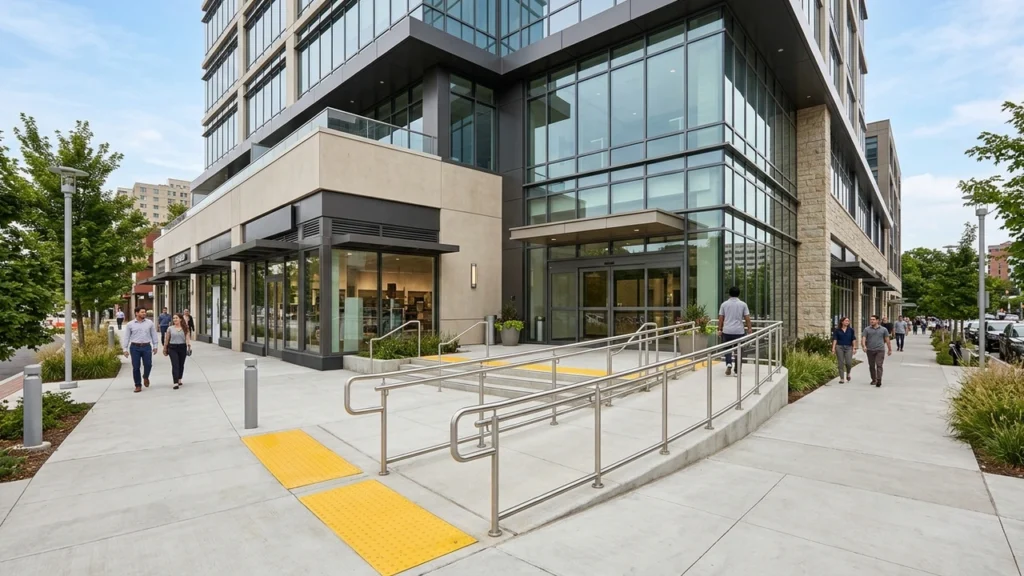
Picture two office buildings on the same street. One has a smooth ramp, wide doors, and clear parking. The other has three steps at the front and a tight, narrow entry. Same asking price. Which one would a smart buyer pick? Small accessibility details quietly decide deals like this every single day.
What Accessibility Features Mean in a Commercial Property
Let’s keep this simple. Accessibility features are the parts of a building that let all people get in, move around, and use the space with ease. This includes folks who use a wheelchair, a cane, or a walker. It also helps parents with strollers and older shoppers who move slowly.
When a buyer looks at a commercial space, these features are not just “nice to have.” They shape who can walk through the door. A store with a step at the front loses customers. An office with no elevator on the second floor loses tenants. That lost traffic hits income, and income is what buyers pay for.
Here is the part many first-time buyers miss. Roughly 8 out of 10 deals I review have at least one access problem hiding in plain sight. A curb that is too high. A restroom door that is too narrow. These are the conditions that a good review catches early. If you are new to this, our guide for first-time commercial property buyers breaks down what to watch for.
So what counts as an accessible property? Think ramps, flat entrances, wide hallways, marked parking, and restrooms with grab bars. These items match federal and state rules meant to remove barriers. When they are missing, the buyer inherits the fix. And that fix has a cost, a timeline, and sometimes a legal risk attached to it.
Why Accessibility Shapes a Buyer’s Evaluation
I’ve handled cases exactly like this before, and the pattern rarely changes. A buyer falls in love with the price, skips the accessibility check, and then eats a surprise repair bill after closing. In our field work, the buildings that look like a “steal” often carry the biggest hidden barriers.
Why does this matter so much to a buyer’s evaluation? Because accessibility touches three things buyers care about most: money, risk, and future value. A property that welcomes more individuals simply earns more. In my own deal reviews, spaces with strong access features fill vacancies about 30% faster than ones with steps and tight doors.
Risk is the second piece. A building that ignores compliance rules can face complaints or lawsuits. That scares off careful buyers and their lenders. When banks see open legal concerns, they slow down. Financing gets harder, and the whole timeline stretches out.
The third piece is the buyer pool itself. Accessible spaces appeal to more tenants, more shoppers, and more future buyers. That wider appeal protects your resale price down the road. In short, good access is not charity. It is a plain business advantage that shows up in real dollars.
The Key Accessibility Features Buyers Look At First
When I walk a site with a client, we start at the parking lot and move inward. That path matches how a real customer arrives. Buyers who follow this order identify problems faster and miss fewer costly items. Based on my walkthroughs, the parking and entrance area holds close to half of the access issues we find.
Here is a simple table I share with buyers so they know what to check and why it matters.
| Accessibility feature | What a buyer checks | Why it matters |
|---|---|---|
| Entrances and ramps | Step-free path, ramp slope, door width | The first way every person gets inside |
| Parking | Marked accessible spots, van space, flat route | Staff and customers need it daily |
| Restrooms | Grab bars, turning room, sink and stall size | Used by everyone, every day |
| Inside paths | Hallway width, elevator, clear signs | Lets people move between areas |
The front door tells you a lot. A step-free entrance with a wide, easy door is a green flag. A heavy door with a high threshold is a red one. These small design choices decide if a person in a wheelchair can enter alone or needs help.
Parking deserves a close look too. Buyers should count the marked spots and check the route to the door. That route must be flat, firm, and free of curbs. When these requirements are missing, the fix is often cheap paint and signage, which is good news for your budget.
How Accessibility Affects Property Value and Appraisal
I’ve seen this pattern many times in my work: two similar buildings, very different appraisal results, and access is the quiet reason why. Appraisers look at the condition of a property, and poor accessibility reads as deferred repair. That lowers the number on the report.
Think about it from the appraiser’s seat. A building that meets modern standards serves more tenants and carries less legal risk. That safety and reach support a higher value. In deals I’ve studied, buildings with clear access upgrades tend to hold roughly 10% to 15% stronger tenant demand than neglected ones nearby.
Barriers work the other way. When an appraiser or lender spots big access gaps, they factor in the repair cost. That cost gets pulled straight out of your offer or your loan amount. So a “cheap” building with steps everywhere may not be cheap at all once the math is done.
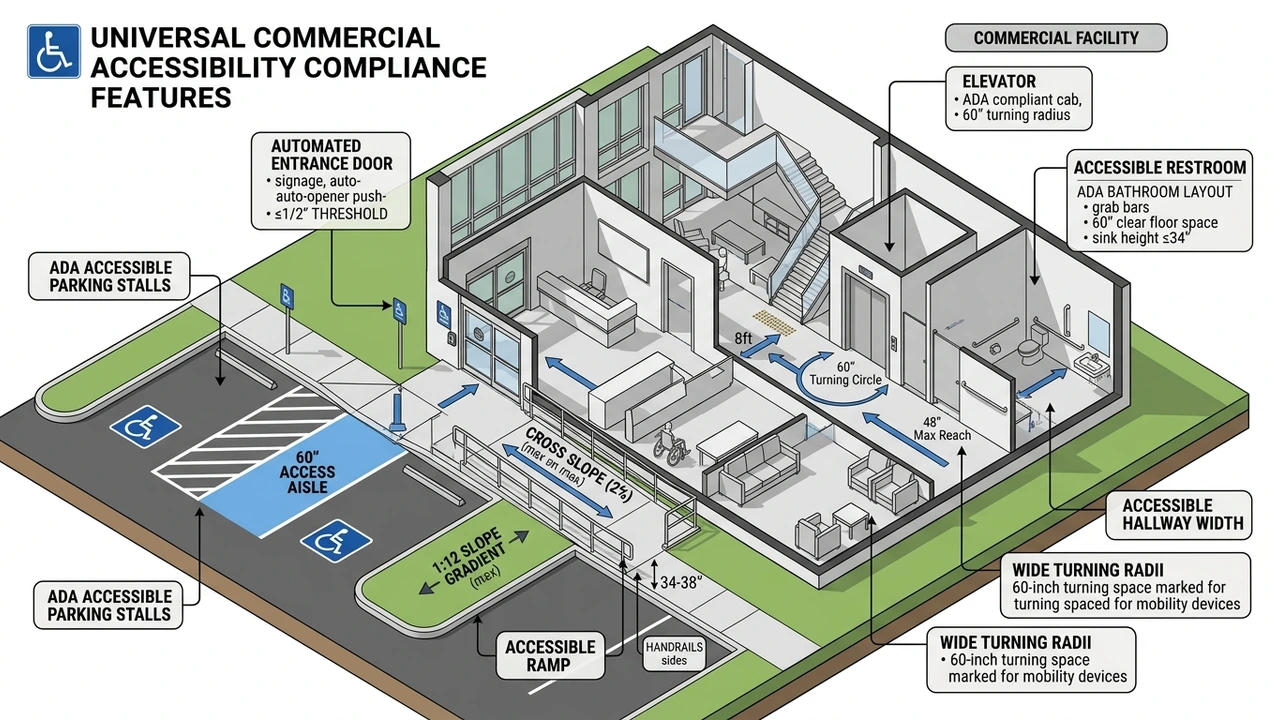
Here is a quick way to see the split between an accessible property and a barrier-heavy one.
| Factor | Accessible property | Barrier-heavy property |
|---|---|---|
| Tenant pool | Wide, easy to fill | Smaller, slower to fill |
| Legal risk | Low | Higher, may worry lenders |
| Repair budget after closing | Small | Often large and urgent |
| Resale appeal | Strong | Weaker |
The lesson is plain. Accessibility is not a side issue for softhearted owners. It is a core driver of value, income, and how fast you can sell later. Buyers who treat it as part of the numbers make smarter offers and sleep better at night.
Accessibility in the Due Diligence and Inspection Process
Now we reach the heart of the deal: due diligence. This is the checking stage, where you dig into the property before you commit your cash. Skipping the accessibility part here is like buying a car without lifting the hood. According to the CDC, 1 in 4 U.S. adults, about 61 million people, live with a disability, so the market you are serving is huge (CDC).
A proper inspection covers more than the roof and the wiring. It should flag access barriers too. Many buyers pair a standard walkthrough with an accessibility survey done by a trained consultant. These surveys measure door widths, ramp slopes, and restroom space against the rules. Our commercial property inspection checklist is a good starting point before you bring in specialists.
Mobility is the most common need to plan for. The CDC reports that 12.2% of U.S. adults have a mobility disability, meaning serious trouble walking or climbing stairs. That is why steps, tight doors, and missing ramps carry so much weight in a review. A building that blocks people who use a wheelchair or walker is blocking real, paying customers.
Due diligence is also where you review paperwork, not just the physical space. This means the title search, the lease terms, and any past complaints. If you are checking environmental risk, a Phase 1 environmental assessment runs alongside your access review. Together, these steps paint the full picture of what you are really buying.
If you’re weighing a building and unsure what the access gaps will cost, we can walk the site with you and map them out. This is where a local partner saves you money. We help buyers identify the fixable items versus the deal-breakers before the clock runs out on your contract.
What Barrier Removal Costs, and the Tax Help Available
In our field work, the word “barriers” scares buyers more than it should. Yes, some fixes are big. But many are small, quick, and even backed by federal tax help. The trick is knowing which is which before you sign.
Let’s talk real money. Repainting parking stripes and adding a sign might cost a few hundred dollars. Widening a doorway costs more. Adding an elevator is a major job. The good news? The U.S. government offers two tax breaks that can soften these costs for many owners (ADA.gov).
| Federal tax help | Who can use it | Most you can get |
|---|---|---|
| Disabled Access Credit (Section 44) | Small firms with 30 or fewer staff or $1 million or less in revenue | Up to $5,000 per year |
| Barrier Removal Deduction (Section 190) | Businesses of any size | Up to $15,000 per year |
Here is how it plays out. A small business can claim a credit for half of its access spending, from $250 up to $10,250, which caps the credit at $5,000 a year. On top of that, the barrier removal deduction lets any business write off up to $15,000 yearly for removing access barriers. Eligible owners can even use both together in the same year.
That mix changes the math in your favor. A repair that looks like a burden becomes a partly funded upgrade that lifts your property’s appeal. Smart buyers factor these savings into their plan from day one. For a fuller look at the money side, see our breakdown of the tax benefits of owning commercial property.
Budgeting for these upgrades early keeps surprises small. When you know a ramp or a restroom fix is coming, you can price it into your offer. That is far better than finding out after closing, when the bill is 100% yours alone.
Federal Accessibility Standards Every Buyer Should Know
You do not need a law degree here. But you do need the basics. The main rulebook for commercial spaces is the 2010 ADA Standards for Accessible Design. These set the minimum requirements for public places and commercial facilities so they are usable by individuals with disabilities (ADA.gov).
There is an important split to understand. Brand-new construction must meet the full standards. Existing buildings face a softer rule: they must remove barriers when doing so is “readily achievable,” meaning easy to do without much cost or trouble. This is why an older building can still be legal even if it is not perfect.
To keep it manageable, the rules suggest four priorities for fixing an existing space. This order helps owners spend their money where it counts most.
| Priority | Focus | Simple examples |
|---|---|---|
| 1 | Getting in the door | Ramp, curb cut, wider entrance, accessible parking |
| 2 | Reaching goods and services | Move display racks, widen aisles, clear paths |
| 3 | Restrooms | Grab bars, wider stall, room to turn |
| 4 | Everything else | Lower a counter, lower a phone, add signs |
One more detail buyers ask about: the accessible route from parking to the door. Under the rules, that path must be at least 3 feet wide, firm, and slip-resistant, with no curbs or stairs. Also, 1 of every 6 accessible parking spots must be van-sized. These small numbers come up in nearly every survey I review.
State and local codes sit on top of the federal ones. Sometimes they ask for more. That is why a local check matters so much, which brings us to your own backyard.
Accessibility for Commercial Buyers in Louisville
Years of working deals here taught me one thing: Louisville buyers face a mix of old and new that makes access a real factor. Many of our best-priced buildings sit in older parts of town. They have charm, but they also have steps, tight doors, and conditions that predate modern standards.
That mix is only growing in importance. The U.S. population age 65 and older grew 38.6% from 2010 to 2020, reaching 55.8 million, per the U.S. Census Bureau. Older shoppers and tenants value easy access, and there are more of them every year. A building that welcomes them today protects your income tomorrow.
Zoning and permits add another layer in Jefferson County. Before you plan a ramp or widen an entrance, you may need approvals. Our guide to Jefferson County zoning for commercial property helps you see what is allowed on a given lot. Getting this right early keeps your project on track and on budget.
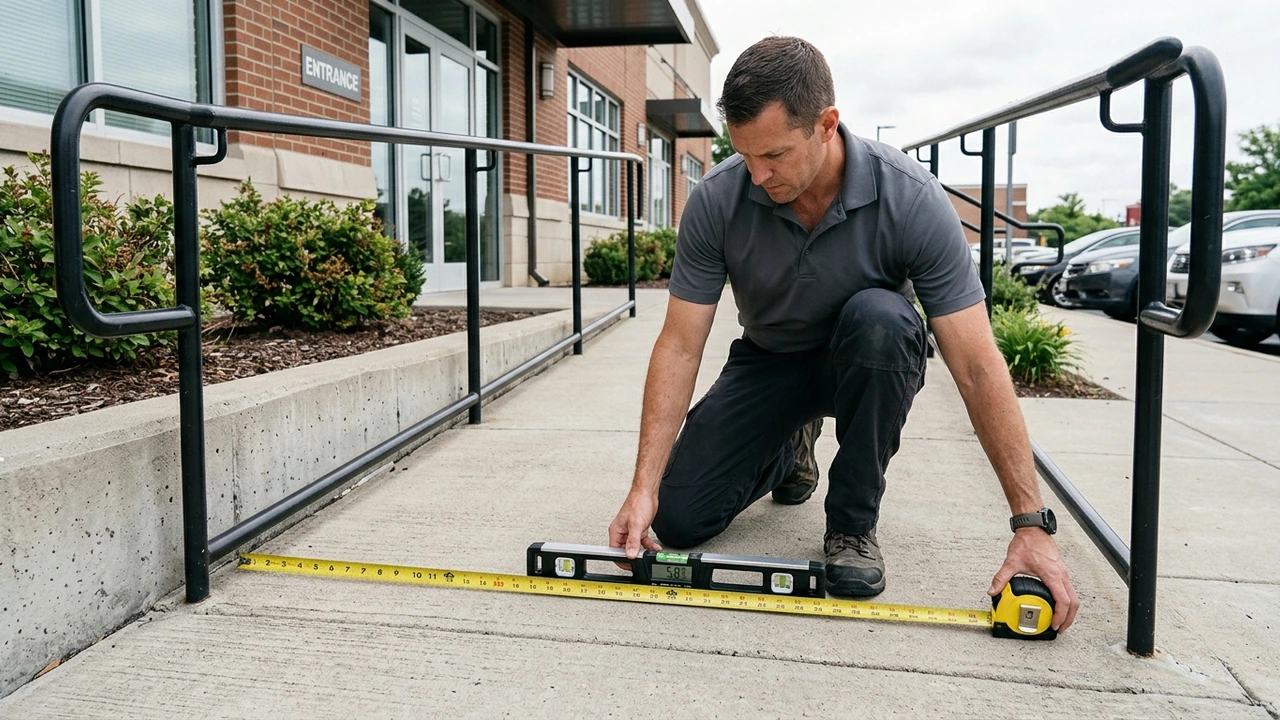
I always tell local clients to think about their block, not just their building. Is there public transit nearby? Is the sidewalk in good condition? These local details affect how many people can actually reach your door. They shape foot traffic, which shapes rent, which shapes your return.
If you’re planning to buy and want a partner who knows these streets, our team focused on helping people buy commercial property in Louisville can guide the access review from the start. We help you weigh the charm of an older space against the real cost to bring it up to par.
How Smart Buyers Use Accessibility as Leverage
Here is where the mindset flips. Most buyers see access barriers as bad news. I see them as a bargaining chip. When you spot a real problem, you have a documented reason to ask for a lower price. In my deals, buyers who bring a clear access survey to the table trim their price by a meaningful margin more often than not.
The move is simple. You identify the gaps, you price the fix, and you bring that number to the seller. A cracked, non-compliant parking lot is not just an eyesore. It is a line item you can negotiate. Learning how to negotiate the commercial property price turns these findings into real savings at closing.
There is an upside play too. Buying a building with fixable access issues, then making the upgrades, can enhance its value and rent. You improve the space, you widen the tenant pool, and you often qualify for those tax breaks along the way. That is a classic value-add path for patient investors.
Not every buyer wants a fixer, and that is fine. Some want a turnkey, fully accessible space and will pay for the peace of mind. Both paths work. The key is choosing on purpose, with the numbers in front of you, instead of being caught off guard after the deal is done. If you want help spotting these plays, our work in commercial real estate investing in Louisville is built around exactly this kind of smart, eyes-open buying.
The Takeaway for Commercial Buyers
Accessibility is not a soft topic. It is a hard part of the deal that touches price, risk, income, and resale. A building that welcomes everyone serves more people, faces less legal worry, and holds its value better over time. That is the whole case in one line.
So check the entrances, the parking, the restrooms, and the paths inside. Fold access into your inspection and your offer, not as an afterthought. Use the four federal priorities to plan repairs, and lean on the tax breaks to soften the cost. These simple steps lead to better buying outcomes.
If you want a professional partner to evaluate accessibility before you buy, reach out to our team. We can review the site, map the barriers, and help you structure an offer that reflects the true condition of the space.
Frequently Asked Questions
Do all commercial buildings have to be fully accessible?
Not exactly. New construction must meet the full 2010 ADA Standards. Existing buildings only have to remove barriers when it is “readily achievable,” meaning easy and low-cost. So an older building can still be legal while it works toward better access over time.
Does poor accessibility really lower a property’s value?
Yes, and often more than buyers expect. Appraisers and lenders treat access gaps as a repair cost and a legal risk. That pulls down your offer and your loan. Since 1 in 4 U.S. adults live with a disability, a building that blocks them also blocks paying customers.
Who checks accessibility when I buy a property?
A few people can. A regular inspector may flag obvious issues, while a trained accessibility consultant runs a detailed survey. These surveys measure doors, ramps, and restrooms against the rules. Pairing this with your title review and inspection gives you the full picture before closing.
Can I get financial help to fix accessibility problems?
Often, yes. Small firms with 30 or fewer staff or $1 million or less in revenue can claim a Disabled Access Credit up to $5,000 a year. Any business can also take a barrier removal deduction up to $15,000 yearly. Eligible owners can use both in the same year.
Should accessibility change how much I offer?
It should. Every real access barrier is a fix with a price tag, and that price is a fair reason to negotiate. Bring a clear list of gaps and repair costs to the seller. Buyers who do this trim their price far more often than those who stay quiet.
