
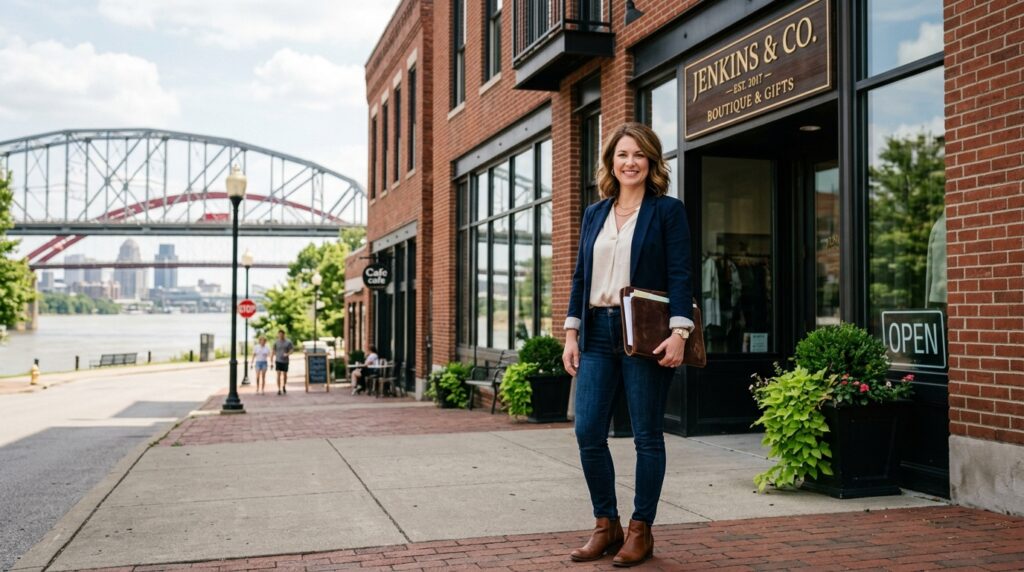
You want to stop paying rent every month and finally own the place where your business runs. I get it. Paying rent feels like putting money into someone else’s pocket forever. If you are a small business owner in Louisville and you want to buy your own building, an SBA loan might be the easiest path to get there.
This guide walks you through everything in simple steps. No hard words. No confusing finance talk.
Why Louisville Is a Smart City to Buy Commercial Property Right Now
Louisville is growing fast. The city is home to big names like Yum! Brands, Humana, GE Appliances, and Ford Motor Company. And with over 96,000 small businesses in Louisville making up nearly 30% of all jobs in the city, the demand for commercial real estate here is real and growing.
The commercial property market in Louisville covers a wide range of options. You can find warehouses, retail spaces, office buildings, medical offices, and even restaurants for sale. Property prices here are still more affordable compared to bigger cities like Chicago or Nashville, which makes it a great time to buy.
Honestly, when I first started looking into this, I was surprised at how many options there were for small business owners to get into a building they could call their own. Louisville’s mix of economic development, a strong logistics and healthcare industry, and rising tourism around the Kentucky Derby make it one of the better mid-sized cities to plant roots as a business owner.
What Is an SBA Loan for Commercial Real Estate?
An SBA loan is a loan backed by the U.S. Small Business Administration (SBA). The SBA does not give you the money directly. Instead, it promises the bank that if you cannot repay the loan, the government will cover part of it. This makes banks more willing to lend to small businesses.
For buying commercial property, two SBA loan types are most popular: the SBA 504 loan and the SBA 7(a) loan. Both have lower down payments and better interest rates than most regular bank loans. They also come with longer repayment terms, which means your monthly payments stay low.
The key thing to know is that these loans are designed for owner-occupied real estate. That means you must use the building for your own business, not just buy it to rent out to others.
SBA 504 vs SBA 7(a): Which Loan Is Right for You in Louisville?
This is the question most business owners get stuck on. Both loans can help you buy commercial property in Louisville, but they work differently. Let me break it down simply.
How the SBA 504 Loan Works for Louisville Business Owners
The SBA 504 loan is the most popular choice for buying or building owner-occupied commercial real estate. It is handled through a Certified Development Company (CDC), which is a nonprofit that works alongside a regular bank or lender. In Louisville and across Kentucky, Alloy Development Co. is the leading CDC for this program.
Here is how the money breaks down on a typical 504 deal: the bank covers about 50% of the project cost, the CDC covers around 40%, and you only need to bring 10% as a down payment. That is much better than a regular commercial mortgage, which can ask for 20% to 30% down.
According to the U.S. Small Business Administration (sba.gov), the maximum loan amount for a 504 loan is $5.5 million. The loan comes with a fixed interest rate and terms of 10, 20, or 25 years. As of April 2026, SBA 504 rates are as low as 5.61% for a 10-year term and 5.94% for a 25-year term. Those are solid rates for long-term commercial financing.
The 504 loan is great if you are buying a building, expanding one you already have, or doing major renovations. It can also cover soft costs like appraisals, architectural fees, and environmental reviews.
When to Choose the SBA 7(a) Loan Instead
The SBA 7(a) loan is the SBA’s most flexible program. It can be used for more things than the 504, including working capital, buying equipment, refinancing debt, and, of course, buying commercial real estate.
The 7(a) loan is capped at $5 million and is offered by one lender directly, not through a CDC partnership. Interest rates are slightly higher than the 504 and can vary, but they still beat most conventional commercial loans.
The 7(a) is a better fit if you need money for more than just the building. For example, if you want to buy a space and also need cash to cover startup costs or purchase equipment at the same time, the 7(a) gives you that flexibility. To be fair, most of my clients who are buying just a building tend to go with the 504, but if you need that extra spending power, the 7(a) is worth looking at.
Who Qualifies for an SBA Loan to Buy Commercial Property in Louisville?
Not every business can get an SBA loan. But the rules are not as scary as they sound. Here is what you need to know.
Basic Eligibility Rules You Need to Know
To qualify for an SBA loan for commercial property in Louisville, your business must meet these basic requirements:
Your business must be a for-profit company located in the United States. Non-profits do not qualify. Your business must also fall within the SBA’s size standards, which for most industries means having a tangible net worth below $20 million and average net income below $6.5 million after taxes for the past two years.
You also need a solid business plan, a history of good financial management, and proof that your business can repay the loan. Lenders will look at your EBITDA, which is your earnings before interest, taxes, and other costs. That number needs to cover at least 115% of your monthly loan payment.
Some industries cannot get SBA loans. These include gambling businesses, banks and lenders, passive real estate investors, and businesses with content of a sexual nature.
The Owner-Occupancy Rule Explained Simply
This is a rule that trips up a lot of people. The SBA loan is not for landlords. It is for business owners who will actually use the building themselves.
For an existing building, your business must occupy at least 51% of the rentable space. You can rent out the rest, but more than half must be yours. For new construction, the rule goes up to 60% owner-occupancy.
So if you want to buy a small office building and rent out all the floors to other tenants, the SBA loan is not for you. But if you want to own a building where your business takes up the main floor and you rent out a small back suite for extra income, that can work fine.
I have seen people get tripped up on this one because they find a great deal on a property that is mostly occupied by existing tenants. Just make sure the math in your own space adds up before you fall in love with a building.
How Much Down Payment Do You Need for an SBA Commercial Property Loan?
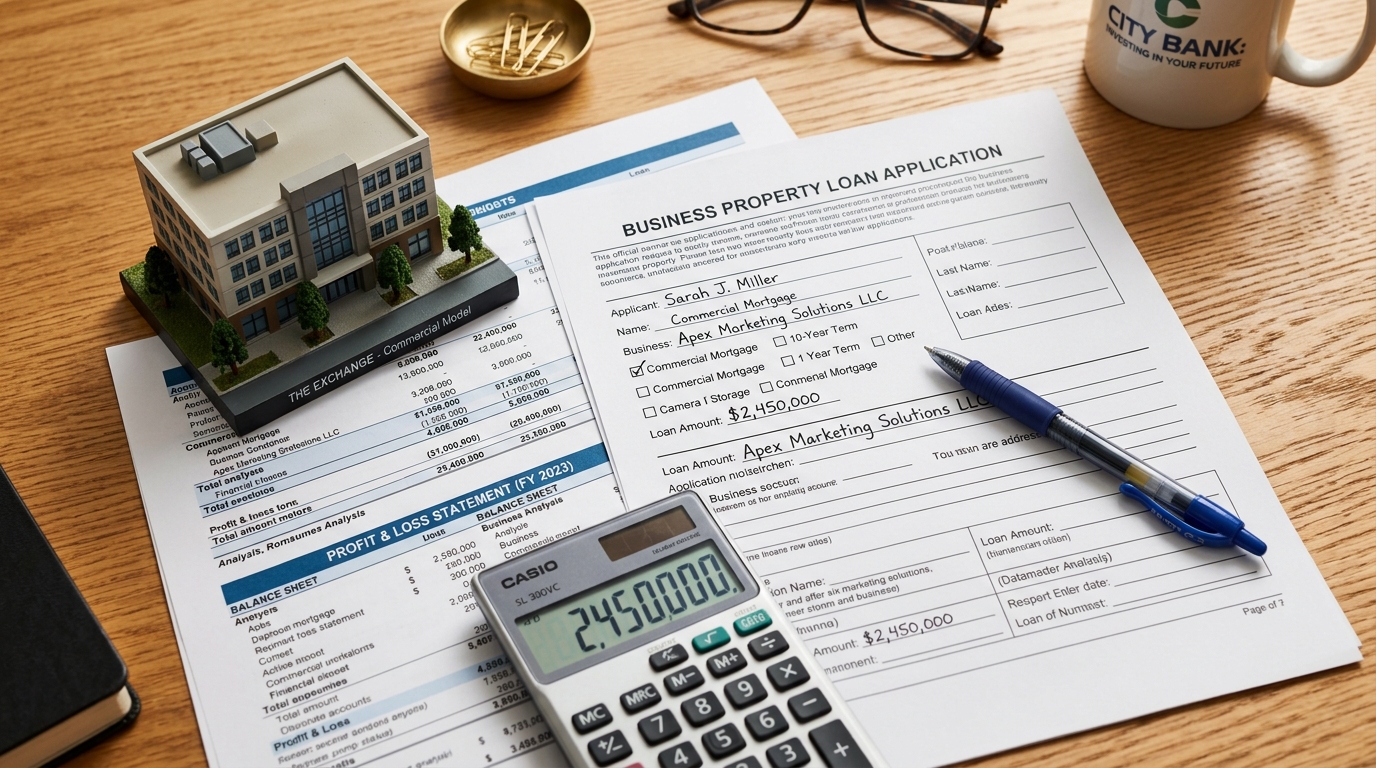
One of the biggest reasons people choose SBA loans is the low down payment. Let me be straight with you about the numbers.
Down Payment Breakdown by Business Type
For most small businesses buying a standard commercial property in Louisville, the down payment for an SBA 504 loan is just 10%. That is a big deal when you compare it to a regular commercial mortgage that might ask for 25% to 30%.
But there are cases where the down payment goes higher. If your business is a startup (less than two years of operating history), you usually need to put down 15% instead of 10%. If you are buying a special-use property, like a gas station, marina, brewery, nursing home, or car wash, the down payment jumps to 20%. These properties are harder to sell if the loan goes bad, so lenders ask for more skin in the game.
For an SBA 7(a) loan, down payment requirements can vary by lender, but are typically in the 10% to 20% range depending on your credit and cash flow situation.
What Costs Are Covered by the SBA Loan?
A lot of people do not realize how much the SBA loan can cover beyond just the building price. The SBA 504 loan can pay for the land and the building, construction of a new building, renovations to an existing one, parking lots, landscaping, utilities, office furniture and fixtures, and soft costs like legal fees, appraisals, and architect fees.
It can also include a contingency reserve of up to 10% of construction costs for new builds. This is helpful because construction almost always has some surprises.
What it cannot cover is regular working capital. If you need money for inventory or payroll, that has to come from somewhere else, like an SBA 7(a) loan or a separate line of credit.
How to Apply for an SBA Loan to Buy Commercial Property in Louisville
Now for the part you actually want to know. How do you get started?
Step-by-Step Application Process
Getting an SBA loan to buy commercial property in Louisville takes some paperwork, but it is not as hard as people think if you prepare well.
First, find a property you want to buy and confirm it meets the owner-occupancy rule. Then gather your financial documents: two years of business tax returns, two years of personal tax returns, a current balance sheet, profit and loss statements, and a solid business plan.
Next, connect with a CDC like Alloy Development Co. for an SBA 504 loan, or go directly to an SBA-approved bank for a 7(a) loan. They will review your documents, run a credit check, and tell you what loan amount you may qualify for.
From there, the lender orders an appraisal of the property. The whole process from application to closing usually takes about 60 to 90 days for a straight purchase. If construction is involved, it can take longer.
According to a study published by the U.S. Small Business Administration (sba.gov), borrowers must also not change the ownership structure of their business without SBA approval after the loan closes. This is a condition many first-time borrowers are not aware of until it comes up in the paperwork.
Top SBA Lenders in Louisville to Work With
You do not have to search hard for an SBA lender in Louisville. The city has a healthy network of active lenders. Based on recent SBA lending data, some of the most active SBA lenders serving Louisville include U.S. Bank, Stock Yards Bank and Trust, Republic Bank and Trust, PNC Bank, and Huntington Bank.
Stock Yards Bank and Trust is a Louisville-based lender and has consistently ranked among the top local SBA lenders with an average loan size of nearly $590,000. For larger deals, Live Oak Bank out of Wilmington has funded Louisville loans averaging over $3 million.
If you are not sure where to start, the Louisville Small Business Development Center (SBDC) is a free resource that can help you prepare your documents and match you with the right lender. They are part of a national network and are genuinely helpful, not just a website with forms.
Conclusion
Using an SBA loan to buy commercial property in Louisville is one of the smartest moves a small business owner can make. You stop paying rent that builds someone else’s equity and start building your own. With a low down payment of just 10% for most businesses, a fixed interest rate, and repayment terms up to 25 years, the SBA 504 loan makes owning your building very realistic.
Louisville’s growing economy, affordable property prices compared to larger cities, and a strong network of SBA lenders make this a good time to take action. Whether you are buying a warehouse, a retail space, or an office building, start by calling your local SBDC or a CDC like Alloy Development Co. to see what you qualify for.
Have you started looking at properties in Louisville yet? I would love to hear where you are in the process. Drop your question below, and I will try to help.
Frequently Asked Questions
Can I use an SBA loan to buy commercial property in Louisville if my business is a startup?
Yes, you can still qualify for an SBA loan as a startup in Louisville, but the down payment requirement goes up to 15% instead of the usual 10%. Lenders will also look more carefully at your business plan and personal financial history since you do not yet have two years of business tax returns to show.
What types of commercial properties can I buy with an SBA loan in Louisville?
You can buy a wide range of commercial properties,<span style=”font-weight: 400;”> including office buildings, retail stores, warehouses, manufacturing facilities, restaurants, medical offices, self-storage facilities, and mixed-use buildings. The property must be at least 51% occupied by your own business. You cannot use an SBA loan to buy an apartment building or a property you plan to hold purely as an investment.
How long does it take to close an SBA commercial property loan in Louisville?
For a standard purchase without construction, most SBA 504 loans close within 60 days. SBA 7(a) loans can sometimes move faster. If your deal involves new construction or major renovations, expect the timeline to stretch to 90 days or more.
What is the difference between the SBA 504 and SBA 7(a) loan for buying commercial property?
The SBA 504 loan is designed specifically for buying or improving owner-occupied commercial real estate. It offers a fixed rate and is processed through a CDC partnering with a bank. The SBA 7(a) loan is more flexible and can also cover working capital and equipment, but it is capped at $5 million and rates can be slightly higher. For most property purchases in Louisville, the 504 is the better deal.
Do I need perfect credit to get an SBA loan for commercial property in Louisville?
No, you do not need perfect credit. But you do need decent credit and a business that can show it earns enough to cover the loan payments. Most lenders want to see a credit score of at least 680, though some programs have more flexibility. A strong business plan, solid cash flow, and a down payment go a long way even if your credit is not perfect.
