

Title insurance protects you from problems with the ownership history of a property. When you buy a commercial building, you are also buying everything that happened to it in the past — old loans, unpaid bills, disputes, even fake documents. If something goes wrong after you close, title insurance is what saves you.
Think of it this way. Regular insurance covers what might happen in the future. Title insurance is different. It covers past events that show up after you already own the building. That is a key point most buyers miss.
How Title Insurance Works in Commercial Real Estate
Before a title insurance company gives you a policy, it does a title search. It digs through public records — deeds, tax records, court judgments, and mortgage documents — to check the full history of the property. Once the search is done, the company prepares a title commitment that explains what it will and will not cover.
If a problem comes up after you buy the property — like someone claiming they are the real owner — your title insurance company steps in. It pays for your legal defense and covers your financial loss up to your policy amount.
Why It Is More Important Than Residential Coverage
Honestly, a lot of people assume commercial title insurance is “just like” what you get for a house. It is not. The financial stakes are much bigger. An unpaid lien on a shopping center worth $5 million can cost you hundreds of thousands of dollars in mitigation costs.
Commercial buildings also change hands more often. The more times a property changes owners, the more chances for title defects to slip through. On top of that, ownership structures for commercial properties are complex — many buildings are owned by LLCs that are owned by other LLCs. Each layer adds more risk. That is why commercial property buyers need strong title insurance coverage, not just a basic policy.
Types of Title Insurance Policies for Commercial Buyers
When you buy a commercial property, you will usually have two types of title insurance policies to think about. Both protect different people in the deal. Knowing the difference can save you money and stress.
Owner’s Policy vs Lender’s Policy: What You Need to Know
The owner’s policy protects you as the buyer. It stays active for as long as you own the property. If someone later challenges your ownership rights or a hidden title defect shows up, this policy covers your legal fees and any financial loss.
The lender’s policy protects your bank or mortgage lender. If you are borrowing money to buy the property, your lender will almost always require you to buy a lender’s policy. It is not optional. But here is the catch — this policy only protects the lender, not you. Once your loan is paid off, the policy ends.
Most experienced commercial property buyers buy both. I would never skip the owner’s policy on a commercial deal, even if it feels like one more expense. The protection it gives is worth every dollar.
| Feature | Owner’s Policy | Lender’s Policy |
| Who it protects | The buyer | The lender |
| Required? | Optional but highly recommended | Yes, if you finance |
| How long it lasts | As long as you own the property | Until the loan is paid off |
| Who usually pays | Negotiable (buyer or seller) | Usually the buyer |
Specialized Endorsements That Can Protect Your Investment
On top of the basic policy, commercial buyers can add specialized endorsements. These are extra protections for risks that are specific to commercial properties. The base policy may not cover everything you need, especially for a complex deal.
Common endorsements include zoning coverage (in case the property is being used in a way that breaks local zoning rules), environmental lien coverage (for cleanup costs from past owners), and access endorsements (to make sure your tenants and customers can reach the building legally). These add-ons usually cost 10% to 25% more on top of your base premium. But they can save you from very expensive problems later.
Common Title Defects Commercial Buyers Face
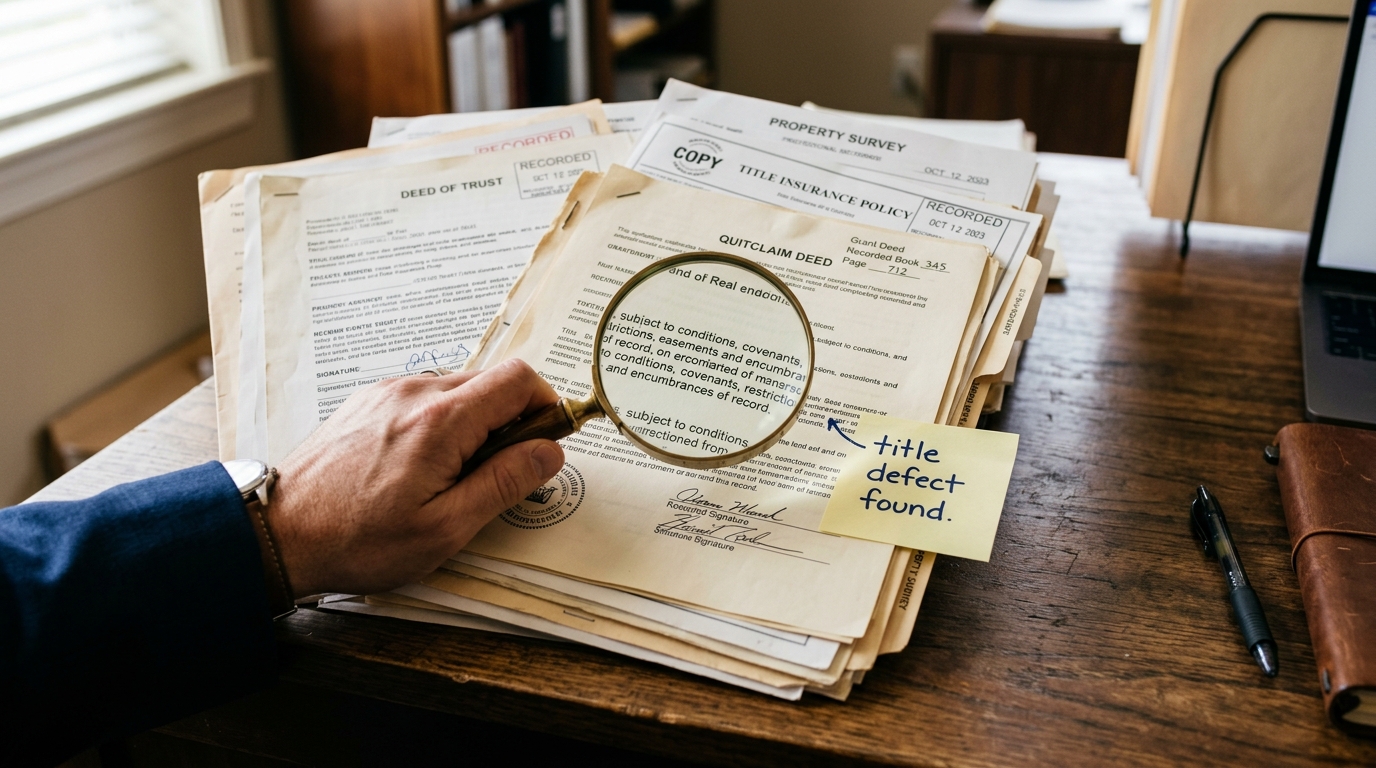
I remember sitting in on a closing for a small office building a few years back. Everything looked fine. Then, three months later, a contractor showed up saying he had never been paid for renovation work done by the previous owner. That is called a mechanic’s lien, and it was now attached to the property my client owned. That one situation taught me why knowing the most common title defects is so important before you close any commercial real estate deal.
Liens, Easements, and Boundary Disputes
Liens are one of the most common problems. An old owner may have had unpaid bills — a contractor, a tax authority, or a lender — and those debts follow the property, not the person. If you buy a building with a hidden lien, you are now responsible for it.
Easements are another big one. An easement is a legal right that lets someone else use part of your property. Maybe a neighbor has the right to walk across your parking lot, or a utility company has a cable running under your building. If these were never properly written in the records, you might not find out until it is too late. Boundary disputes work the same way — the legal lines of your property might be different from what you can see on the ground.
According to Justia’s Small Business Law Center, a title search can bring to light an owner who does not match the seller of the property, as well as easement and boundary issues that affect how a buyer can use the land.
Zoning Violations and Falsified Documents
Zoning violations can shut your business down overnight. If the previous owner used the building for something that does not match current local zoning rules, you could be forced to stop operating. You may need a zoning variance, which takes time and money to get.
Then there is the scarier problem — falsified documents. Some sellers create fake deeds or falsified identity papers to hide the true owner of a property. A proper title search can catch many of these issues. But if one slips through, your title insurance policy provides your financial safety net. This is also why being a bona fide purchaser — someone who buys in good faith without knowing about any problems — matters legally.
How Much Does Commercial Title Insurance Cost?
The cost of commercial title insurance is not fixed. It depends on how much the property is worth, where it is, and what kind of coverage you choose. Most buyers are surprised when they see the final number — but when you compare it to what it protects you from, it is a bargain.
How Premiums Are Calculated
Most states use a percentage of the purchase price to set the premium. Typical rates run from 0.5% to 1.5% of the transaction value. So for a $5 million office building, you might pay between $25,000 and $75,000 for your title insurance policy. You only pay this once — it is a one-time premium.
Some states let companies compete on price, which means you might be able to get a lower rate by shopping around. In states like New York, the rates are set by the Title Insurance Rate Service Association (TIRSA) and approved by the state, so every agent charges the same amount.
According to ANSTitle, bundle rates for both owner’s and lender’s policies together typically average around 0.5% to 1% of the commercial property purchase price.
Smart Ways to Lower Your Title Insurance Cost
You do not always have to pay the full price. One of the easiest ways to save is to negotiate with the seller during the purchase agreement stage. In many deals, the seller agrees to pay for the owner’s policy. That is money you keep in your pocket.
If you are buying multiple properties or working with the same title company regularly, ask about volume discounts. In states with competitive pricing, get quotes from at least two or three companies — rates can vary by 20% to 30%. Also, think carefully about which endorsements you actually need. Not every add-on is right for every property.
The Title Search and Closing Process for Commercial Buyers
To be fair, this is the part of buying a commercial property that most buyers want to rush through. But going too fast here is how problems get missed. I have seen buyers skip due diligence steps to hit a faster closing date, and it almost always causes bigger headaches later. The title search is not a step to skip or speed up.
What Happens During a Commercial Title Search
When you order title insurance, the title company starts a deep search of public records. This can go back 30 to 60 years. The company looks at deeds, mortgages, court judgments, tax records, and any pending litigation related to the property.
For commercial properties, this process takes 10 to 20 business days. That is much longer than the 3 to 5 days it takes for a home. Complex ownership structures like a building owned by a dissolved LLC can add even more time. Once the search is done, the company creates the title commitment, which shows what it will cover and what it will not. You should have your attorney review this carefully before you close.
Do You Also Need a Survey? Yes, Here Is Why
A survey is a separate service, but most experienced buyers get one alongside their title insurance. A survey shows the exact physical boundaries of your property on a map. It shows where buildings sit, where easements run, and whether any structures cross into a neighbor’s land.
The best kind is an ALTA survey (from the American Land Title Association). It is the most detailed kind available. Getting an ALTA survey also helps remove the “survey exception” from your title policy, which is important. Without it, your policy does not cover problems that a survey would have caught. A good survey costs between $5,000 and $15,000 for most commercial properties — money well spent when you are buying a multi-million dollar asset.
According to Fryberger Law Firm, an ALTA survey is generally the most comprehensive survey available and helps the buyer understand exact boundaries, easement locations, and whether any improvements encroach on required setbacks or neighboring lots.
Conclusion
Title insurance for commercial property buyers is not just a formality. It is one of the smartest protections you can buy. When you are spending millions on a building, a hidden lien, a zoning violation, or a falsified document can cost you everything. A solid owner’s policy, the right endorsements, and a thorough ALTA survey together give you a strong shield against those risks.
The process takes time and the premium is a real cost. But compared to the risk of losing your investment or getting stuck in years of legal defense, it is one of the most affordable protections in commercial real estate. Get it. Review the title commitment with your attorney. And never skip the survey. I’d love to hear your thoughts — have you ever dealt with a title problem on a commercial property? What happened?
Frequently Asked Questions
Is title insurance required for all commercial property buyers?
It is not always legally required. But if you are borrowing money to buy the property, your lender will almost always make you get a lender’s policy. The owner’s policy is optional — but any smart buyer gets one. Without it, you have no protection if a title defect shows up after you close.
What is the difference between a title search and title insurance?
A title search is the process of checking public records to find any existing problems with the property’s history. Title insurance is the policy that protects you if something was missed during that search. You need both — the search finds known problems, and the insurance covers unknown ones.
Can I negotiate who pays for title insurance on a commercial property?
Yes. In most commercial deals, the cost of title insurance is negotiable. The seller often pays for the owner’s policy as part of the deal, while the buyer covers the lender’s policy. Some deals split the cost 50/50. Bring it up early in your purchase agreement talks before the terms are set.
How long does title insurance last for a commercial property?
Your owner’s policy lasts as long as you own the property — there are no monthly payments or renewals. The lender’s policy ends when your mortgage is paid off. When you sell the building, both policies end and the new buyer needs their own coverage.
What common title issues does commercial title insurance not cover?
Title insurance only covers past events, not things that happen after you buy the property. So if you stop paying property taxes and a lien is placed on your building, your policy will not help. It also will not cover problems you knew about before closing. That is why reviewing the title commitment carefully — and fixing known issues before closing — is so important.
