
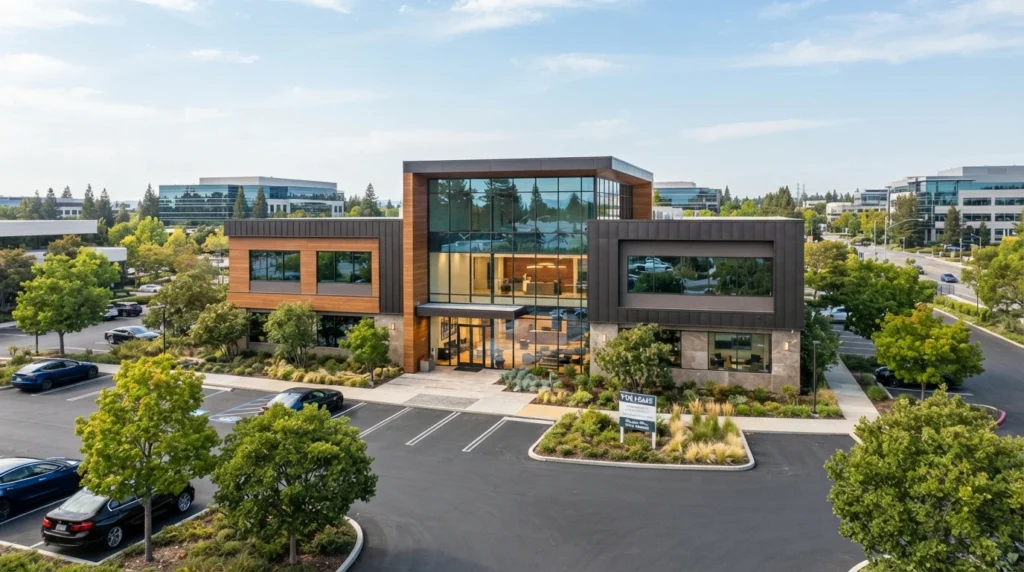
A tired building sits on the market for months. A fresh one down the street sells in weeks. Same location. Same size. The difference? Smart capital improvements. The upgrades you make (or skip) decide how fast your property sells, who wants to lease it, and how much you walk away with.
What Counts as a Capital Improvement?
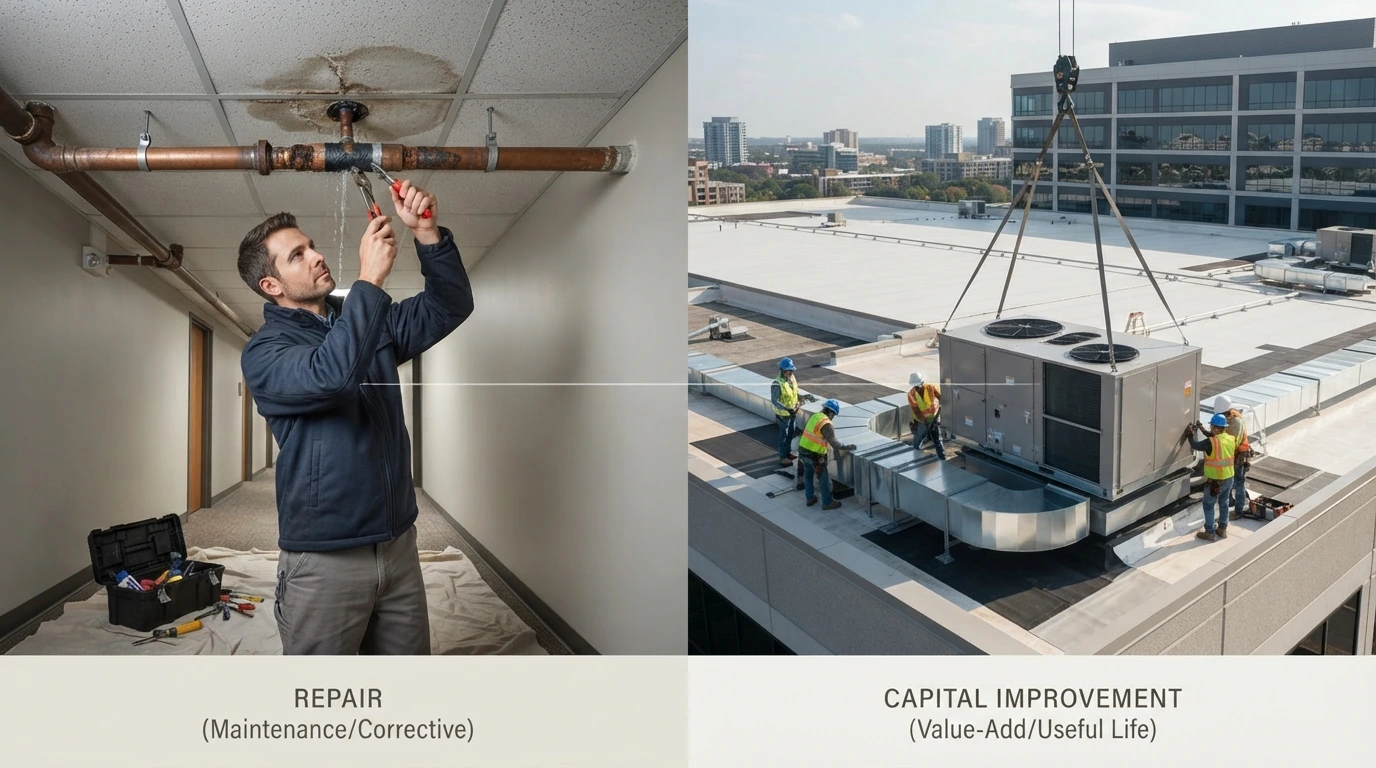
A capital improvement is a big, lasting upgrade that adds value to your building or makes it last longer. Think new roof, new HVAC, or a repaved parking lot. These are different from small repairs.
A repair just fixes what broke. Patching a leak is a repair. Putting on a whole new roof is a capital improvement. One keeps the lights on. The other raises the value of the asset.
Here is a simple way to see the difference:
| Feature | Repair | Capital Improvement |
|---|---|---|
| Goal | Fix what broke | Add value or extend life |
| Cost | Small, one-time | Large, planned |
| Example | Fix a leaky pipe | Replace all plumbing |
| Tax treatment | Written off now | Depreciated over years |
| Effect on value | Little to none | Raises property value |
Why does this line matter? Because the tax rules treat them in different ways. Repairs come off your taxes right away. Capital improvements get spread out over time through depreciation (a way to write off the cost of a big item slowly, year by year). If you want the full picture on write-offs, our guide on the tax benefits of owning commercial property breaks it down in plain terms.
What Marketability Means for a Commercial Property
In my professional experience, most owners think “marketability” just means price. It doesn’t. Marketability is how easy it is to sell or lease your building, how fast it happens, and how strong the offers are.
A property with high marketability gets more calls. It gets more showings. It gets better offers, and it gets them sooner.
A building with low marketability just sits. The days pile up. Buyers start to wonder what’s wrong with it. Every extra week on the market chips away at your final price.
Three things drive marketability the most:
- Condition — does the building look and work like it should?
- Income — does it make good money with low risk?
- Cost to fix — how much will the next owner need to spend?
Capital improvements touch all three. That’s why they matter so much.
How Capital Improvements Make a Building Easier to Sell or Lease
Buyers and tenants are simple at heart. They want a building that works, looks good, and won’t drain their wallet next year. Capital improvements give them exactly that.
Start with first impressions. A clean lot, a solid roof, and updated common areas tell a buyer the property was cared for. In deals I’ve worked, well-kept buildings draw roughly 3 times more showings than run-down ones in the same price range. More eyes means more offers.
Then there’s trust. When a tenant walks into a space with a new HVAC system and fresh lighting, they picture moving in fast. They don’t picture a repair list. That feeling closes leases.
Capital improvements also cut fear. The biggest deal-killer in commercial real estate is deferred maintenance (repairs that got put off for too long). When a buyer sees a stack of delayed fixes, they either walk away or slash their offer. From what I’ve seen, unaddressed deferred maintenance can knock 10% to 20% off a final sale price.
Fresh upgrades erase that fear. They tell the buyer, “The big stuff is done. You can relax.” A smart move here is to run a full commercial property inspection checklist before you list, so you fix problems before a buyer ever finds them.
Lower risk. Faster close. Better price. That’s the whole game.
The Upgrades That Boost Marketability the Most
I’ve handled cases exactly like this before, and one truth shows up again and again: not all upgrades are equal. Some barely move the needle. Others turn a slow listing into a bidding war. You want to spend where it counts.
The big building systems matter most. These are the bones of the property. When they’re new, buyers breathe easy.
Here’s how the top upgrades stack up for marketability:
| Improvement | Buyer Appeal | Effect on Speed of Sale |
|---|---|---|
| Roof replacement | Very high | Removes a top buyer worry |
| HVAC system upgrade | Very high | Speeds up leasing fast |
| LED lighting retrofit | High | Cuts bills, easy selling point |
| Parking lot repaving | High | Strong first impression |
| Common area refresh | Medium-high | Helps tenants say yes |
| ADA accessibility fixes | Medium | Avoids legal trouble |
Roof, HVAC, and the Big Systems
A new roof and a new HVAC system are the two upgrades buyers ask about first. Why? Because they cost the most to replace. A buyer who sees both are new will pay more and close faster.
These systems also protect everything else. A bad roof leads to water damage, mold, and ruined interiors. Fixing the roof isn’t just an upgrade. It’s insurance for the whole building.
Energy-Efficient Upgrades
LED lighting, better insulation, and modern HVAC controls all lower running costs. Lower costs mean higher net operating income (the money a building makes after you pay its bills). And higher income means a higher sale price.
Curb Appeal and Common Areas
Curb appeal is the look of your building from the street. Fresh paint, clean landscaping, and a smooth parking lot cost less than you’d think. But they shape the buyer’s mood before they even step inside.
How Improvements Change Property Value and NOI
Let me show you the money math, because this is where capital improvements really shine. Commercial property value is tied to income, not just to looks. The key number is NOI (net operating income) and the cap rate (a number that shows how much a building earns compared to its price).
Here’s the simple version: Value = NOI ÷ Cap Rate. So when you raise NOI, you raise value. When you lower expenses through smart upgrades, NOI climbs.
Watch what happens when energy upgrades cut yearly costs by just $20,000:
| Item | Before Upgrade | After Upgrade |
|---|---|---|
| Yearly income | $200,000 | $200,000 |
| Yearly expenses | $90,000 | $70,000 |
| NOI | $110,000 | $130,000 |
| Cap rate | 7% | 7% |
| Property value | $1,571,000 | $1,857,000 |
That $20,000 in yearly savings added about $286,000 in value. This is the part owners miss. A capital improvement that lowers expenses does double duty. It saves you money now, and it lifts your sale price later.
This is why I always tell owners to run a real cash flow analysis before they plan upgrades. The numbers tell you which fix actually pays. If you want a second set of eyes, our commercial real estate investing team in Louisville can help you run these numbers before you spend a dime.
Which Improvements Give the Best ROI?
In my professional experience, the upgrades that “wow” people are rarely the ones that pay back the most. Owners love shiny lobbies. But the boring stuff, like a new roof or better HVAC, often returns more.
ROI just means return on investment. It’s how much money an upgrade brings back compared to what it cost. Here’s a rough look at what different upgrades tend to return:
| Upgrade | Typical Cost Range | Payback Strength |
|---|---|---|
| LED lighting retrofit | Low | Very strong, fast payback |
| HVAC upgrade | High | Strong over time |
| Roof replacement | High | Strong, protects value |
| Restroom/common refresh | Medium | Good for leasing speed |
| Full lobby remodel | High | Weak to medium |
Notice the pattern? The cheapest fix on the list, LED lighting, often gives the fastest payback. Swapping old bulbs can cut lighting energy use by a large share, and the savings show up on the very next bill.
The lobby remodel? It looks great. But it rarely returns what you spend unless the building really needs it. Spend on function first. Spend on flash last.
If a buyer sees strong bones and low bills, they’ll forgive an older lobby. It rarely works the other way around.
Energy Upgrades and Why Buyers Care Now
Energy is a bigger deal today than it was ten years ago. Buyers ask about utility bills before they make an offer. Smart owners get ahead of it.
Here’s why it matters so much. According to the U.S. Energy Information Administration, the United States had about 5.9 million commercial buildings covering roughly 96.4 billion square feet in its most recent survey (EIA, Commercial Buildings Energy Consumption Survey). That’s a huge amount of space competing for the same buyers and tenants. Efficient buildings stand out from that crowd.
The savings are real, too. The U.S. Environmental Protection Agency reports that owners can cut a building’s energy use by up to 30 percent through its ENERGY STAR program (EPA ENERGY STAR). A 30% cut in energy costs flows straight into higher NOI, and you already saw what that does to value.
You don’t need a full overhaul to start. The EPA notes that simple walk-through reviews, which it calls Energy Treasure Hunts, have helped organizations cut facility energy use by 15 percent or more (EPA ENERGY STAR). Small moves add up fast.
Where does the energy go? Space heating alone eats about 32% of the energy used in commercial buildings, per EIA data. That single fact tells you where to aim first: heating, cooling, and the systems that run them.
A Local Look at the Louisville Market
I’ve seen this pattern many times in the Louisville market: buyers here are practical. They don’t chase flash. They want a building that works through hot, wet summers and cold winters. HVAC and roofing carry extra weight in this town for that reason.
Older buildings fill much of Louisville’s commercial stock. Many were built decades ago. That means a well-timed capital improvement can make your property stand out fast, because a lot of the competition still runs old systems.
Foot traffic and neighborhood matter too. A retail space near a growing corridor with a fresh facade will lease quicker than a dated one two blocks away. Local demand rewards owners who invest in condition.
Timing plays a role as well. Knowing the best time to buy or sell commercial property in Louisville helps you line up your improvements with the market’s busy season, so your upgraded building hits the market when buyers are active.
Mistakes Owners Make With Capital Improvements
I’ve watched owners lose real money on avoidable slips. The upgrades weren’t wrong. The plan was. Let me share the ones I see most.
The first mistake is over-improving for the area. You put a Class A lobby in a Class B neighborhood (Class is just a grade for building quality, A being top-tier). The market won’t pay for it. You spent big and got little back.
The second is ignoring the boring systems. Owners paint walls but skip the aging roof. Buyers see right through fresh paint. They ask about the roof, the HVAC, the wiring. Cover the bones first.
Here are the traps to dodge:
- Chasing looks over function — pretty won’t fix a broken furnace.
- Skipping the inspection — you can’t plan fixes you haven’t found.
- Over-improving for the neighborhood — match the upgrade to the market.
- Doing it all at once — spread out big spends to protect cash flow.
- Forgetting the tax angle — miss depreciation and you leave money behind.
The third mistake hurts at the closing table. Owners forget to document their work. When you upgrade, keep every receipt and warranty. A buyer who sees a clean record of new systems will trust the property more and haggle less. When it’s time to sell, that paper trail also strengthens your hand when you negotiate the price.
How to Plan Your Improvements Before Selling
I’ve handled cases where a little planning added six figures to the sale price. The owners who win don’t upgrade at random. They follow a simple order.
Start with a full check of the building. You can’t fix what you haven’t found. A proper inspection shows you the real condition of every major system.
Next, sort your list. Put the high-impact, income-boosting fixes at the top. Push the flashy, low-return items to the bottom or cut them.
Follow these steps:
- Inspect first — get a clear picture of every system’s age and health.
- Rank by return — fix what raises income and removes buyer fear.
- Budget in stages — protect your cash flow, don’t spend it all at once.
- Track the numbers — measure how each upgrade changes your NOI.
- Keep the records — save receipts, warranties, and permits for buyers.
Good management ties it all together. Well-run buildings show better and sell faster because the upkeep is already handled. If you’d rather not juggle it alone, our commercial property management team can help you keep the building sale-ready year-round.
The goal is simple. Walk into the sale with a building that works, looks cared for, and has the paperwork to prove it.
Conclusion
Capital improvements aren’t just about looking nice. They’re about making your building easier to sell, faster to lease, and worth more when the offer comes in. The right upgrades cut buyer fear, raise your NOI, and set you apart from tired competition.
Spend on the bones first. Roof, HVAC, and energy systems return the most. Save the flash for last. Match every upgrade to your market, track the numbers, and keep your records clean.
Do that, and your property won’t just sit there. It’ll move. Have you looked at your building lately with a buyer’s eyes? That’s where the smart money starts.
Frequently Asked Questions
What is the difference between a capital improvement and a repair?
A repair fixes something that broke, like a leaky pipe. A capital improvement is a big, lasting upgrade that adds value or extends the building’s life, like a new roof. Repairs come off your taxes now. Improvements are written off slowly through depreciation.
Which capital improvements add the most value to a commercial property?
The big building systems win. A new roof and a new HVAC system top the list because they cost the most to replace and worry buyers the most. Energy upgrades like LED lighting also pay back fast by lowering bills and lifting NOI.
Do capital improvements really help a building sell faster?
Yes. Fresh upgrades cut a buyer’s fear of surprise costs and remove the drag of deferred maintenance. A building with new systems and clean records draws more showings, stronger offers, and a quicker close than a neglected one nearby.
How do capital improvements affect property value?
Commercial value follows income. When an upgrade lowers expenses, your net operating income rises. Since value equals NOI divided by cap rate, even small yearly savings can add hundreds of thousands to your sale price.
Should I make improvements before selling or let the buyer do it?
It depends on the fix. High-return, fear-removing upgrades like roofing and HVAC are usually worth doing before you list, since buyers overprice those risks. Flashy, low-return remodels can often wait. Run the numbers first, or ask a local advisor to help you decide.
