

If you are thinking about buying a commercial property, one question matters more than anything else: will this property make you money? The answer lives inside something called a commercial property cash flow analysis. I know it sounds technical, but trust me — once you learn the steps, it feels like turning on a light in a dark room. You will suddenly see exactly where the money goes in and where it goes out. And that clarity can save you from making a very expensive mistake.
What Is Commercial Property Cash Flow Analysis?
The Simple Definition You Actually Need
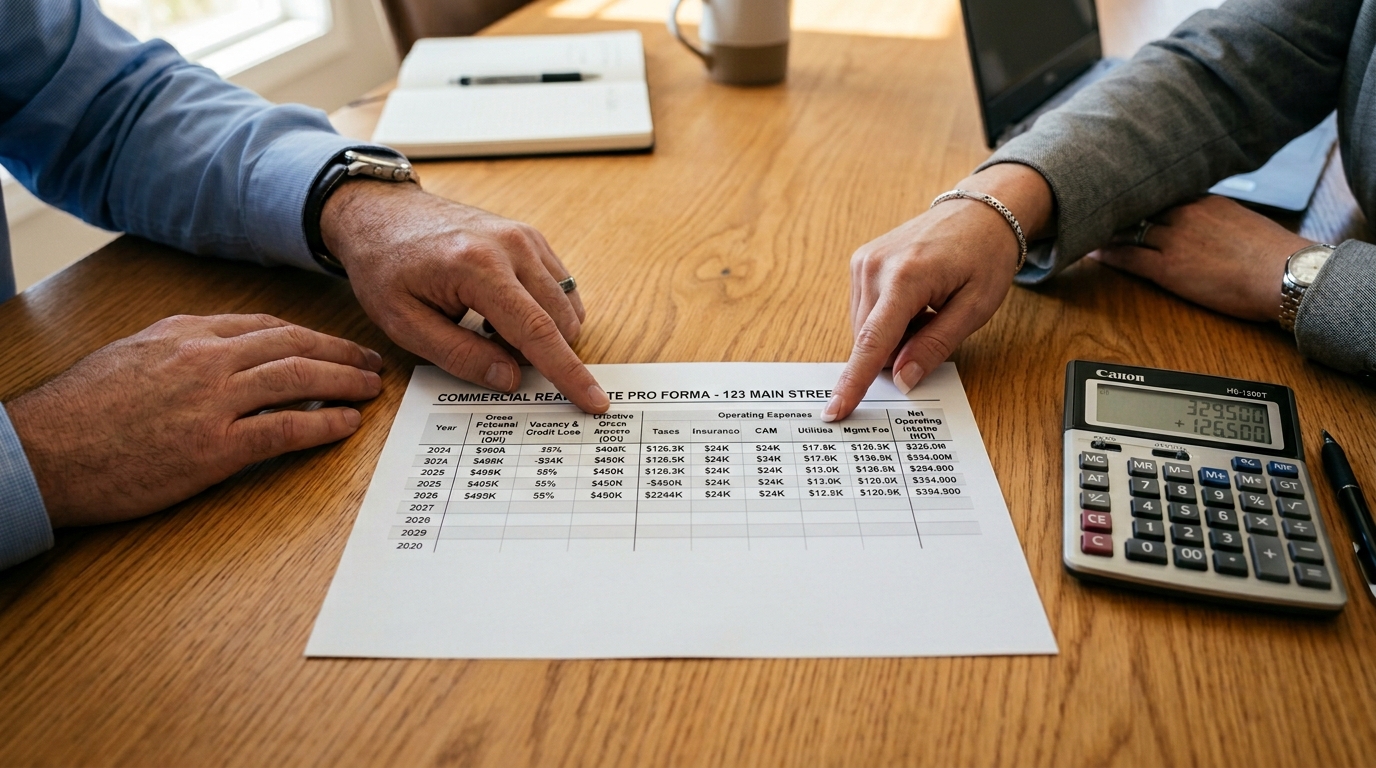
A commercial property cash flow analysis is a way to measure how much real money a property puts in your pocket after you pay all its bills. It is not just about rent. It counts every dollar coming in and every dollar going out — operating expenses, mortgage payments, vacancy losses, and more.
Think of it like a report card for a property. A positive number means the property earns more than it costs. A negative number means you are paying out of your own pocket every month to keep it running. Most smart investors will not touch a deal without running this analysis first.
Why Cash Flow Analysis Is the Heart of Commercial Real Estate Investing
I once talked to a new investor who bought a small retail strip without doing a proper cash flow projection. He thought the rent looked great on paper. But after property taxes, maintenance costs, insurance, and a few months of vacancy rate, he was losing money every single month. He did not know until it was too late.
That is exactly why this analysis matters so much. According to the National Association of REALTORS (NAR), rising operating expenses and shifting tenant demand are pushing property owners to rethink lease structures and protect their net operating income (NOI) in 2025. If you do not track your numbers, the market will catch you off guard.
Step-by-Step: How to Run a Commercial Property Cash Flow Analysis
Step 1 — Start With Gross Potential Income (GPI)
The first step is figuring out how much money the property could make if every single unit or space was rented at full market rent. This is called Gross Potential Income (GPI).
The formula is easy. You multiply the total rentable square footage by the rental rate per square foot per year. So if you have a 10,000 sq ft office building and the market rate is $20 per sq ft, your GPI would be $200,000 per year.
Step 2 — Adjust for Vacancy and Credit Loss to Get EGI
No property stays fully rented all year. Tenants move out. New tenants take time to find. This gap is your vacancy rate. You also have to count for credit losses — when tenants do not pay or pay late.
When you subtract the vacancy and credit losses from your GPI, you get Effective Gross Income (EGI). This is a more honest look at what the property will actually earn. For most commercial properties, a vacancy rate between 5% and 10% is common, though it varies a lot by property type and city.
Key Metrics Every Investor Must Know
Net Operating Income (NOI): The Most Important Number
Once you have your EGI, you subtract all the operating expenses. This includes property taxes, insurance, property management fees, repairs, utilities, and maintenance. What you are left with is the Net Operating Income (NOI).
NOI is the most talked-about number in commercial real estate for good reason. It tells you how much the property earns from operations — before you pay the bank. Lenders look at this number when deciding if they will give you a loan. Appraisers use it to figure out a property’s value. And investors use it to compare deals.
| Metric | What It Measures | Formula |
| GPI | Max possible income | Rent/sq ft × Total sq ft |
| EGI | Realistic income after vacancy | GPI − Vacancy & Credit Loss |
| NOI | Income after all operating costs | EGI − Operating Expenses |
| CFBT | Cash after debt payments | NOI − Debt Service |
| CFAT | Cash after taxes too | CFBT − Income Taxes |
Cap Rate: How to Quickly Judge a Property’s Value
The capitalization rate (cap rate) is a quick way to see how good a deal is. You divide the NOI by the property’s current market value. If a property has an NOI of $30,000 and is worth $500,000, the cap rate is 6%.
According to Benzinga (2024), average cap rates in the US typically range from 5% to 10%, depending on location, property type, and market conditions. A higher cap rate means a higher return — but also more risk. A lower cap rate usually means the property is in a stable, high-demand area.
Honestly, cap rate alone does not tell the full story. A property with a 9% cap rate in a declining area can be a worse investment than one with a 5.5% cap rate in a growing city. Always look at the bigger picture.
Cash-on-Cash Return vs. Cap Rate: What Is the Difference?
Understanding Cash-on-Cash Return
Cash-on-cash return is different from cap rate because it accounts for your actual loan. It measures how much cash you get back based on the real cash you put in — your down payment.
Here is a simple example. Say you put down $300,000 on a property and it generates $80,000 per year in cash flow after debt service. Your cash-on-cash return is about 26.7%. That is how much your actual invested dollars are working for you.
Which One Should You Use?
Use the cap rate to compare properties quickly and to see the market value. Use cash-on-cash return to understand what your money is actually doing for you after you take a loan. Most experienced investors look at both. They give you two different windows into the same deal.
How Discounted Cash Flow (DCF) Analysis Works in Commercial Real Estate
What Is DCF and Why Does It Matter?
A Discounted Cash Flow (DCF) analysis goes deeper. Instead of just looking at one year, it projects your cash flows over many years — usually 5 to 15 years — and then figures out what all those future dollars are worth today.
Why does that matter? Because $100,000 five years from now is not the same as $100,000 today. Money loses value over time. DCF accounts for this using a discount rate — your required rate of return. The result tells you the Net Present Value (NPV) of the deal, and whether it meets your investment goals.
IRR: The Number Serious Investors Track
Inside a DCF model, one metric stands out: the Internal Rate of Return (IRR). This is the discount rate that makes the NPV equal to zero. In plain words, it tells you the annualized return you will earn on all the cash you put into the deal over the full holding period.
I have seen many investors get excited about a property’s first-year cash flow, only to discover the long-term IRR does not justify the risk. That is why running a proper DCF before you buy can save you from a deal that looks good today but underperforms for years.
Common Factors That Hurt Your Cash Flow
Operating Expenses That Quietly Eat Your Profits
Many first-time investors underestimate how much operating a commercial building actually costs. Beyond the obvious ones like property taxes and insurance, you have things like HVAC repairs, parking lot maintenance, capital expenditures (CapEx), landscaping, and security.
One of the smartest habits you can build is tracking every expense category from day one. Small leaks add up fast. I know an investor in Dallas who saved over $18,000 a year just by switching service providers and renegotiating his cleaning contract. Every dollar saved goes straight to your cash flow.
Vacancy and Tenant Turnover: The Silent Cash Flow Killers
A vacant space is not just lost rent. It also means you are still paying property taxes, utilities, and insurance on empty space. And when a tenant leaves, you often have to spend money on tenant improvements and leasing commissions to get the next one in.
According to the National Association of REALTORS (2025), office vacancy rates remained at record highs heading into 2025, while the retail and multifamily sectors told a different story. Knowing your property type’s market trends helps you plan for realistic vacancy in your cash flow model.
How to Improve Your Commercial Property Cash Flow
Smart Strategies to Boost Rental Income
The most direct way to improve cash flow is to increase your gross operating income. You can do this by raising rents to market rate, adding ancillary income like parking fees or storage units, or filling vacant spaces faster by offering better lease terms.
Building in rent escalation clauses in your leases is one of the best moves. These are built-in rent increases — usually tied to CPI or a fixed percentage each year. Over a 5-year lease, this can add up to a meaningful bump in your NOI without doing anything extra.
Cut Costs Without Cutting Corners
On the expense side, look at energy costs first. LED lighting, smart thermostats, and energy-efficient HVAC systems can cut utility bills by a surprising amount. If interest rates have come down since you bought, refinancing can also lower your debt service and free up monthly cash flow.
The funny part is that many property owners never think to shop their service contracts. Lawn care, security, pest control — these can all be negotiated. You are a business owner when you own commercial real estate, and that means looking at every line on your expense sheet.
Conclusion
A solid commercial property cash flow analysis is not just a math exercise. It is how you protect yourself from buying the wrong property and how you find the ones that truly build wealth over time. Start with GPI, work your way down to NOI, and always look at both cap rate and cash-on-cash return before making any decision.
If you can, run a DCF analysis too — it gives you the full picture of what a deal is worth over the life of your investment. I would love to hear your thoughts in the comments — have you run a cash flow analysis on a property before? What surprised you most?
Frequently Asked Questions (FAQs)
What is a good cash flow for a commercial property?
There is no single right answer — it depends on your goals and the market. But most investors look for a cash-on-cash return of at least 6% to 10% after all expenses and debt service are paid. A positive monthly cash flow is the minimum bar. If the property is costing you money every month, it needs to have a very strong reason to hold it, like fast appreciation in a hot market.
What does NOI mean in commercial real estate?
NOI stands for Net Operating Income. It is the money a property earns after you subtract all operating expenses — like taxes, insurance, and maintenance — from the effective gross income. It does not include your mortgage payment. NOI is used to calculate cap rate, property value, and to qualify for commercial loans.
How is cap rate different from cash-on-cash return?
The cap rate ignores your loan. It just looks at NOI versus property value. Cash-on-cash return looks at your actual out-of-pocket cash and how much annual cash flow you get back from it. Cap rate is good for comparing properties quickly. Cash-on-cash return tells you what your invested dollars are actually earning after you factor in the mortgage.
How do I calculate the cash flow of a commercial property?
Start with Gross Potential Income (GPI). Subtract vacancy and credit losses to get Effective Gross Income (EGI). Then subtract all operating expenses to get NOI. Finally, subtract your debt service (mortgage payment) to get your Cash Flow Before Tax (CFBT). If that number is positive, the property is paying you. If it is negative, you are paying the property.
What vacancy rate should I use in my cash flow analysis?
A common starting point is 5% to 10% for most commercial property types. But this should be based on real data from your local market. Talk to local commercial real estate brokers, check market reports, and look at the property’s own history if it is an existing building. As noted by the National Association of REALTORS (2025), vacancy rates vary a lot by sector — office space faces very different conditions than multifamily or retail right now.
