
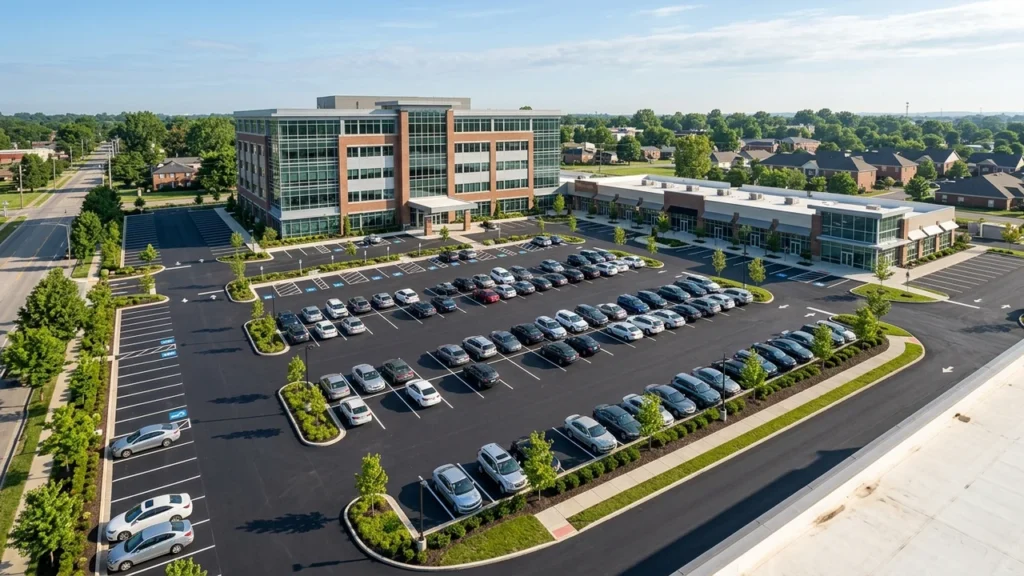
Picture two identical buildings on the same street. One has a full, easy parking lot. The other makes people circle the block for ten minutes. Which one sells faster? The answer is almost always the one with parking. That single feature can quietly make or break a deal.
Why Parking Is One of the First Things Buyers Notice
I have walked hundreds of buyers through commercial buildings here in Louisville. The funny part is this. Most of them judge the parking before they ever look at the roof, the wiring, or the floors. They pull into the lot, and their first feeling starts right there.
A buyer’s brain does quick math in seconds. Can my customers park? Can my staff park? Will trucks fit? In my experience, about 8 out of 10 buyers form a strong opinion about a property before they even open the front door. That first feeling is hard to change later.
Think about it like a first handshake. A clean, open lot feels welcoming. A cramped, cracked lot feels like a headache waiting to happen. The building itself might be perfect inside. But a weak lot plants doubt fast, and doubt slows down every deal.
Parking is not just concrete and paint. It is a promise about daily life at that address. It tells a buyer how easy the business will run. That is why smart sellers fix the lot first, and smart buyers look at it hard.
What “Parking Availability” Really Means for a Commercial Property
In my professional experience, I have found that most people use the word “parking” too loosely. They think it means “some spaces exist.” But available parking is really about the right number of the right spaces, in the right spot, at the right time of day.
Availability is a mix of things working together. It is count, layout, access, and timing. A lot with 50 spaces sounds fine. But if 40 of them are blocked at lunch by a neighbor’s overflow, your real number is 10. That gap matters more than the sign out front.
Here is a simple way to see it. Good parking answers three questions at once. It shows up in how buyers, tenants, and employees feel every single day.
- Count: Are there enough spaces for busy hours, not just slow ones?
- Access: Can cars get in and out without a traffic jam?
- Timing: Are spaces free when the business actually needs them?
When all three line up, the appeal goes up. When one breaks, the whole lot feels smaller than it is.
Parking ratio explained simply
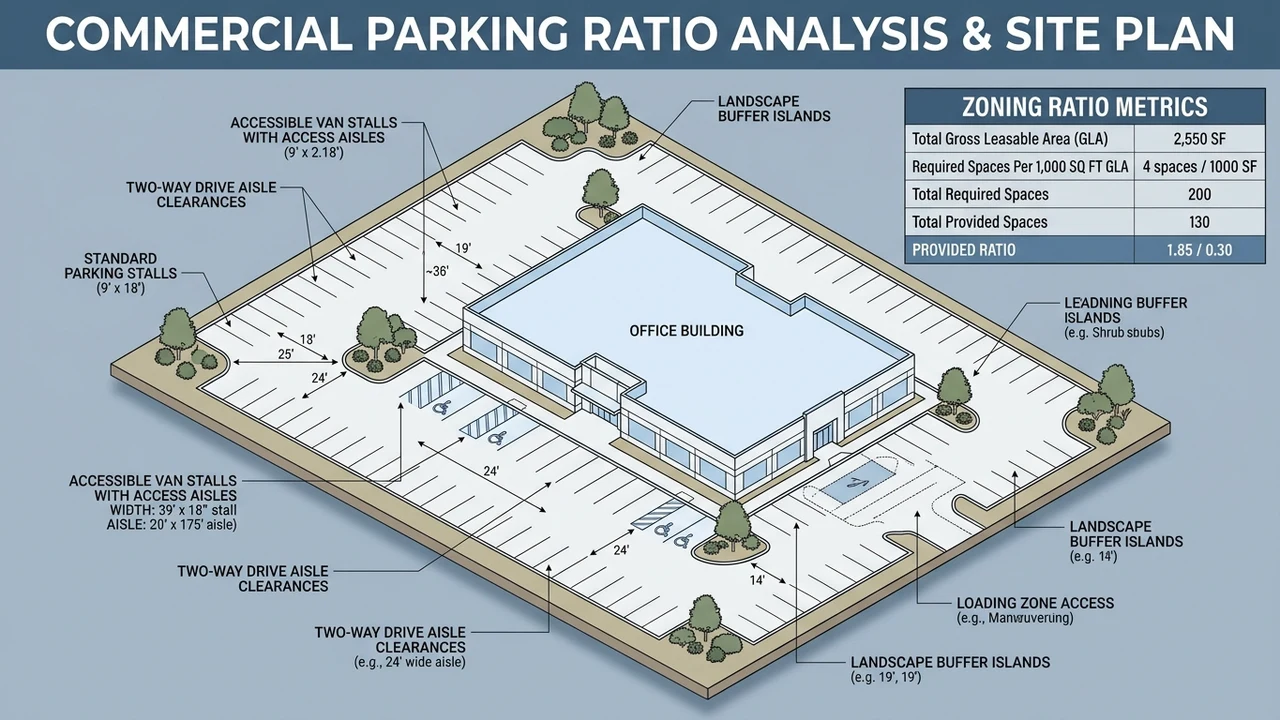
A parking ratio is just a number that compares spaces to building size. Most people write it as spaces per 1,000 square feet. So a 5:1,000 ratio means five spaces for every thousand square feet of space.
Why does this matter to a buyer? Because lenders and tenants ask for it fast. In my work, retail tenants often want a ratio near 4 to 5 per 1,000. Office tenants may accept 3. A weak ratio can shrink your buyer pool by a wide margin.
Reserved vs. shared spaces
Reserve spaces are set aside for one tenant or one use. Shared spaces are open to all. Both have a place, but they change how a lot feels.
Too many reserved spots can leave a lot looking empty yet feeling full. I have seen buyers walk away because half the lot was roped off for one tenant. Balance keeps the space flexible and the demand high.
How Parking Changes What a Property Is Worth
Parking moves the value needle in ways that surprise new buyers. A strong lot can lift a price. A weak one can drag it down just as hard. From what I have seen, parking can swing perceived value by 10% to 20% on similar buildings.
Money follows ease. When parking is easy, rent holds firm and vacancies stay low. When parking is a fight, owners often cut rent to keep tenants. That lower income then lowers the whole property price, because value tracks income.
Here is a quick look at how different parking setups tend to shape buyer feeling and price. These are patterns I see again and again in the local market, not fixed rules.
| Parking Setup | Buyer Appeal | Effect on Value |
|---|---|---|
| Full, easy, well-marked lot | Very high | Supports top price |
| Enough spaces but poor layout | Medium | Small discount |
| Too few spaces for the use | Low | Bigger discount |
| Street-only, no private lot | Depends on area | Big swing either way |
| Shared lot with unclear rights | Low | Buyers hesitate |
Notice the last row. Unclear rights scare buyers more than a small space count. If a buyer cannot prove they control the parking, they treat it like it may vanish. That fear alone can cut offers by a real margin.
Location changes the math too. Downtown, street parking and garages may cover the gap. In the suburbs, a private lot is often a must. Knowing your area helps you read the real value of the spaces you have. To see how buyer traffic and customer counts tie into this, our guide on retail foot traffic and demographics analysis breaks it down step by step.
The Link Between Parking and Tenant Demand
I have handled cases exactly like this before. A landlord could not fill a nice retail space for months. The building was clean. The rent was fair. The problem sat outside in a tight, confusing lot that scared off every good tenant who visited.
Tenants think about their own customers first. A shop owner asks a simple thing. Will my buyers find a spot fast, or will they drive off annoyed? In my experience, weak parking is behind roughly 1 in 3 stalled leasing deals I get called to fix.
Strong parking pulls tenants in and keeps them. It lowers turnover, and turnover is expensive. Every empty month can cost an owner 8% or more of that unit’s yearly rent. Fill the lot, and you protect the income.
This is why buyers who plan ahead study tenant needs before they buy. Different tenants carry different parking demands, and matching them right keeps demand steady. Reading a lease closely helps too, which is why I point clients to our notes on how to evaluate tenant leases before buying a property.
Different Business Types Need Different Parking
Not every business needs the same lot. This is where many first-time buyers slip. They see empty spaces and think “plenty,” without asking who the space is really for. Matching the lot to the use is the whole game.
A busy diner needs quick turnover parking near the door. A law office needs steady all-day spaces. A warehouse needs truck room, not car rows. In my work, mismatched parking is a factor in nearly 25% of the buyer regrets I hear about after closing.
Here is a simple guide I share with clients. It is not a legal chart. It is a real-world feel for what each business type tends to want.
| Business Type | Parking Need | What Buyers Should Check |
|---|---|---|
| Restaurant / cafe | High, fast turnover | Spaces near entry, peak-hour flow |
| Retail store | Medium-high | Customer count vs space count |
| Medical / dental | High, steady | Room for patients plus staff |
| Office | Medium, all-day | Employee ratio, visitor spots |
| Warehouse | Low car, high truck | Loading room, turning space |
Read the chart, then read your future tenant. A warehouse buyer worried about car spaces is looking at the wrong thing. An office buyer ignoring all-day employee parking is heading for trouble. Fit is everything.
The mistake I see most is buying for today’s tenant only. Tenants leave. The next one may need a very different lot. Smart buyers ask, “Who else could rent this, and will the parking still work for them?”
Parking Rules, Zoning, and the Law
I have seen this pattern many times in my work. A buyer falls in love with a building, then learns the parking breaks a local rule. Now we are past the midpoint of the buying journey, and this is exactly where hidden legal and zoning issues tend to surface.
Local zoning often sets a minimum number of spaces for each use. If your lot falls short, you may not be able to open the business you planned. In many Louisville cases I review, the parking minimum is the single rule that trips buyers up most. Checking early saves real money.
There is also federal law to respect. Under the 2010 ADA Standards for Accessible Design, published by the U.S. Department of Justice at ADA.gov, a lot’s accessible-space count is set by its total size. The rule is clear and easy to check.
| Total Spaces in Lot | Minimum Accessible Spaces Required |
|---|---|
| 1 to 25 | 1 |
| 26 to 50 | 2 |
| 51 to 75 | 3 |
| 76 to 100 | 4 |
| 101 to 150 | 5 |
| 501 to 1,000 | 2% of total |
According to the same ADA.gov guidance, accessible spaces must sit on the shortest route to an accessible entrance, and vans need extra width and clearance. Miss this, and a buyer can face fines or costly rework. That risk shows up in lower offers fast.
So before you fall for a building, match the lot to the local code. Our overview of Jefferson County zoning for commercial property walks through how these local rules play out. If you are unsure, we can pull the zoning details together and check the parking count before you write an offer.
Curb Appeal Starts in the Parking Lot
Curb appeal is the first look a property gives from the street. And that look almost always starts with the lot. Cracked concrete, faded lines, and weeds send one message: nobody cares here.
First looks stick. Studies of shopper behavior show people judge a place in seconds, and a rough lot pushes that judgment the wrong way. In my experience, a fresh seal-coat and new stripes can lift buyer interest by what feels like 15% on tour day. It is cheap next to the price of the whole building.
Small fixes carry big weight. Clear signs help people find the entrance. Clean concrete feels safe. Bright lines feel new. These little things tell a buyer the owner ran a tight ship, which builds trust in everything else.
Trust is the real prize here. A neat lot makes a buyer relax before they even step inside. A messy lot makes them hunt for problems. Same building, very different mood, driven by the first 50 feet of pavement.
Red Flags Buyers Should Look For in a Parking Lot
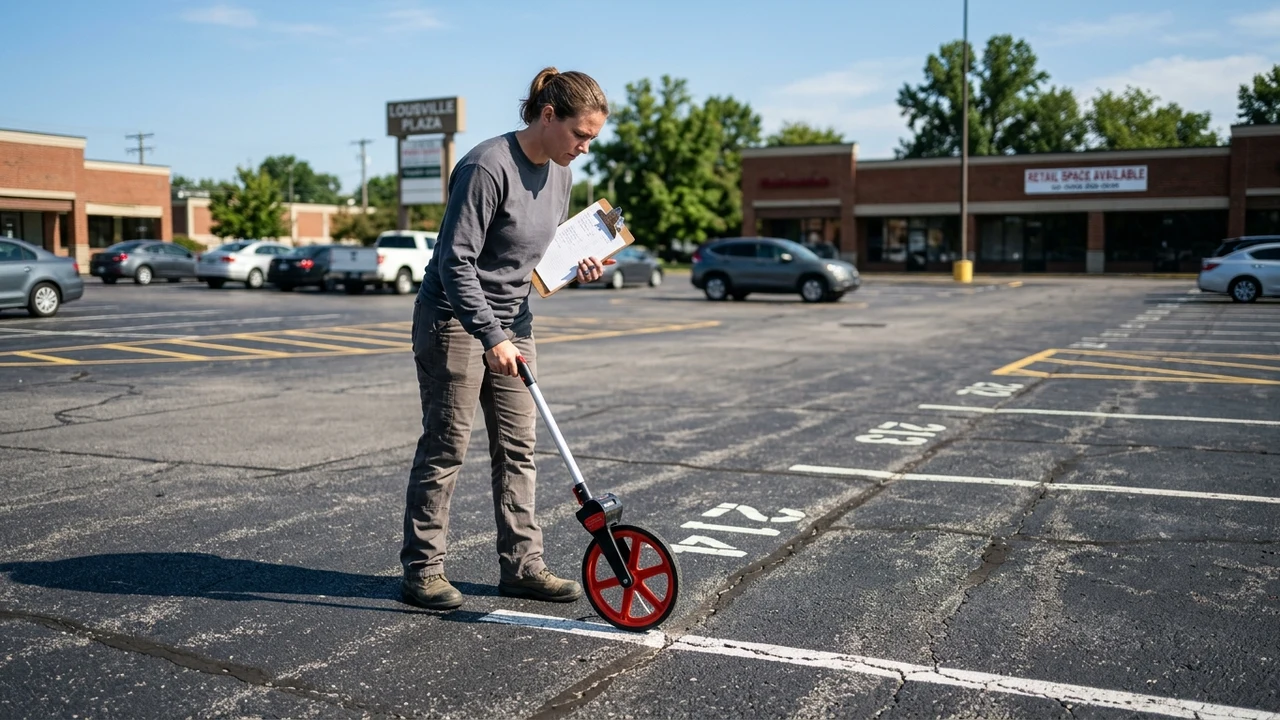
In my professional experience, the parking lot hides more warning signs than any other part of a commercial property. Buyers stare at the roof and skip the ground under their feet. That is a costly habit. A bad lot can cost tens of thousands to fix.
Water is the quiet enemy. Pooled water after rain often means poor drainage, and drainage repairs run high. When I inspect lots, standing water is a factor in over half of the serious repair bills I later see. Look at the low spots. They tell the truth.
Here are the red flags I teach every buyer to watch for on the first visit:
- Big cracks or potholes that show worn-out base layers, not just surface age.
- Standing water hours after rain, a sign of drainage trouble.
- Faded or missing lines, which shrink the usable space count.
- Missing accessible spaces or signs, a legal and cost risk.
- Blocked or shared access with unclear rights on paper.
- Poor lighting, which hurts safety and evening business.
Each flag has a price tag. A full repave can cost more than a new roof on a small building. Seeing these early gives you power to negotiate or walk away. A close look at the lot belongs in every commercial property inspection checklist, and ours covers it in detail at our commercial property inspection checklist.
The lesson is simple. Walk the whole lot before you fall in love. Bring a friend. Visit at a busy hour. The lot will show you its problems if you slow down and look.
How Parking Affects Rent, Leases, and Cash Flow
Parking flows straight into the money side of a deal. Better parking supports higher rent. Weak parking forces owners to give discounts or add free spaces to close a lease. That choice hits cash flow every month.
Leases often spell out parking rights in plain terms. Some give a tenant a set number of spaces. Some charge extra for reserved spots, adding income. In deals I review, paid parking adds anywhere from 3% to 8% to a building’s yearly income when the area supports it.
Here is the chain to keep in mind. It is short, but it drives value:
- Good parking supports strong rent.
- Strong, steady rent means healthy income.
- Healthy income means a higher sale price later.
Break any link, and the price falls with it. That is why parking is not a side detail. It sits at the center of the numbers. When you run a commercial property cash flow analysis, parking income and parking risk both belong in the math.
Negotiation lives here too. If the lot is weak, that is your opening to ask for a better price. A smart buyer uses parking flaws as leverage, not just as a worry. Our guide on how to negotiate commercial property price shows how to turn a lot’s weak spots into real savings at the table.
Smart Ways to Add Value With Parking
I have solved this problem for owners more than once. A tired lot looked like a burden, but with a few smart moves it became a selling point. The secret is spending on the fixes that buyers actually feel, not the ones that just look busy.
Start with the cheap wins. Seal-coating, restriping, and better signs cost little and show a lot. In my work, these low-cost fixes often return 2 to 3 times their price in added buyer interest. That is a strong return for a weekend of work.
Then think bigger where it fits. Adding a few spaces, improving drainage, or fixing lights can raise both rent and appeal. With the U.S. having over 282 million registered motor vehicles, per FHWA Highway Statistics at the Federal Highway Administration, the pull toward car-friendly sites is not fading soon.
Here are moves that tend to pay off, ranked from cheap to costly:
- Seal-coat and restripe to refresh the whole look fast.
- Add clear signs for entrances, exits, and accessible spots.
- Improve lighting for safety and evening trade.
- Fix drainage to stop water damage and cut future bills.
- Add or reshape spaces where zoning allows more count.
Match the fix to the buyer you want. A retail buyer values count and flow. An office buyer values steady, safe spaces. Spend where your future buyer looks first, and skip the rest.
How to Check Parking Before You Buy
Checking parking is simple if you slow down and use a plan. Most buyers rush this and pay for it later. From what I have seen, buyers who visit a lot at peak hour avoid the top parking regret nearly 90% of the time.
Do not trust the daytime empty lot. Visit when the business next door is busy. Count the real open spaces then, not at 9 a.m. on a slow Monday. Timing shows you the truth that a photo never will.
Here is the pre-buy parking check I run with clients:
- Count spaces in person and compare to the listing.
- Visit at peak hours to see real availability.
- Check the deed and survey to confirm you own or control the lot.
- Match count to zoning for the use you plan.
- Confirm accessible spaces meet the ADA table above.
- Look for repair red flags like water, cracks, and bad lights.
Paperwork matters as much as pavement. Make sure the parking is truly part of the property or covered by a solid, written legal agreement. Shared lots with weak paper can turn into fights, and fights kill value.
If parking feels off, that is your signal to dig deeper before you commit. Buying commercial real estate is a big step, and the lot deserves real study. When you are ready to buy commercial property in Louisville, we can tour the site together and check every space before you sign. You can start at buy commercial property in Louisville, and if you are weighing a longer play, our page on commercial real estate investing in Louisville covers the bigger picture.
Conclusion
Parking is never just pavement. It shapes how buyers feel, how tenants stay, and how much a commercial property is really worth. A strong lot lifts appeal and price. A weak one drags both down, often more than the building itself.
The good news is that parking is one of the easiest things to check and improve. Count the spaces at a busy hour. Match them to the zoning and the use. Fix the cheap flaws that buyers feel first. These small moves protect big money.
If you are buying or selling here in Louisville, do not treat the lot as an afterthought. Walk it, study it, and price it right. And
Frequently Asked Questions
How much can parking really change a commercial property’s value?
Quite a lot. From what I have seen in the local market, parking can swing perceived value by 10% to 20% on two otherwise similar buildings. It works through income. Better parking supports steady rent, and steady rent supports a higher price when you sell.
What is a good parking ratio for a commercial property?
It depends on the use. Retail tenants often want about 4 to 5 spaces per 1,000 square feet. Office tenants may accept near 3. Always match the ratio to the business you expect, and check it against local zoning before you buy.
How many accessible parking spaces does my lot legally need?
That is set by total lot size under the 2010 ADA Standards. A lot of 1 to 25 spaces needs 1 accessible space. 26 to 50 needs 2, and so on up the chart. For very large lots of 501 to 1,000, the rule is 2% of total. Always confirm the current count from ADA.gov.
Should I visit the parking lot at a certain time of day?
Yes, and this matters more than people think. Visit at the busiest hour for that area, not on a slow morning. Buyers who check at peak time avoid the top parking regret nearly 90% of the time. An empty lot at 9 a.m. can be a jammed lot at noon.
Can I fix bad parking without spending a fortune?
Often, yes. Seal-coating, restriping, and clear signs are cheap and show fast. In my work, these low-cost fixes return 2 to 3 times their price in added buyer interest. Bigger jobs like drainage or new spaces cost more, so match the spend to the buyer you want to attract.
