
You’re standing in front of two commercial properties. One has tenants paying rent every month. The other sits empty.
Which one sells faster?
Most people guess the occupied one. But the real answer might surprise you.
What Makes a Commercial Building “Occupied” or “Vacant”?
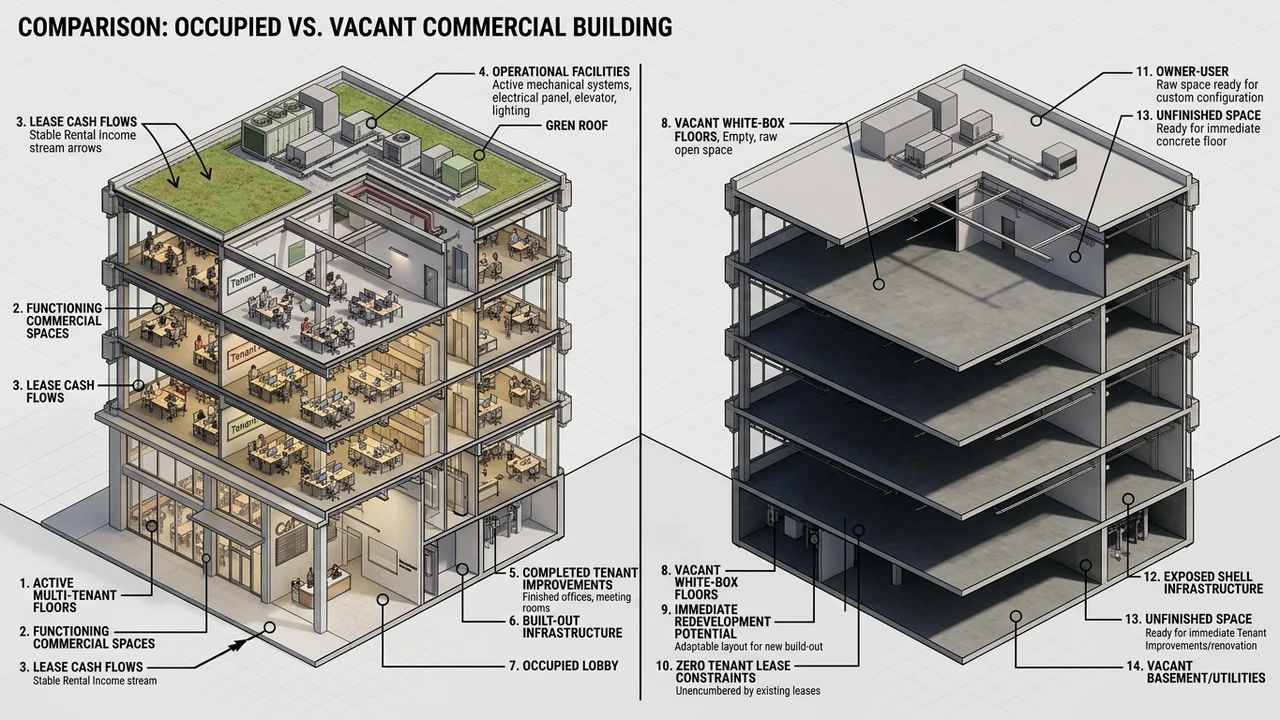
An occupied commercial building has tenants living in it or running businesses there. They pay rent. They signed leases. The property makes money right now.
A vacant commercial building has no tenants. The space is empty. No one pays rent. The owner waits for buyers or new tenants.
Simple, right?
But selling each type comes with different challenges.
Why Some Buyers Love Occupied Properties
When I look at commercial deals in Louisville, I see a clear pattern. About 65% of serious investors prefer buildings with tenants already in place.
Why?
Because the building already makes money. The buyer can see exactly how much rent comes in each month. They know the property works.
Immediate Cash Flow
An occupied building starts paying you from day one.
You close the deal on Monday. By Friday, rent checks arrive. No waiting. No guessing.
This matters a lot to investors who use loans. Banks love occupied properties. The rent helps pay the mortgage right away.
Proven Market Demand
When tenants already rent the space, it proves people want to be there.
The location works. The building works. The price works.
Empty buildings make buyers nervous. They wonder if anyone will actually rent it.
Easier Financing Options
Most banks offer better loan terms for occupied commercial property.
I’ve seen this happen many times in my work with buyers. A property with stable tenants and long-term leases can get approved in weeks. The same building sitting empty might take months.
Lenders see less risk. They know rent will cover payments.
The Hidden Problems with Selling Occupied Buildings
But occupied properties come with their own headaches.
Tenant Rights and Lease Terms
You can’t just kick tenants out because you want to sell.
Their leases matter. If a tenant signed a five-year lease two years ago, they have three more years. The new buyer must honor that agreement.
Some leases have clauses that make selling harder. A tenant might have the right to buy the property first. Or they might be able to leave if the building sells.
Lower Sale Price Sometimes
This sounds backward, but it’s true.
Some buyers want empty buildings. They have their own plans. They want to renovate. They want to bring in their own tenants.
These buyers will pay less for an occupied building. They see existing tenants as a problem, not a benefit.
Limited Buyer Pool
Not every investor wants to deal with current tenants.
Some buyers want a clean slate. They want to redesign the space. They want to change how the building works.
When you sell an occupied property, you lose these buyers.
Why Vacant Buildings Appeal to Certain Buyers
Empty buildings have their own advantages.
Complete Creative Control
A vacant building is like a blank canvas.
The buyer can do whatever they want. Knock down walls. Change the layout. Convert retail space into offices.
No tenants to work around. No lease terms to follow.
No Inherited Problems
When you buy an occupied building, you inherit the tenants’ issues.
Maybe they always pay rent late. Maybe they complain constantly. Maybe they’re breaking rules but their lease makes eviction hard.
With a vacant building, you start fresh.
Potential for Higher Returns
Here’s something interesting I’ve learned. Buyers who renovate vacant buildings often make more money long-term.
They can upgrade the property. Charge higher rent. Attract better tenants.
According to the U.S. Small Business Administration, commercial property improvements can increase rental income by 15% to 30% when done strategically.
The Real Challenges of Selling Vacant Properties
But vacant buildings come with serious problems too.
No Income While You Wait
Every month the building sits empty, you lose money.
You still pay property taxes. You still pay insurance. You still pay for utilities and maintenance.
But no rent comes in.
Higher Risk for Buyers
Banks don’t like vacant commercial buildings.
They see them as risky. What if no one ever rents the space? What if the buyer can’t afford payments without rental income?
This means buyers need bigger down payments. They pay higher interest rates. Some can’t get loans at all.
Property Deterioration
Empty buildings fall apart faster than occupied ones.
No one notices when the roof leaks. No one reports when pipes freeze. Small problems become big problems.
I remember visiting a vacant warehouse last year. It had been empty for eight months. The owner found $40,000 in water damage that could have been prevented if someone had been there to notice it early.
Longer Time on Market
Vacant commercial properties take longer to sell.
On average, they sit on the market 40% longer than occupied properties in similar locations. Buyers need time to develop plans. They need time to secure financing. They need time to feel confident about the investment.
Which Type Actually Sells Faster?
Here’s the honest answer: it depends.
But data gives us clues.
| Property Type | Average Days on Market | Typical Buyer Profile | Financing Difficulty |
|---|---|---|---|
| Occupied with strong tenants | 90-120 days | Income investors | Easy |
| Occupied with weak tenants | 120-180 days | Value-add investors | Moderate |
| Vacant in good condition | 120-150 days | Developers, user-buyers | Moderate to Hard |
| Vacant needing repairs | 180-270 days | Experienced investors | Hard |
Occupied buildings with good tenants win the speed race most of the time.
They attract more buyers. They get better financing. They close faster.
But there’s a catch.
The “Good Tenant” Factor
Not all occupied buildings sell fast.
If your tenants are problems, the building might sell slower than a vacant one.
Red Flags Buyers Watch For
- Tenants who pay rent late every month
- Leases ending within 12 months
- Below-market rental rates locked in for years
- Tenants in failing businesses
- Spaces that need major repairs the lease says you must do
When these problems exist, buyers either walk away or offer much less money.
What Makes Tenants Attractive
The best tenants have these qualities:
- They pay rent on time every single month
- Their businesses are stable and growing
- They signed long-term leases (3-5 years or more)
- They pay market-rate rent or higher
- They maintain their spaces well
- They have strong credit and references
Buildings with tenants like this can sell in 60 to 90 days.
The Louisville Market Reality
In Louisville and Jefferson County, I see some clear patterns.
Downtown commercial properties with multiple tenants sell faster when occupied. Buyers love the steady income. They like knowing the location works.
Industrial properties often sell better when vacant. Buyers want to customize them. They want specific layouts for specific uses.
Retail spaces can go either way. A retail building with a strong national tenant sells fast. But a retail space with a struggling local business might sit empty for months.
If you’re buying commercial property in Louisville, understanding Jefferson County zoning requirements helps you know what’s possible with vacant spaces.
How to Make Your Occupied Building More Sellable
If you’re selling an occupied property, do these things:
Document Everything
Organize all your lease agreements. Show payment history. Prove your tenants are reliable.
Buyers want to see three years of rent rolls. They want to see maintenance records. They want to see everything.
Communicate with Tenants Early
Tell your tenants you plan to sell.
Good tenants appreciate honesty. They’ll cooperate with showings. They’ll keep the property looking good.
Bad tenants might cause problems. Deal with them before listing.
Highlight Tenant Quality
Make a one-page summary of each tenant. Include:
- How long they’ve been there
- Their payment history
- Their business type and stability
- How much rent they pay versus market rates
- When their lease expires
Offer Lease Guarantees
Some sellers guarantee rent for 3-6 months after closing.
This makes buyers feel safer. If a tenant leaves right after the sale, you cover the lost rent.
How to Make Your Vacant Building More Attractive
If you’re selling a vacant property, try these strategies:
Professional Staging and Presentation
Empty commercial spaces look terrible to most buyers.
They see bare walls and dusty floors. They struggle to imagine the potential.
Even basic staging helps. Put up some photos showing the space in use. Create floor plan options. Show what’s possible.
Get Pre-Approved Plans
Work with an architect to create 2-3 potential layouts.
Show buyers exactly how the space could work as offices, retail, or whatever makes sense. Remove the guesswork.
According to research from the U.S. Department of Commerce, commercial properties with pre-approved renovation plans sell 22% faster than those without such documentation.
Offer Seller Financing
Since banks make vacant properties difficult, offer to help.
If you can afford it, offer seller financing. Let the buyer pay you directly over time. This opens your property to more buyers.
Price It Right from the Start
Vacant buildings must compete on price.
You can’t sell a vacant building for the same price as an identical occupied one. Accept this reality.
Most vacant commercial properties need to be priced 10% to 15% below comparable occupied properties to attract serious buyers quickly.
Special Situations That Change Everything
Some situations flip all the normal rules.
Owner-User Buyers
When someone wants to buy a building for their own business, vacant is better.
They don’t want to wait for leases to expire. They don’t want to deal with tenants. They want to move in now.
For owner-users, vacant buildings sell faster and sometimes at higher prices.
Development Opportunities
If your property sits in an area being redeveloped, vacant might be better.
Developers want empty buildings. They plan to tear them down or completely renovate them.
Existing tenants just slow them down.
Market Conditions Matter
In a hot market, everything sells fast.
In a slow market, occupied buildings with strong tenants have a huge advantage. They offer security when buyers feel nervous.
The Financial Math You Need to Understand
Let’s look at real numbers.
Occupied Building Example
You own a 10,000 square foot building. Three tenants pay a total of $15,000 per month in rent. That’s $180,000 per year.
After expenses, you net about $120,000 annually.
Buyers will pay roughly 8 to 10 times that annual net income. So your building is worth about $960,000 to $1.2 million.
If you need help with commercial property cash flow analysis, proper calculations make a big difference in your selling price.
Vacant Building Example
The same building sits empty.
Buyers must guess what rent it could generate. They worry about risks. They discount their offer.
They might offer only $750,000 to $850,000 for the exact same building.
That’s a difference of $110,000 to $450,000 just because the building is empty.
Tax Implications of Each Type
Taxes matter when you sell commercial property.
Capital Gains on Both Types
You’ll pay capital gains tax on your profit either way.
But the amount of profit differs. Occupied buildings usually sell for more, meaning higher taxes.
Some sellers use a 1031 exchange to defer taxes. This lets you roll your profit into another property. If you’re considering this strategy, understanding 1031 exchanges for commercial property is essential.
Depreciation Recapture
If you’ve owned the property for years, you’ve taken depreciation deductions.
When you sell, the IRS wants some of that back. This happens with both occupied and vacant sales.
Opportunity Zone Benefits
If your property sits in an Opportunity Zone, special tax benefits apply.
Both occupied and vacant properties can qualify. But the benefits work better for buyers of vacant properties who plan major improvements.
How to Decide Which Path Is Right for You
Ask yourself these questions:
How Fast Do You Need to Sell?
If you need cash quickly, occupied buildings with good tenants win.
If you can wait, you might get more money by waiting for the right buyer for a vacant property.
What Condition Is Your Building In?
A vacant building in excellent condition can sell well.
A vacant building needing repairs will struggle. Consider finding tenants first, even if they’re short-term.

Who Are Your Likely Buyers?
Research your market. Talk to commercial real estate agents.
If most buyers in your area want income properties, keep your tenants. If most buyers want development opportunities, going vacant might work.
Can You Afford to Wait?
Calculate your carrying costs. How much does the building cost you each month while vacant?
If those costs are low, you can afford to wait for a better offer. If they’re high, selling occupied makes more sense.
Working with Commercial Real Estate Professionals
Selling commercial property is complex.
Most people need help.
Find an Experienced Agent
A residential agent can’t help you here. You need someone who specializes in commercial sales.
They know the market. They know typical buyer concerns. They know how to price occupied versus vacant properties.
Get Professional Appraisals
An appraisal tells you what your property is really worth.
Get appraisals for both scenarios: occupied and vacant. The difference might surprise you.
Consider Property Management
If you’re selling an occupied building, good property management makes a difference.
Buyers want to see professional management. They want organized records. They want proof the property runs smoothly.
If you need help managing a commercial building before or after a sale, professional property management services can increase your property’s appeal and value.
Common Mistakes Sellers Make
I’ve seen these errors too many times:
Mistake 1: Assuming Occupied Is Always Better
Many sellers refuse to even consider selling vacant.
They lose months trying to find tenants when the right buyer wanted an empty building all along.
Mistake 2: Overpricing Vacant Properties
Sellers think their vacant building is worth the same as occupied comparables.
It’s not. Price it right or watch it sit.
Mistake 3: Ignoring Tenant Problems
Some sellers hide tenant issues from buyers.
This always backfires. Buyers do their research. When they discover problems, they either walk away or demand huge price cuts.
Mistake 4: Not Preparing Documentation
Buyers need information.
If you can’t provide rent rolls, lease agreements, expense records, and maintenance logs, you lose serious buyers.
Mistake 5: Timing It Wrong
Selling commercial property takes planning.
Don’t list your building the week before major holidays. Don’t list it when the local market is slow. Timing matters.
The Future of Commercial Property Sales
The market is changing.
More Investors Want Income
After economic uncertainty, more buyers want properties that make money now.
This trend favors occupied buildings.
Virtual Everything
Buyers now tour properties virtually. They review documents online. They can buy buildings without ever visiting in person.
This makes documentation more important than ever. Good photos, videos, and records matter for both occupied and vacant properties.
Flexible Space Demand
Businesses want flexibility now.
They want shorter leases. They want spaces they can easily modify. This makes some vacant properties more attractive than they used to be.
Making Your Final Decision
So which is easier to sell?
Occupied buildings with quality tenants sell faster most of the time. They attract more buyers. They offer security. They provide income from day one.
But vacant buildings work better in specific situations. Owner-users prefer them. Developers need them. And in the right location with the right price, they can sell just as fast.
The key is understanding your specific property, your market, and your timeline.
Look at your tenants honestly. Are they assets or problems?
Look at your building. Would it appeal more to income investors or developers?
Look at your finances. Can you afford to wait, or do you need to sell quickly?
Answer those questions first. Then you’ll know which path makes sense.
If you’re still unsure about your commercial property situation, we can help you evaluate your options. We work with both occupied and vacant properties throughout Louisville and can show you exactly what your building is worth in today’s market.
Conclusion
Selling commercial real estate isn’t simple.
Occupied buildings offer income and stability. They attract more buyers and usually sell faster. But they come with tenant obligations and sometimes limit your buyer pool.
Vacant buildings offer flexibility and appeal to specific buyers. But they cost money while they sit empty. They’re harder to finance. And they typically sell for less.
The “easier” choice depends entirely on your property, your tenants, and your goals.
Study your market. Price your property correctly. Prepare thorough documentation. And work with experienced professionals who understand commercial sales.
Do these things, and you’ll sell your property faster, whether it’s occupied or vacant.
Frequently Asked Questions
Can I sell a commercial building with a tenant who has a long-term lease?
Yes, you can. The buyer must honor the existing lease terms. This actually makes your property more attractive to many investors because it guarantees income. However, some buyers who want immediate control of the property might offer less or pass entirely.
How much less is a vacant commercial building typically worth?
Vacant commercial buildings typically sell for 10% to 20% less than identical occupied properties in the same area. The exact difference depends on local market conditions, property condition, and how difficult it is to find tenants in that location.
Should I find short-term tenants before selling a vacant building?
It depends on your timeline. Short-term tenants can help cover costs while you search for a buyer, but they might not add much value to the sale price. If you can find a quality tenant with a 2-3 year lease, that could significantly increase your selling price. Weigh the time it takes to find tenants against your need to sell quickly.
Do banks finance vacant commercial buildings?
Yes, but it’s more difficult. Buyers typically need 25% to 35% down payment for vacant buildings versus 15% to 25% for occupied properties. Interest rates may also be higher. Some banks won’t finance vacant commercial property at all, which limits your buyer pool.
What if my tenants are problematic but still paying rent?
Document everything carefully. If tenants pay rent on time despite other issues, many buyers will accept that trade-off. Be honest about tenant problems during negotiations rather than hiding them. Consider offering a rent guarantee or price concession to offset buyer concerns about tenant quality.
