
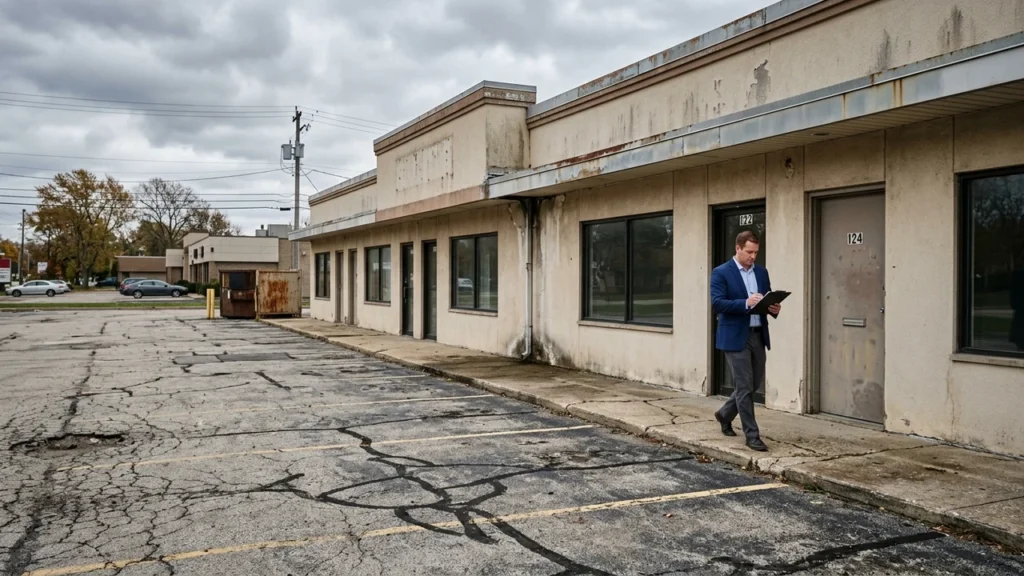
You set the price. You cleaned the lobby. Then the buyer’s inspector finds a leaking roof and a dead HVAC unit. The offer drops fast. That is what deferred maintenance can do to a sale before you even talk real numbers.
What Is Deferred Maintenance in Commercial Real Estate?
Deferred maintenance is a simple idea with a big price tag. It means “repairs you put off.” The roof you never patched. The old heater you kept running. The cracked parking lot you walked past for years.
Every building needs care. When owners skip that care to save cash today, the problems stack up. Small stuff turns into big stuff.
Here is the part that stings. In the buildings I have walked through, one skipped repair often grows into a bill that is 3 to 4 times bigger once it gets worse. A $500 seal becomes a $2,000 leak.
Buyers know this too. So when they see neglect, they don’t just see one repair. They see a red flag about the whole commercial property.
And that changes everything. A building with a clean history feels safe. A neglected one feels like a gamble. Buyers pay top dollar for safe, not for gambles.
Why Buyers Get Nervous About Deferred Maintenance
I’ve handled deals exactly like this before. The second a buyer spots one ignored repair, they start to wonder what else got ignored. One bad sign turns into ten new questions.
Think about how you shop. If a used car has bald tires and old, dirty oil, you assume the engine got skipped too. Buildings work the same way in a buyer’s mind.
In my work, close to 7 out of 10 buyers lower their offer the moment they see a list of skipped repairs. First they price in the fix. Then they price in the worry.
That worry has a real cost. We call it buyer interest cooling off. A cold buyer just walks away. A nervous buyer low-balls you. Neither one helps your sale.
Here in Louisville, I once watched a solid retail deal slow to a crawl over a rusty back staircase. The stairs were cheap to fix. But the buyer saw rust and pictured a building full of hidden problems.
Want to catch these issues before your buyer does? Our commercial property inspection checklist walks you through what sharp buyers look at first.
How Deferred Maintenance Drags Down Your Property Value
Property value is not just about square feet and a good corner. It is about how much work the next owner has to take on. More work means less money in your pocket.
The Quick Repair Math Buyers Run
Buyers do fast math in their heads. First they add up the repair costs. Then they subtract that from your asking price. Then they subtract a little more, just to be safe.
Most buyers I meet knock off the repair bill, then take another 10% to 15% off for risk and hassle. So a $50,000 repair can cost you $60,000 or more at the closing table.
Why the extra cut? Because nobody likes surprises. A buyer protects their own wallet with a bigger discount, every time.
There is also a trust cost. Once a buyer feels let down by one thing, they push harder on price for the rest. Small neglect creates big leverage for them.
What It Does to Cap Rate and NOI
Let me keep this simple. NOI (net operating income) is the money left after you pay the building’s bills. Cap rate is a number that shows the yearly return a buyer gets for the price they pay.
Skipped repairs raise the yearly bills. Higher bills shrink your NOI. A smaller NOI drags down your price. It is a chain, and deferred maintenance pulls the very first link.
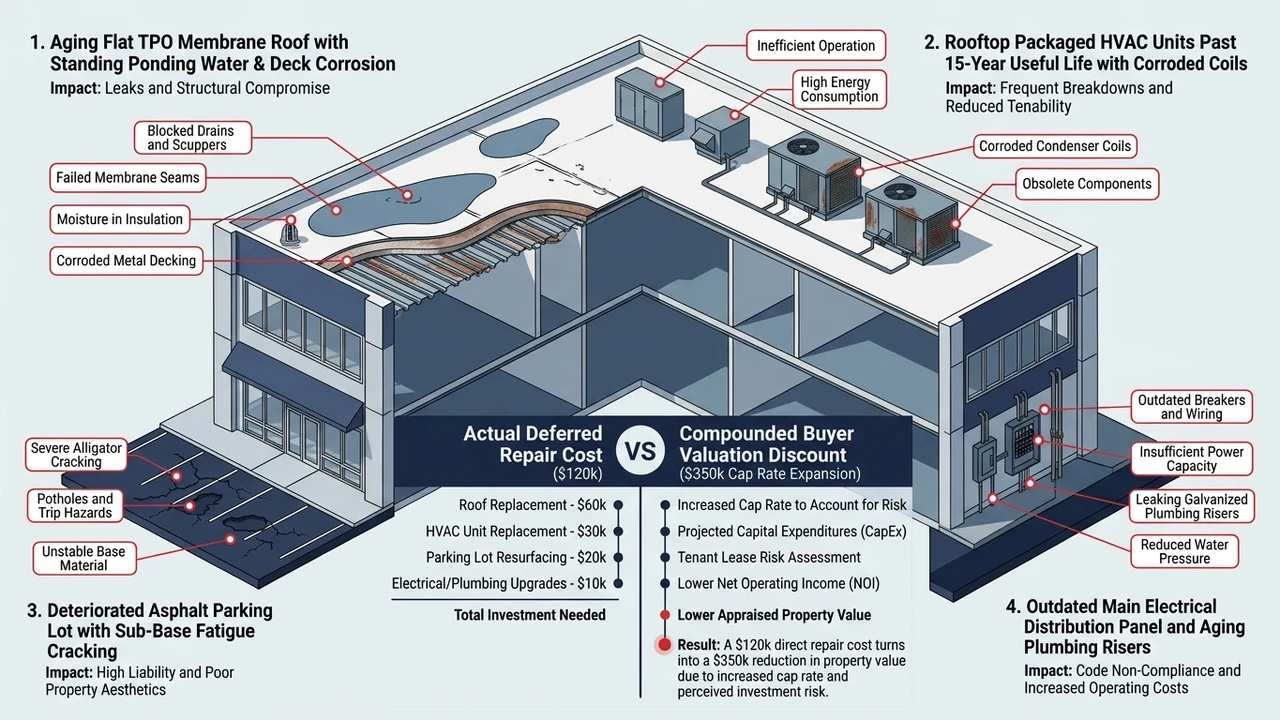
Here is a quick example. If neglect adds $10,000 a year in extra costs, and buyers price the deal at an 8% cap rate, that can lower your value by about $125,000. One number moves a lot of money.
Want to see how repairs eat into your returns? Our commercial property cash flow analysis guide breaks the math down in plain words.
The Building Systems Buyers Inspect First
In my professional experience, buyers do not check every part of a building the same way. They go straight for the big, costly systems. Those are the ones that can wreck a budget overnight.
Roof and Structure
The roof is buyer enemy number one. It is costly. It is hard to hide. And one leak can ruin everything sitting under it.
A tired roof makes buyers flinch. Most commercial roofs last about 15 to 20 years, so a roof near the end of its life pushes buyers to ask for tens of thousands off, or a brand-new roof before closing.
Cracks in walls or floors scare them even more. Structural issues feel risky and hard to price. Risk is the fastest way to cool buyer interest.
I always tell sellers to know their roof’s age before they list. If you don’t know, the buyer’s inspector will find out for you, and that puts them in charge.
HVAC, Plumbing, and Electrical
After the roof, buyers look at the guts of the building. That means the HVAC (the heating and cooling system), the plumbing, and the electrical panels.
These systems cost a lot to replace. A big rooftop HVAC unit also lasts about 15 to 20 years, and swapping one out can run into the thousands. Buyers check the age and the service dates right away.
Bad wiring is a special kind of scary. It is a safety problem and a money problem at the same time. When buyers spot it, their trust drops through the floor.
Old plumbing brings slow, hidden damage. A drip behind a wall can rot wood for months. Buyers picture that damage and pull back their offer.
How Problems Surface During Due Diligence
Once you accept an offer, the buyer starts due diligence. That is just the “check everything” stage before the deal closes. This is where hidden problems come out into the open.
There are about 5.9 million commercial buildings in the United States, and many are decades old, according to the U.S. Energy Information Administration (EIA). Older buildings hide more skipped repairs, and buyers dig hard to find them.
During this stage, the buyer hires their own inspector. They also ask you for your maintenance records. If your paperwork is thin or messy, that alone raises red flags fast.
In my deals, about 8 out of 10 serious buyers ask for at least three years of service history. When you can’t hand it over, they assume the worst. Missing records feel like hidden problems.
Smart buyers also protect themselves with inspection contingencies. These let them back out or renegotiate if the inspection goes bad. If you are unsure how they work, our guide to commercial real estate contract contingencies explains them in simple terms.
Some neglect goes past the building itself. Old leaks and dumping can pollute the ground below. That is why many buyers order a Phase 1 environmental assessment, which is a check for pollution on the land, before they will close.
The Ripple Effect on Financing, Appraisals, and Tenants
I’ve seen this pattern many times in my work. Deferred maintenance does not just bug the buyer. It follows the deal into the bank, the appraisal, and even your tenant list.
Start with the bank. Lenders do not like risky buildings. When the financing team sees big repairs coming, they may lend less or ask for a larger down payment. That shrinks the pool of buyers who can afford your price.
Next comes the appraisal. An appraiser sets the building’s worth for the loan. A worn-out building earns a lower number, and a low appraisal can freeze the whole deal in place.
Then there is wasted energy. The U.S. Department of Energy reports that, on average, 30% of the energy used in commercial buildings is wasted. Old, neglected HVAC is a big reason, and high power bills push buyers away.
The bills are not small, either. U.S. commercial buildings spend about $141 billion on energy each year, per the EIA. A leaky, poorly kept building sits on the ugly end of that number.
Efficient buildings do the opposite. A building that scores 75 on the EPA’s ENERGY STAR scale performs better than at least 75% of similar buildings. Buyers will pay more for that kind of proof.
Last, think about your tenants. Broken systems make renters unhappy. Unhappy renters leave, and empty space scares buyers more than almost anything else.
How to Handle Deferred Maintenance Before You Sell
Good news. You do not have to fix every last thing. You just have to be smart about what you repair and what you show.
Start with a plan. Here is the order I use with sellers:
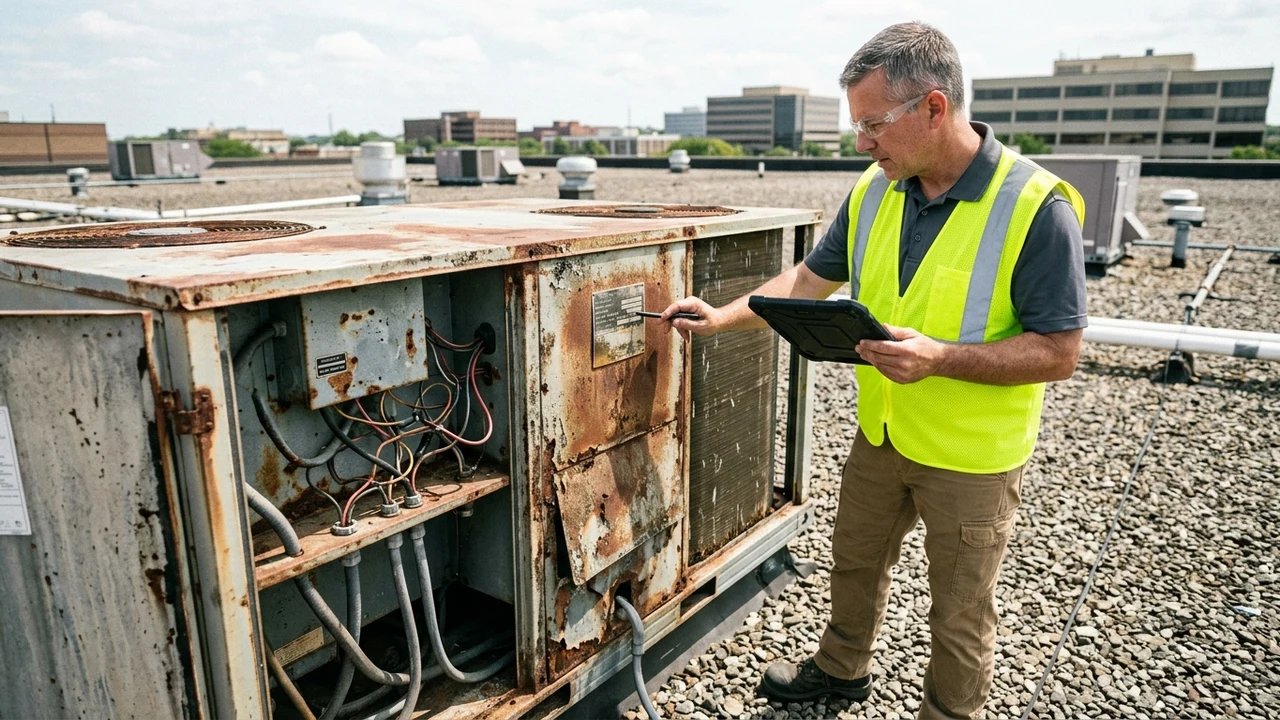
- Get a pro inspection first, so you know the real list, not a guess.
- Fix the big, scary items – roof, HVAC, and any safety problems.
- Gather clean maintenance records to build buyer trust.
- Get written quotes for the smaller stuff, so buyers see honest numbers.
Sellers who fix the top 2 or 3 big issues first often keep 90% or more of their asking price in my deals. A little money up front saves big money at the table.
Records matter as much as repairs. When you hand a buyer a neat folder of service history, their worry shrinks. Paper builds trust that words cannot.
Honesty helps too. If one problem is too costly to fix, price it in and say so. Buyers respect a straight seller, and a straight story keeps buyer interest warm.
The best fix, though, is not skipping repairs in the first place. A steady preventive maintenance plan keeps small problems small. Our property management for commercial buildings team keeps your building in shape all year, so you never face a scary list on sale day.
Sell As-Is or Repair First?
I’ve advised owners on this exact choice more times than I can count. There is no single right answer. It depends on your cash, your time, and how hot the local market is right now.
Selling as-is means you sell the building just as it stands. You skip the repairs, but you also accept a lower price. Fixing first costs money now, yet it can bring a stronger offer later.
In a hot market, as-is can still draw solid bids. In a slow one, buyers use every flaw to chip away at your price. Timing changes the math a lot.
Here is a simple way to compare the two paths:
| Choice | Best When | The Trade-Off |
|---|---|---|
| Repair First | You have cash and some time | Higher final price, but you spend and wait |
| Sell As-Is | You want a fast, clean exit | Quicker sale, but a lower price |
Either way, price is the real fight. When repairs are on the table, you want a plan and hard numbers. You can negotiate the commercial property price from real strength when you know your figures cold.
My honest take? Most guides say “always fix first.” From what I’ve seen, that is just not true. Sometimes a clean as-is sale beats months of repair headaches and stress.
The Bottom Line
Deferred maintenance is one of the biggest silent killers of buyer interest. It drops your property value, spooks lenders, drags down appraisals, and hands buyers a reason to walk or low-ball you.
The fix is not fancy. Know your building. Repair the big stuff. Keep clean records. Then price it with honesty.
Have you run into a surprise repair during a sale? I would love to hear how you handled it. Every building tells a story, and with the right plan, yours can still end well.
Frequently Asked Questions
What counts as deferred maintenance?
It is any repair or upkeep you put off. Think old roofs, tired HVAC, worn parking lots, or leaky pipes. If it needed care and did not get it, it counts as deferred maintenance.
Does deferred maintenance always lower the sale price?
Almost always, yes. Buyers subtract the repair costs, then take a little extra off for risk. The bigger the neglect, the bigger the cut to your property value.
Should I get an inspection before I list my property?
Yes. A pre-listing inspection shows you the real problems before a buyer finds them. It gives you time to fix issues or price them in, which keeps buyer interest high and keeps you in control.
Can I sell a commercial building “as-is”?
You can. Selling as-is means no repairs from you, but you should expect a lower price. It works best when you want a fast, simple exit and the buyer clearly knows what they are getting.
How do I keep deferred maintenance from piling up?
Set up a preventive maintenance plan and stick to it. Small, steady fixes cost far less than big emergency repairs. A good property manager can handle the whole schedule for you.
