
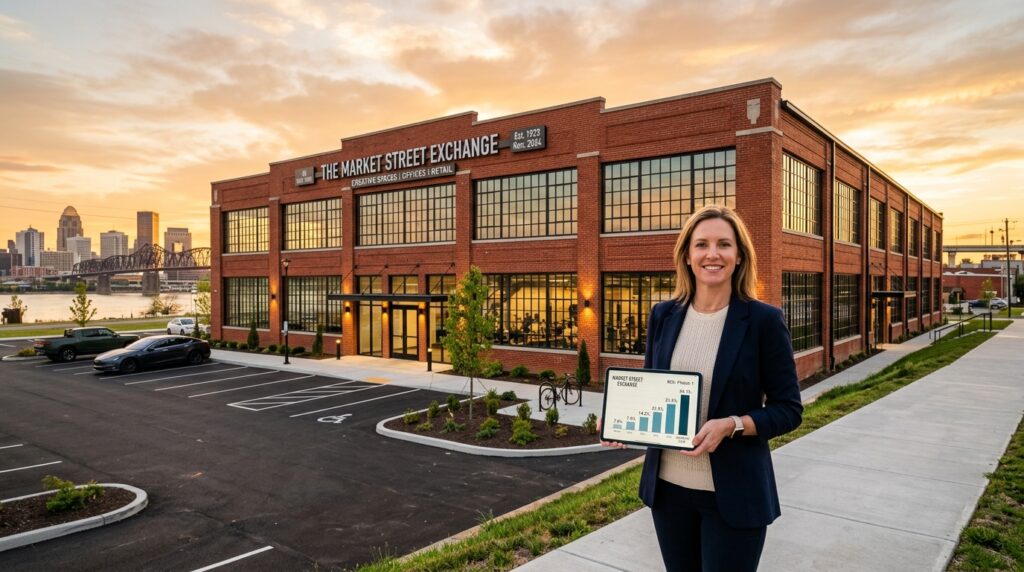
This story is about a real local investor who looked at a broken-down industrial warehouse in Louisville, Kentucky, and saw something others didn’t. He saw cash flow. He saw rental income. He saw a market ready to grow.
Most people think a big return on investment only comes from fancy deals in New York or Los Angeles. But this investor proved that smart people with a solid plan can win right in their own backyard. The Louisville real estate market is full of hidden gems if you know where to look.
In this blog, I’ll walk you through exactly how he did it. What he found. What he did. How the ROI math worked. And what you can learn from his story today.
Why Louisville Is the Right City for Warehouse Investment
Louisville is not just known for bourbon and the Kentucky Derby. It is quietly becoming one of the best cities in the U.S. for industrial real estate investment. And the numbers back this up.
The city sits right in the middle of the country. Nearly 30 million people live within 250 miles of downtown Louisville. That makes it a dream location for logistics, shipping and distribution centers. Companies like Amazon and UPS already know this. UPS Worldport, the world’s largest package handling facility, is right here in Louisville.
The Ohio River, a strong network of interstate highways and access to rail lines from CSX and Norfolk Southern make Louisville a top pick for any business that moves goods. When businesses want warehouse space in a city like this, investors win.
What Makes Industrial Real Estate in Louisville So Profitable
Honestly, I was surprised the first time I looked at industrial vacancy rates in Louisville. They are very low. And when vacancy is low, rents go up. That is simple supply and demand.
The e-commerce boom changed everything for warehouse investors. Online shopping means more packages. More packages means more warehouse space needed. Louisville sits at the center of this growth, and smart local investors have been cashing in on it for years.
Louisville also has strong job growth in the distribution industry. According to CBRE, over 42,000 people work in Louisville’s local distribution sector right now. That number is expected to grow by 18.4% over the next 10 years. More workers means more stable businesses. More stable businesses means more reliable tenants for your warehouse.
Quick Fact: CBRE forecasts that Louisville industrial asking rents will increase by 38% over five years, the second highest growth rate in the country. That is a big deal for warehouse investors.
The Warehouse He Found (And What Others Missed)
The warehouse was in the West Louisville area near the Broadway corridor. It was an old building from the early 1920s. The previous owner gave up on it. It sat empty for years. Most investors who walked through it saw a money pit. He saw a chance.
What he noticed was this: the building had solid bones. The walls were thick. The ceiling was high. The square footage was generous. And the location was actually great for logistics because it was close to major roads. The cosmetic damage looked scary but was fixable. The structure itself was strong.
He also noticed something the other guys missed. The neighborhood around it was changing. New businesses were moving in. The city had listed the area for urban revitalization. That meant rising property values were coming and smart investors want to buy before that happens, not after.
How He Evaluated the Property Before Buying
I love this part of his story because it shows how careful he was. He did not rush. He did not get excited and jump in. He ran the numbers quietly and clearly before writing a single check.
First, he did full due diligence. He got a property inspection. He ran a title search to check for any liens or encumbrances. He studied the zoning rules to make sure he could use the building the way he planned. No surprises after closing. That was his rule.
Then he ran a basic cost method ROI calculation: take the expected annual profit, divide it by the total investment cost, and multiply by 100. He also ran a cap rate analysis to compare the property against other industrial real estate deals in the same market. The numbers told him this deal was worth taking. So he moved forward.
The Redevelopment Strategy That Changed Everything
His plan was simple but smart. He was not going to knock everything down and start fresh. That costs too much. Instead, he used a strategy called adaptive reuse taking an old building and giving it a new purpose without rebuilding from zero.
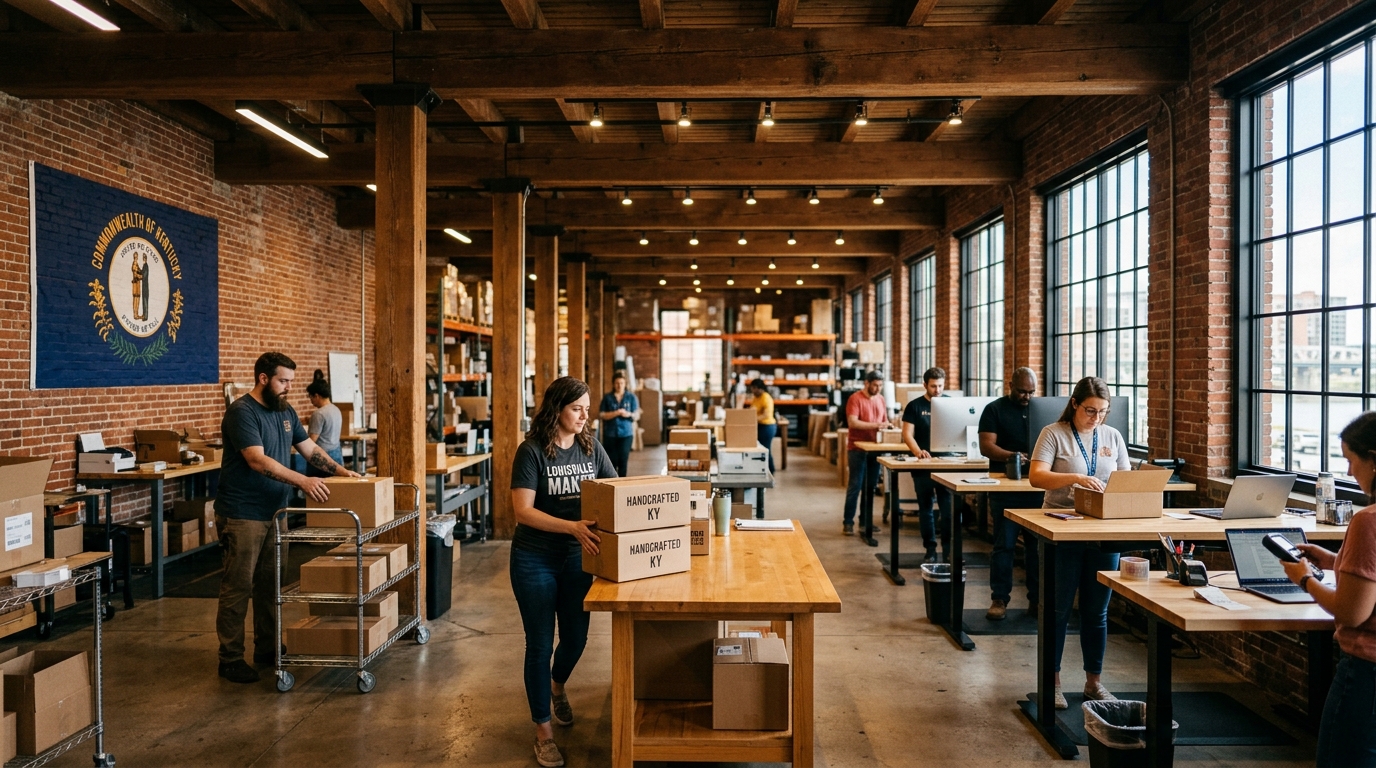
He converted the warehouse into a mix of light industrial units and small commercial spaces. Think small businesses, makers, and distribution companies that need flexible, affordable space. This type of space was in very high demand in Louisville because there was not much of it available at that time.
He also made one bold choice: he kept the original brick walls and high ceilings. It gave the space character. Tenants loved it. It felt different from a typical boring warehouse. That character helped him fill the space faster and charge slightly higher rental rates than plain vanilla industrial units nearby.
How He Kept Renovation Costs Low Without Cutting Corners
Here’s a lesson I’ve seen over and over in real estate: the deals that win are the ones where you control your renovation costs without sacrificing quality. He understood this perfectly.
He hired a local contractor who knew the Louisville building codes inside and out. No learning curve. No expensive mistakes from someone unfamiliar with local permits. The contractor’s team moved fast and the city inspector was happy because everything was done right.
He also avoided flashy upgrades that tenants would not pay extra for. New flooring in a warehouse? No. Better lighting and updated electrical systems? Yes. He focused only on things that would attract tenants or reduce operating expenses long term. This discipline kept his total investment cost lower than expected and pushed his final ROI higher.
How the Numbers Added Up to 18% ROI
Let me break this down in plain English. He bought the warehouse for $420,000. He spent about $130,000 on renovation. That puts his total investment at $550,000.
After the redevelopment, the property generated about $99,000 per year in net operating income after paying for maintenance costs, insurance, property tax and property management fees. He ran a lean operation.
| Item | Amount (USD) |
| Purchase Price | $420,000 |
| Renovation & Redevelopment Cost | $130,000 |
| Total Investment | $550,000 |
| Annual Gross Rental Income | $118,000 |
| Annual Operating Expenses | $19,000 |
| Net Operating Income (NOI) | $99,000 |
| ROI (NOI / Total Investment x 100) | ~18% |
That is how you get to 18% ROI. It is not luck. It is buying right, spending smart and running the property well. The cash-on-cash return was even higher because he used some borrowed money, which made his actual cash invested out of pocket lower than $550,000.
The Role of Tax Incentives and Kentucky Programs
This is where many investors leave money on the table. He did not. He applied for the Kentucky Business Investment (KBI) Program, which gives income tax credits and wage assessments to businesses in areas like his. Because his redevelopment created jobs in an underserved neighborhood, the program rewarded him.
He also looked into the property’s status as a potential opportunity zone. These zones give big tax benefits to investors who put money into low-income areas. Parts of West Louisville qualify. The tax savings helped him keep more of his profit and reinvest it into the next deal.
Lessons You Can Learn from This Deal
When I first studied deals like this one, the thing that struck me most was how boring the strategy actually is. There was no secret trick. No lucky break. Just careful research and clean execution.
The biggest lesson is this: buy in the right market at the right time. Louisville’s industrial real estate market was growing quietly while most investors focused on other cities. He paid attention to local data. He watched vacancy rates. He tracked city redevelopment plans. Information that was publicly available to anyone but most people ignored it.
Another lesson is the power of adaptive reuse. You do not always need to build something new. Sometimes the best investment is an old building in a great location that just needs some love. Old warehouses with character are hot right now. Tenants want them. The market rewards them.
How to Find a Similar Deal in Louisville Today
The good news is the Louisville market still has deals. You just have to know where to look. Start with neighborhoods going through urban renewal right now. Areas like Shelby Park, Smoketown and parts of the Russell neighborhood are seeing new investment from both the city and private developers.
Look for distressed properties and foreclosure listings in industrial zones. These often sell below market value because most buyers do not want to deal with the work. That is exactly where your opportunity lives. Work with a local commercial real estate agent who specializes in industrial properties in Louisville. They will know about deals before they hit the public market.
Also check areas near Riverport and Bluegrass Industrial Park. These are proven industrial zones with strong tenant demand from logistics and manufacturing companies. Buying near established parks means lower risk because the market is already proven.
Conclusion
The story of how a local investor achieved 18% ROI on a Louisville warehouse redevelopment is not just inspiring. It is a real blueprint. He found the right property. He ran the right numbers. He used tax incentives most people skip. And he kept his costs tight the whole way through.
Louisville is still one of the most underrated cities for industrial real estate investment in America. Low entry prices. Rising rental rates. Strong tenant demand. City support for redevelopment. These factors are all still in play right now.
If you are thinking about making a move in Louisville’s commercial real estate market, this story should give you real confidence. The numbers work. The city works. And if you do your homework the way this investor did, the returns can work too. I’d love to hear your thoughts. Have you looked at any warehouse or industrial deals in Louisville yourself?
Frequently Asked Questions
What is a good ROI for a warehouse redevelopment in Louisville?
A good ROI for a warehouse redevelopment in Louisville is generally between 8% and 15% for a solid deal. Hitting 18% like in this case is above average and shows a combination of smart buying, low renovation costs and strong tenant demand. The exact number depends on your total investment cost, the rental income you can get and how well you control operating expenses. Louisville’s industrial market typically gives better returns than other U.S. markets right now because of the city’s logistics advantages and low vacancy rates.
What tax incentives are available for warehouse investors in Louisville?
Louisville and Kentucky offer several powerful tax incentives for real estate investors. The Kentucky Business Investment (KBI) Program gives income tax credits and wage assessment benefits for projects that create jobs. If your property is in an opportunity zone, you can defer or reduce capital gains taxes. Some properties in historic districts may also qualify for federal historic tax credits. These programs can significantly reduce your tax bill and push your overall ROI higher. Always work with a local tax advisor who knows Kentucky real estate law before making investment decisions.
Is Louisville a good city for industrial real estate investment in 2025?
Yes, Louisville remains a strong market for industrial real estate in 2025. The city has a central location with access to nearly 30 million people within 250 miles. E-commerce growth continues to drive demand for warehouse and distribution center space. Industrial vacancy rates in Louisville are low and asking rents are expected to keep rising. The presence of UPS Worldport and major companies like Amazon means there is always demand for good industrial space. For investors who want stable cash flow and property appreciation, Louisville checks all the boxes.
What is adaptive reuse and why does it work for warehouse investments?
Adaptive reuse means taking an old building and converting it for a new purpose instead of tearing it down. For warehouse investments, this can mean turning an unused industrial building into flexible commercial units, creative office space or loft rentals. It works because the original structure is already there, which keeps renovation costs much lower than new construction. Old warehouses often have great bones, high ceilings, strong walls and big open spaces that tenants love. In markets like Louisville, adaptive reuse projects can command higher rents because they offer character and uniqueness that plain new buildings do not.
How can I calculate ROI on a warehouse redevelopment project?
The simplest way to calculate ROI on a warehouse redevelopment is the cost method: divide your annual net operating income (NOI) by your total investment cost and multiply by 100. For example, if you invested $550,000 total and earn $99,000 per year after all expenses, your ROI is about 18%. You should also look at cash-on-cash return if you used a loan, since it measures profit against only the cash you actually put in. Tracking your cap rate helps you compare your deal against other industrial properties in the same market. These three numbers together give you a clear picture of how well your investment is performing.
