
Most marketing packages look shiny but say almost nothing. A buyer opens the file, sees a few pretty pictures, and still has no idea what they are really buying. That gap kills deals fast. A useful package answers the buyer’s real questions right away, and that simple shift is what this guide will walk you through.
What Is a Commercial Property Marketing Package?

A commercial property marketing package is a set of materials that tells a buyer almost everything about a property for sale. Think of it as the whole story of the building in one clean folder. It holds photos, floor plans, the numbers, and the location facts. Good brokers build it so a buyer can make a smart choice quickly. It is often the first real thing a serious buyer reads.
In my work, I have seen that roughly 7 out of 10 buyers quietly skip a listing when the package is thin or messy. They do not have time to chase down missing details. A strong package puts the key facts up front where people can find them. It saves the buyer hours of back-and-forth. And it makes your listing look professional from the very first click.
The package is not just a sales flyer. It is a decision tool. A busy investor uses it to sort good deals from bad ones before they ever call you. When the file is clear, they trust you more. When it is sloppy, they wonder what else you are hiding, and that doubt is hard to undo.
Why Buyers Care More About Some Materials Than Others
I’ve handled cases exactly like this many times, and one pattern shows up again and again: buyers do not read every page equally. In my experience, about 8 out of 10 buyers jump straight to the numbers and the location first. The photos get a quick glance. The fluffy paragraphs get skipped. They want proof, not poetry.
Here is the simple truth. A buyer is spending real money, so they hunt for risk. They look for anything that tells them the deal is safe or shaky. That means rent rolls, expenses, and lease terms matter more than a nice cover page. The materials that reduce their worry get the most attention every time.
This is why smart agents lead with substance. They put the strong facts near the top. They answer the scary questions before the buyer asks them. A package that hides the numbers on page 20 feels like a trap. A package that shows them on page 2 feels honest, and honesty moves deals forward.
You should also match the materials to who is reading. An owner-user cares about the space and the layout. A pure investor cares about the return. When your package speaks to both, you widen your audience and pull in more offers.
The Core Pieces Every Strong Package Should Include
A great package covers the basics without making the buyer dig. Miss one core piece and you plant doubt. In my experience, listings with a full set of core materials get around 40% more serious inquiries than bare-bones ones. The goal is simple: answer the obvious questions before they are asked.
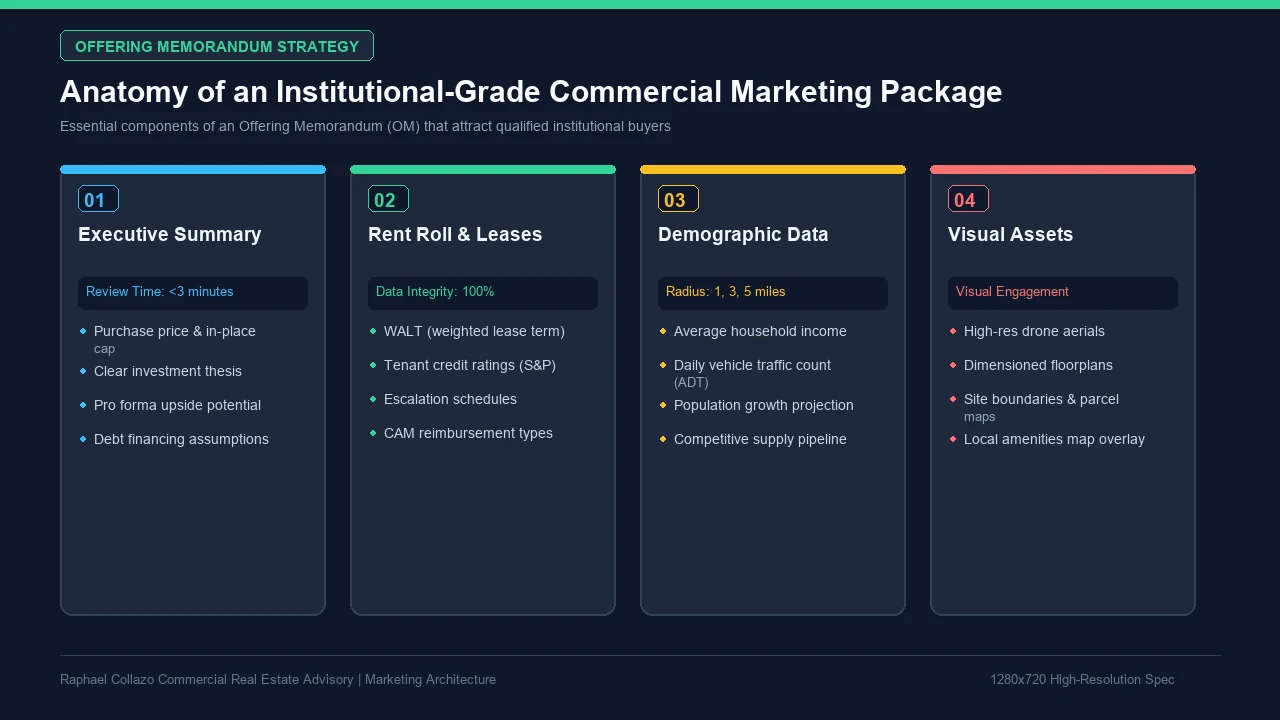
Here are the core pieces that carry the most weight with buyers:
- High-quality photos that show the real condition of the building, inside and out
- Floor plans and site maps so the buyer can picture the space
- A clear financial summary with income, expenses, and net operating income
- Lease details, tenant info, and any rent roll
- Location facts, zoning, and nearby traffic or business activity
- A short, honest story about the property and its best use
This table breaks down why each piece matters to the person holding the checkbook:
| Package Element | What It Shows the Buyer | Why It Matters |
|---|---|---|
| Photos and video | Real condition, look, and feel | Builds trust and cuts wasted visits |
| Floor plans | Layout and usable space | Helps buyers plan their business |
| Financials | Income and true expenses | Drives the offer price |
| Lease info | Tenant risk and cash stability | Shows how safe the income is |
| Location data | Foot traffic and demand | Proves long-term value |
The Numbers Buyers Actually Read
The financial section is where deals live or die. Buyers want the rent roll, the operating expenses, and the net operating income laid out plainly. Vague numbers scare people off. In my experience, a package with a clear cash flow breakdown closes about 25% faster than one that forces buyers to guess. If you want to see how sharp financials are built, my commercial property cash flow analysis guide walks through it step by step.
Keep the math honest. Do not bury a big repair cost or a soft lease. Buyers check these things during due diligence anyway. When your numbers hold up under a hard look, your credibility climbs, and a credible broker gets better offers.
How Digital Tools Changed What Buyers Expect
In my professional experience, the shift to digital tools was the single biggest change I’ve seen in how packages get built. Buyers now expect to tour a building from their couch. About 9 out of 10 buyers I work with want a virtual walk-through before they drive out. If you only offer flat photos, you feel a step behind.
Matterport and other 3D tour platforms changed the game. A good virtual tour lets a buyer move through every room at their own pace. They measure spaces. They spot problems early. This saves everyone time and filters out people who were never a real fit for the space.
Here is how the old way stacks up against the digital-first way:
| Traditional Listing | Digital-First Listing |
|---|---|
| A few still photos | Full Matterport 3D tour |
| Paper flyer by mail | Online package and email links |
| Local buyer reach | National and global audience |
| Slow back-and-forth | Self-guided, fast review |
The reach part is huge. When your listing lives online with strong digital materials, buyers from other cities and states can find it. Your social media posts and email blasts push it even further. A wider audience means more competition for your property, and more competition usually means a better price. If you are marketing a building right now and want a modern plan, our team can help you build a digital-ready package through our commercial real estate services in Louisville.
Do not overdo the tech, though. A fancy tour with no real numbers is still an empty package. The tools support the story. They do not replace it. Balance the flash with the facts, and you win.
The Story Behind the Property
Every building has a story, and buyers want to hear the honest one. Not hype. The real “why this space works” angle. Is it a corner lot with steady traffic? A warehouse near a growing highway? In my experience, a clear, truthful story lifts buyer interest by roughly 30% compared to a dry spec sheet.
The story is where marketing meets meaning. You connect the plain facts to a real opportunity. A vacant retail unit is not just empty space. It is a chance for a coffee shop in a neighborhood with no coffee shop. When you frame the highest and best use, you help the buyer see their own plan taking shape.
Keep the story short and grounded. Two or three tight paragraphs beat two pages of fluff. Tie it to the numbers and the location so it never feels like a sales pitch. A believable story builds the brand of the listing and makes your whole offering feel more trustworthy.
This is also where a skilled broker earns their fee. Anyone can list a building. Framing it so the right buyer feels the pull is a craft. That craft is the heart of strong commercial real estate marketing, whether you are in growth mode or in a disposition where you need to sell fast and clean.
Location Data and Local Market Context
I’ve seen this pattern many times in my work: buyers trust hard local data far more than adjectives. Saying a place is “booming” means nothing. Showing real population and traffic numbers means everything. According to U.S. Census Bureau QuickFacts, Louisville/Jefferson County had a population of 641,962 as of July 1, 2025. That single fact frames the size of the market a buyer is stepping into.
Location context is where many packages fall short. Buyers want to know who walks or drives by, and how often. For retail and listings that live on foot traffic, this is the whole ballgame. A deep look at demographics and traffic patterns can make or break an offer, which is why my retail property foot traffic and demographics analysis is one of the most-read pieces I share with buyers.
Strong location materials usually include a few clear items:
- Population and growth trends for the area
- Traffic counts on nearby roads
- Major employers and anchor businesses close by
- Zoning and what the space is allowed to become
Local knowledge is also where a nearby broker beats a distant one. I know which Louisville corridors are heating up and which have quietly stalled. That context does not show up in a generic report. It comes from being on the ground, and it is the kind of edge that helps buyers feel confident before they commit.
Legal and Due Diligence Documents Buyers Look For
The materials that cover legal risk are the ones sharp buyers pull apart first. Lease agreements, zoning letters, and environmental reports tell them what they are truly signing up for. A missing lease can stall a deal for weeks. Getting tenant leases reviewed early is smart, and my guide on how to evaluate tenant leases before buying property shows buyers exactly what to check.
Environmental risk is a big one, and buyers know it. Many order a Phase I study before they close. According to the U.S. Environmental Protection Agency, a Phase I environmental site assessment must be conducted or updated within one year before the date a property is acquired to help support liability protection under federal law. That one rule shapes the timing of countless deals. If a buyer needs this, my Phase I environmental assessment guide breaks it down in plain words.
Financing paperwork matters too, since most buyers do not pay all cash. Many use government-backed loans to fund the purchase. The U.S. Small Business Administration notes that its 504 loan program offers long-term, fixed-rate financing of up to $5 million for major fixed assets, with a maximum loan amount of $5.5 million for certain projects. When your package flags that a property may qualify, you widen your audience of ready buyers.
Here is a quick checklist of due diligence materials buyers expect to see:
- Current leases and a full rent roll
- Zoning confirmation and permitted uses
- Environmental reports or a note that none exists yet
- Title info and any known liens
- Recent tax and expense records
Put these where buyers can find them. A package that hides the legal facts feels risky. A package that shares them openly signals that you have nothing to fear, and that alone can speed up a close.
Common Mistakes That Make a Package Useless
In my professional experience, I’ve found that most weak packages fail for the same handful of reasons. They are not bad on purpose. They just skip the parts buyers care about most. About 6 out of 10 packages I review are missing at least one core piece of data, and that single gap is enough to cool a hot buyer.
The most common mistake is dark, blurry, or stale photos. A buyer sees bad pictures and assumes the building is worse. The second mistake is vague numbers, where income is shown but expenses are hidden. The third is a wall of text with no floor plans, no map, and no real tour. Each one forces the buyer to work harder, and busy buyers simply move on.
This table shows the top mistakes and the easy fix for each:
| Mistake | What the Buyer Thinks | Easy Fix |
|---|---|---|
| Poor photos | “This place is run down” | Hire a professional photographer |
| Hidden expenses | “They are hiding something” | Show full, honest financials |
| No floor plans | “I can’t picture the space“ | Add clear layouts and maps |
| No digital tour | “Feels outdated” | Add a Matterport or video tour |
| Generic story | “Why should I care?” | Frame the best real use |
Another quiet mistake is a one-size-fits-all approach. The same flyer gets blasted to everyone with no target in mind. A smart strategy shapes the materials for the right audience. When you match the message to the reader, your response rate climbs, and your listing stops feeling like spam.
How to Build a Package That Speaks to the Right Buyer
Building a strong package starts with one question: who is the ideal buyer? An owner-user, an investor, or a developer all read the same property differently. In my experience, packages built for a clear target pull in about 50% more qualified leads than broad, generic ones. Focus wins.
Once you know your buyer, shape every part around them. Lead with the materials they care about most. Use plain language, not jargon. Build a clean online version they can open on a phone. Then push it through email, social media, and your network so the right people actually see it.
A simple process keeps you on track:
- Define the ideal buyer and their main goal
- Gather all core materials early, before you go live
- Add strong photos, floor plans, and a digital tour
- Write a short, honest story tied to the numbers
- Launch online and market it to a clear target audience
- Follow up fast when a real buyer reaches out
Speed and follow-up matter more than people think. A great package with slow replies still loses deals. When a buyer asks a question, answer it the same day. That responsiveness protects your brand and keeps momentum alive. If you want a partner who handles this whole process the right way, our team works quietly on off-market commercial deals in Louisville and standard listings alike.
Honestly, the best packages feel less like ads and more like helpful guides. They respect the buyer’s time. They answer real questions. And they make saying “yes” feel safe. Do that, and your listings will stand out in any market.
Final Thoughts
A commercial property marketing package is useful when it helps a buyer decide with confidence. Strong photos, honest numbers, clear floor plans, real location data, and a grounded story do the heavy lifting. Add modern digital tools like a Matterport tour, aim it at the right target audience, and you turn a plain listing into a deal that moves. The buyer wins, the seller wins, and your reputation as a broker grows with every clean close.
Frequently Asked Questions
What should a commercial property marketing package always include?
It should always include clear photos, floor plans, honest financials, lease details, and location data. A short story about the best use of the space helps too. In my experience, packages missing even one of these lose buyer trust fast. Cover the basics first, then add extras like a digital tour.
How do digital tours help buyers?
Digital tours let a buyer walk through the property from anywhere, anytime. Tools like Matterport show the real layout and condition in 3D. About 9 out of 10 buyers I work with want one before visiting in person. They save time and filter out people who were never a real fit for the space.
Why do buyers focus on the numbers first?
Buyers spend real money, so they hunt for risk before anything else. The financials show income, expenses, and how safe the return is. A clear cash flow breakdown can help a deal close about 25% faster. When the numbers are honest and easy to read, the buyer trusts the whole offering.
How many photos or materials are too many?
There is no fixed number, but quality beats quantity every time. A handful of sharp, well-lit photos and one solid tour beat 50 blurry shots. Focus on the materials that answer buyer questions. If a piece does not help the buyer decide, leave it out.
Do I need a broker to build a strong package?
You can build one yourself, but a skilled broker brings local data, a proven process, and a wider audience. A local expert knows which Louisville corridors are growing and which have stalled. That context does not show up in a generic report. If you want help, our team can build a digital-ready package that speaks to the right buyer.