
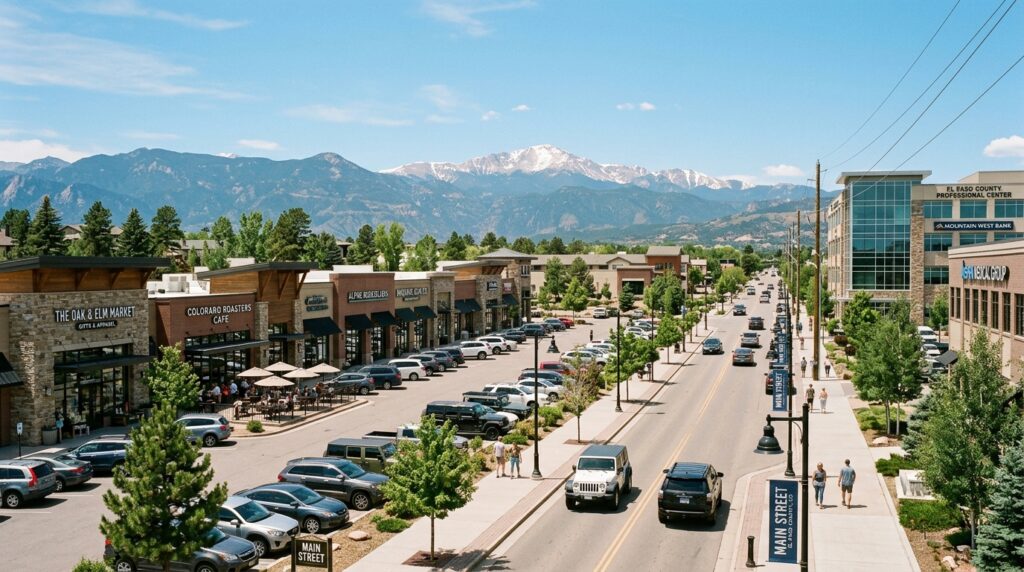
If you own land or want to open a business in Jefferson County, the first thing you need to know is your zoning. I have seen so many people buy property and then find out they cannot build what they planned. It is a painful and expensive surprise. This guide will help you avoid that and understand how Jefferson County’s commercial property zoning rules actually work.
What Is Zoning and Why Does It Matter for Your Property?
Zoning is simply the county’s way of saying what you can build or do on a piece of land. Think of it like this. Some streets are for houses. Others are for shops. Some areas are for factories. The county makes these rules so that everyone’s property value stays protected.
According to the Jefferson County Zoning Resolution, which was first adopted on May 6, 1946, zoning provides for the orderly growth of communities through the designation of areas for each type of development, such as residential, agricultural, commercial, and industrial. All four types of activity are essential to the economy of an area.
So if you want to open a store, run an office, or build a commercial building, you need to be in the right zone district. If you are not, you will need to apply for a change. We will talk about that later.
How Jefferson County Organizes Its Commercial Zone Districts
Jefferson County divides commercial land into clear groups. The Commercial Districts are intended to provide areas for low to high-density commercial office, retail, services, and activities, where allowed. Contained in each section are the allowed land uses, building and lot standards, including minimum setbacks and other general requirements for each specific commercial zone district.
The three main commercial types are Restricted Commercial-One (RC-1), Commercial-One (C-1), and Commercial-Two (C-2). Each one has its own rules about what businesses are allowed, how big your building can be, and how far it must sit from the property line.
Understanding the Commercial Zone Types in Jefferson County
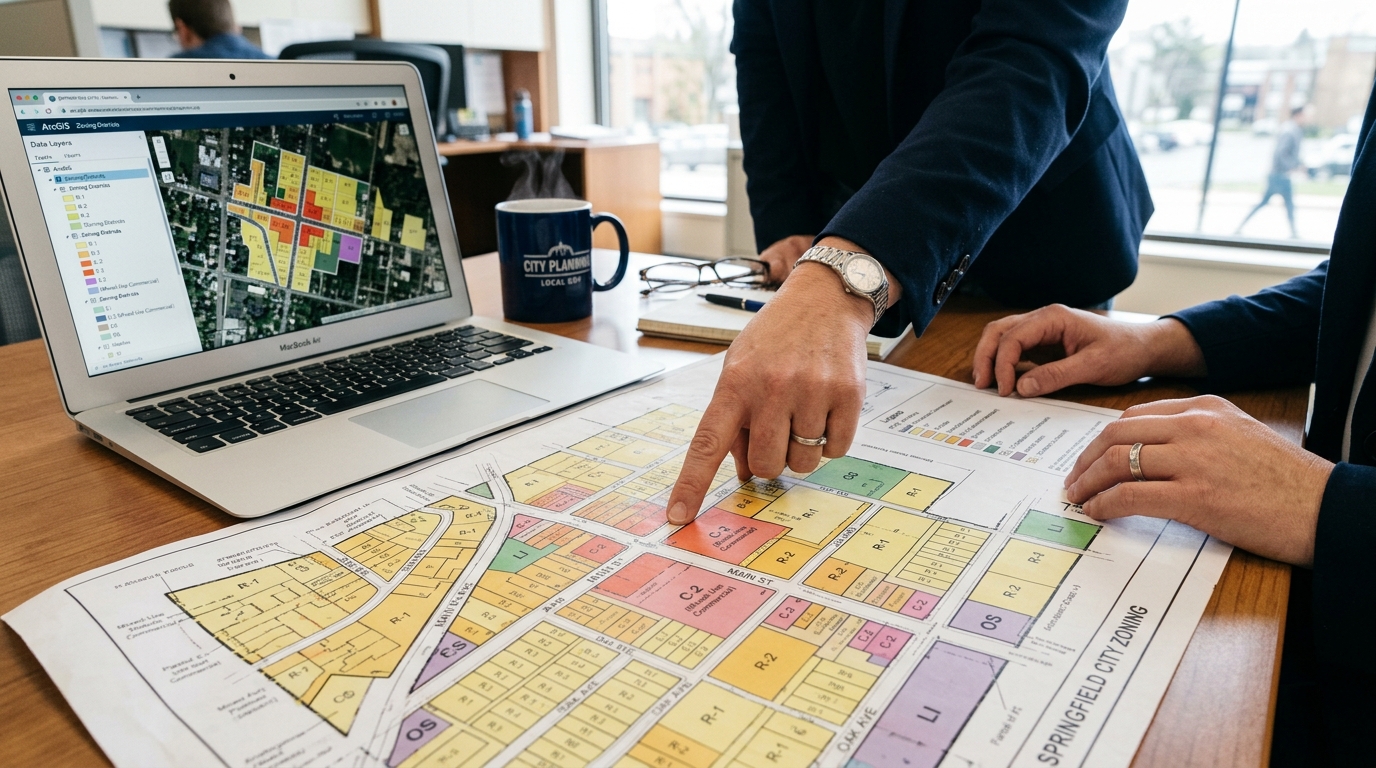
What Can You Do in C-1 and C-2 Commercial Zones?
The C-1 zone is broken into four levels: Convenience, Neighborhood, Community, and Regional. Each level allows more and bigger uses as you go up the scale.
For example, at the Convenience level, medical and dental offices, clinics, business and professional offices, state-licensed day-care centers, grocery stores up to 10,000 square feet, gas stations, auto repair facilities with a maximum of 4 bays, convenience retail shopping facilities up to 5,000 square feet, and specialty restaurants under 1,200 square feet are all permitted uses.
Honestly, the C-1 zone covers most normal businesses you see in a shopping area. At the Regional level, you can even have department stores, hotels, motels, entertainment facilities like movie theaters and bowling alleys, and private colleges.
The C-2 zone is the highest commercial level. It allows wholesale businesses, cold-storage plants, amusement parks, auction houses, and even homes for social rehabilitation for up to 20 residents plus staff, provided they are not located within 750 feet of a similar type facility.
I want to be clear though. Just because a use is listed does not mean you can start tomorrow. You still need the right permits. We will cover that in a moment.
What Is Restricted Commercial-One (RC-1)?
RC-1 is the most limited commercial zone. It sits between light residential use and full commercial use. It allows professional offices, small retail under 5,000 square feet GLA, and basic services. But it does not allow things like department stores, hotels, or large entertainment venues.
If your property is zoned RC-1 and you want to run something bigger, you may need to apply for a rezoning. This is a common situation I hear about, especially for people buying older commercial lots on the edge of neighborhoods.
One important detail: mini-storage located in C-1 and C-2 zoning must be designed to emulate other allowed uses in the commercial zone district and be in context with the built environment, with specific architectural standards. Doors to individual storage units may not be visible from abutting public street frontage or residential areas.
How to Find the Zoning for Your Commercial Property
Using the Jeffco Interactive Mapping Tool (jMap)
You do not need to drive to a government office to find out your zoning. Jefferson County has a free online tool called jMap that makes it easy.
You can use the Planning and Zoning Public Map on the Jeffco Interactive Mapping Application to find zoning information about a property, in addition to recent permit activity, tax information, nearby development applications, and many other features. Simply open the map, search for your address, and click on your property.
Once you find your zone, you can look up the rules in the Zoning Resolution document. It has bookmarks built in so you can jump to your specific zone section fast.
One thing I always tell people: the Assessor’s Office information is not the same as zoning. The Assessor’s Office information is the actual use on the property, which is different from zoning. Zoning is all of the uses that could be allowed on the property. If vacant land is zoned Commercial-One, the owner may be able to obtain a permit to build an office building. If it is zoned Residential-One, then they may be able to obtain a permit to build a single family home.
When You Should Talk to a Planner Directly
Sometimes the map is not enough. If your property is zoned Planned Development (PD), the rules are unique to that specific property. Properties zoned PD are site-specific zone districts with different standards and uses for each Planned Development. You should contact a Planner to determine the permitted uses and standards of a specific zone district.
You can reach the Jefferson County Planning and Zoning Division at their office at 100 Jefferson County Parkway, Suite 3550, Golden, CO 80419. For general inquiries, you can email them or use the online form. To schedule an appointment with staff, you can book an appointment online or call 303-271-8700.
I have seen people waste weeks trying to guess their zoning from old maps. A quick 15-minute call with a planner can save you a lot of headaches.
Permits You Will Need for Commercial Property in Jefferson County
Site Development Plans and Building Permits Explained
Before you build anything commercial in Jefferson County, you usually need to go through a Site Development Plan (SDP) process first. This comes before you even apply for a building permit.
The SDP process includes a review of landscaping, architecture, parking, easements, access, and other items that are not always covered by the Building Permit process. This generally applies to any new structures over 200 square feet, tenant finishes of existing buildings where proposed vehicular trips would require site improvements, any additions of 25% or greater to any existing building, any additions over 2,500 square feet regardless if the addition is less than 25% of the existing building, and any change from residential use or residential zoning to an industrial, commercial or institutional use.
This might sound like a lot of steps, but each one protects you and your neighbors. Think of it as the county making sure your new coffee shop will not create a traffic nightmare for the whole street.
According to the Jefferson County Planning and Zoning Division, new tenants in an existing commercial or industrial structure are also required to get a Building Permit for a change in use, even if they are not making any physical changes to the space. Source:
Signs, Solar, and Special Use Permits
Signs are a big part of any commercial property, and they have their own rules. Most signs require a Sign Permit before construction. Signs need to meet required setbacks, height limitations, and any limitations on square footage or sign types. These regulations are determined by the property’s zone district and property characteristics. Signs may not be in easements or floodplains.
Some signs are banned completely, including billboards, off-site signs, and balloon-style signs. Some small signs like window signs and temporary parking lot signs do not need permits. But when in doubt, check with a planner first.
For solar panels, the rules depend on what you plan to do with the energy. Commercial solar installations intended to sell energy back to the grid require going through a Special Exception process to allow for the use, followed by a Miscellaneous Permit. All solar panel installations need to meet required setbacks and height limitations, which are determined by your property’s zone district.
How to Change or Rezone a Commercial Property
The Rezoning Process Step by Step
Maybe your land is zoned residential but you want to use it for a small business. Or maybe it is RC-1 but you need C-1 for a bigger store. In that case, you need to apply for a rezoning.
The process in Jefferson County goes like this. You first meet with a planner to talk about your idea. Then you submit a formal application. The application gets reviewed by the Planning Commission. They hold a public hearing where neighbors can speak. Then the Board of County Commissioners makes the final decision.
The County sends notifications when a formal application is accepted or a public hearing is scheduled. These notifications are sent to property owners and registered associations within the boundaries described in the notification sections of the Zoning Resolution and Land Development Regulation.
The whole process can take several months. I know that sounds slow, but the public hearing step is important. It gives everyone affected a fair say.
What Happens After a Zoning Change Is Approved
Once your rezoning is approved, your property gets a new zone designation on the official zoning map. You can then apply for the permits needed to build or operate under that new zone. According to the Jefferson County Land Development Regulation, the purpose is to “promote the health, safety and welfare of the present and future inhabitants of the county” by ensuring quality and orderly development.
Keep in mind that a rezoning approval does not mean you skip permits. You still need to go through the SDP and building permit process. The zoning just tells you what is possible. The permits make it legal to actually do it.
One thing worth knowing: if your property had a legal use before a zoning change was made, it may qualify as a legal nonconforming use. A Legal Nonconforming Use is any building, structure, sign or use existing and lawful at the time of the adoption of the Zoning Resolution or in the case of an amendment. This is a complex area, so talk to a planner if you think this applies to you.
Conclusion
Understanding Jefferson County zoning commercial property rules is not as scary as it sounds once you break it down. You have zone districts like RC-1, C-1, and C-2, each with their own list of what is allowed. You have tools like jMap to check your zoning from home. And you have a clear permit process to follow once you know where your property stands. The key is to check your zoning first, talk to a planner early, and never assume you can skip the permit steps. Do those three things and you will save yourself a lot of time and money.
If you have gone through this process and want to share what worked for you, I would love to hear your experience.
Frequently Asked Questions
What is the difference between C-1 and C-2 zoning in Jefferson County?
C-1 zoning is for low to medium density commercial uses like offices, retail shops, restaurants, and gas stations. It has four sub-levels: Convenience, Neighborhood, Community, and Regional. C-2 is the highest commercial zone and allows bigger uses like wholesale businesses, cold-storage plants, and amusement parks. C-2 is meant for properties that need maximum commercial use while fitting the county’s long-range plans.
How do I find out the zoning of my property in Jefferson County?
The easiest way is to use the free jMap tool on the Jefferson County website. Just search your address, click your property, and your zone district will show up. You can also call the Planning and Zoning Division at 303-271-8700 or visit their office in Golden, CO. If your property is zoned Planned Development (PD), you will need to speak with a planner directly since PD rules are property-specific.
Do I need a permit to open a new business in a commercial zone?
Yes. Even if you are moving into an existing building, you likely need a Building Permit for a change of use. If you are constructing anything new over 200 square feet, you will also need to go through the Site Development Plan process first. The SDP reviews things like parking, landscaping, and access. Always contact Planning and Zoning before you start any work.
Can I rezone my residential property to commercial in Jefferson County?
Yes, it is possible, but it requires a formal rezoning application. You will need to meet with a planner, submit an application, go through a Planning Commission review, and attend a public hearing. The Board of County Commissioners makes the final call. The process takes several months and is not guaranteed. Your request needs to line up with the county’s Comprehensive Plan for it to be approved.
What types of signs are not allowed on commercial property in Jefferson County?
Jefferson County bans several types of signs on commercial property. These include off-site signs, billboards, balloons, and other lighter-than-air signs. Signs also cannot be placed in easements or floodplains. Most commercial signs need a Sign Permit before they go up. Some small signs like window signs, temporary parking lot directional signs, and flags under 30 square feet do not require permits, but you should confirm with the Planning and Zoning office before assuming yours qualifies.
