
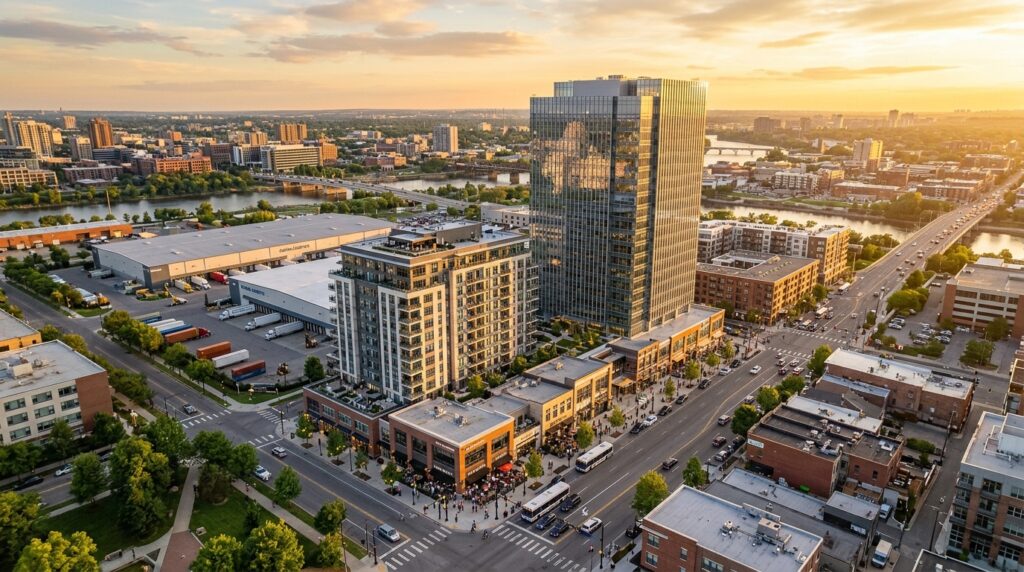
If you have ever looked at a busy city street and thought, “Who owns all of this?” you are not alone. Commercial real estate property types cover everything from the coffee shop on the corner to the giant warehouse near the highway. And knowing which type is which can help you make smarter choices, whether you want to invest, lease, or just understand how the property world works.
When I first started learning about real estate, I thought it was simple. Office buildings, malls, maybe some apartments. But once I dug in, I realized there are many different commercial property types, each with its own rules, risks, and rewards. In this guide, I will walk you through all of them in plain, simple language.
What Is Commercial Real Estate and Why Does It Matter?
How Commercial Real Estate Is Different from Residential
At its core, commercial real estate (CRE) is any property used to make money. That can mean renting it to a business, leasing it to tenants, or holding it and selling it later at a higher price. The key difference from residential real estate is the purpose behind it.
Residential homes are mostly about giving people a place to live. But commercial properties are mostly about business and income. A small apartment that houses one family is residential. A building with six or more units that brings in monthly rent? That is usually counted as commercial.
Other differences include longer lease terms, usually five to ten years compared to the typical one-year rental at home. Commercial tenants are mostly businesses, not individuals. And the price is usually much higher, which is why investor groups and institutions tend to own them rather than single buyers.
The “Four Food Groups” of CRE You Should Know
In the real estate world, people often call the four main property types the “four food groups.” These are office, retail, industrial, and multifamily. Most other types like hospitality, special purpose, and land are considered outside the core four but still very much part of the bigger picture.
Each of these asset classes has its own risk and return profile. Some give you steady, long-term cash flow. Others are more tied to economic ups and downs. Knowing each one helps you figure out which type fits your goals, whether that is capital gain, rental income, or both.
Office Properties: From Small Suites to Big Towers
What Makes an Office Building “Commercial”
Office Buildings
Office properties are buildings where businesses set up their workplace. They range from a small one-story building in the suburbs to a 50-story skyscraper in a downtown central business district (CBD). Businesses use these spaces to run their day-to-day operations, meet clients, and house their teams.
Office properties are split into four quality levels. Class A spaces are the newest and nicest, usually in the best locations with the highest rent. Class B and Class C are older and cheaper. Class D buildings are in poor shape and often need major repairs or a full rebuild.
Honestly, the office market has been going through some tough changes. According to data from CBRE, office vacancy rates are expected to peak at around 19% in 2025 as more companies keep hybrid work policies. But that is not all bad. Cities like New York, Dallas, and Miami are actually showing positive net absorption again, which means more space is being leased than left empty.
For investors, this means there is still opportunity, especially in Class A office space in high-demand markets. Coworking spaces and executive suites also fall under this category and are growing fast with flexible office needs.
📎 Source: NAR – January 2025 Commercial Real Estate Market Insights
Types of Office Properties You Will Encounter
Not all office buildings look the same. High-rise buildings are those with many floors and are usually found in dense urban areas. Low-rise buildings are smaller and more common in suburban areas. Then there are medical office buildings for doctors, clinics, and dental offices that serve specific professions.
One thing I find interesting is how much a building’s vibe matters to the type of tenant it attracts. A law firm may want a high floor with views to impress clients. A tech startup might want easy bike parking and a dog-friendly policy. The same property class can attract very different kinds of businesses depending on the design and feel.
Retail Properties: Where Businesses Meet Customers
From Strip Malls to Shopping Centers
Retail Real Estate
Retail properties are spaces leased to businesses that sell goods or services directly to customers. Think of your local grocery store, clothing shop, or restaurant. All of these live in retail commercial real estate.
These can be single-tenant buildings, like a standalone Walgreens or a multi-tenant shopping center with dozens of stores. Some retail properties have a large, well-known store called an anchor tenant, like a Target or Walmart, that draws foot traffic to smaller shops nearby.
Retail is one of the more complex property types because the type of shopping center depends on many things. The size, the number of tenants, the location, and the kinds of stores inside all play a role. According to the International Council of Shopping Centers (ICSC), regional malls range from 400,000 to 800,000 square feet. Super-regional malls go above 800,000 square feet.
You also have strip malls (small rows of shops along a busy road), outlet malls (focused on discount shopping), power centers (250,000 to 600,000 square feet with big-box stores), and retail parks (large open-air shopping areas with entertainment too).
Retail has had to adapt a lot lately. E-commerce has changed how people shop, which means some malls have had to convert space into gyms, medical clinics, or even apartments. But according to CBRE’s Q4 2025 data, retail availability has actually tightened to just 4.8%, showing that well-located retail space is still very much in demand.
What to Think About Before Investing in Retail
If you are thinking about retail, you need to look at foot traffic, the trade area (how far away customers travel to shop there), and whether there is a strong anchor tenant in place. Retail with good anchors tends to hold value better, especially in uncertain markets.
Lease terms for retail properties are usually among the longest in commercial real estate. That means stable income for landlords but also less flexibility if the market changes fast. To be fair, both sides of that coin matter depending on your goals.
Industrial Properties: The Backbone of Modern Commerce
Warehouses, Factories, and Distribution Centers
Industrial Real Estate
Industrial properties are used for manufacturing, storage, and distribution. They are mostly located outside of city centers, near major highways, railway stations, harbors, or airports, because location is critical for moving goods quickly.
Types include warehouses (for storing goods), distribution centers (for moving goods to stores or customers), manufacturing plants (for making things), and flex spaces (a mix of office and light manufacturing in one building).
I want to be honest here: industrial was the big winner in the post-pandemic real estate world. With the rise of e-commerce, everyone needed more warehouse space. According to CBRE, e-commerce-related industrial leasing accounted for 35% of all new industrial space leases in recent years, and industrial construction starts hit 236 million square feet in 2024 alone.
Manufacturing plants often have special features like heavy-duty flooring, overhead cranes, and loading docks. They are built for specific industrial work and are not easy to convert. Flex buildings are more versatile and popular with small businesses that need both office and production space under one roof.
| Industrial Type | Main Use | Key Feature |
| Warehouse | Storage of goods | Large floor space, loading docks |
| Distribution Center | Moving goods to market | Near major transport routes |
| Manufacturing Plant | Making products | Specialized equipment, heavy floors |
| Flex Space | Mixed office + light industry | Versatile, multi-use layout |
Why Industrial Real Estate Is a Strong Investment
Industrial has one of the better track records among all commercial property types in terms of consistent rent growth. Demand from logistics companies, tech firms, and food distributors keeps this sector busy. Even as vacancy rates rose slightly in 2024, industrial remained a top choice for institutional investors.
The funny part is that most people drive past warehouses without a second thought. But those big, boring gray buildings near the freeway? They are some of the most valuable pieces of income-producing real estate you will find.
Multifamily Properties: Where Residential Meets Commercial
Apartments, Duplexes, and High-Rise Units
Multifamily Real Estate
Multifamily properties are residential buildings with more than one unit. A single-family home is not commercial. But once a property has five or more units, it is typically classified as a commercial investment property because its main purpose is generating rental income.
This category includes duplexes (2 units), triplexes (3 units), garden apartments (low-rise buildings with outdoor space), mid-rise apartments (5 to 12 floors), and high-rise buildings (12 floors or more). You also find student housing and senior living complexes under this umbrella.
Multifamily is interesting because it blends the comfort of a residential feel with the income power of a commercial asset. It used to be seen as less serious than other commercial real estate asset classes. But today it is firmly one of the four main types, largely because of strong demand for rental housing and high urban density.
According to the National Association of Realtors (NAR), multifamily remained the strongest commercial sector in 2024, reaching $122 billion in annual investment volume despite the broader market slowdown. People always need places to live, which makes this type of CRE more stable during rough economic periods.
Garden Apartments, Senior Housing, and Student Living
Garden-style apartments are one of the most common forms of multifamily housing. They are usually one to three stories tall, located in suburban areas, and each unit often has its own entrance. Senior living properties are designed for older adults and often include on-site healthcare and shared community spaces. Student housing is close to colleges and tends to have high and predictable demand during the school year.
I have seen more investors enter the multifamily space in recent years, especially people coming from single-family home investing. The leap is big in terms of management demands, but the income potential is much larger once you get the hang of it.
Hospitality, Special Purpose, and Land: The Other CRE Types
Hotels, Resorts, and Mixed-Use Developments
Hospitality properties are places where guests pay to stay temporarily. This includes full-service hotels with restaurants and room service, limited-service hotels without those extras, extended-stay properties for longer trips, and casino hotels with gaming areas. Hotels are closely tied to travel trends and the broader economy, making them more sensitive to downturns than other property types.
According to NAR’s 2025 data, hotel occupancy rates sat at around 63.1% in early 2025, just below the pre-pandemic rate of 66%. Average daily room rates, however, rose to $160, up from $131 in 2019. So while occupancy is still recovering, revenue per room has improved.
Special purpose properties are unique buildings built for one specific use. Think of hospitals, churches, schools, government buildings, or research labs. These are hard to convert to a different use, which makes them both higher risk and higher reward depending on the tenant. Mixed-use properties are a growing category that combine two or more uses in one building, like retail on the ground floor with apartments above. They are popular in urban areas where space is limited and walkability matters.
Raw Land and Development Sites
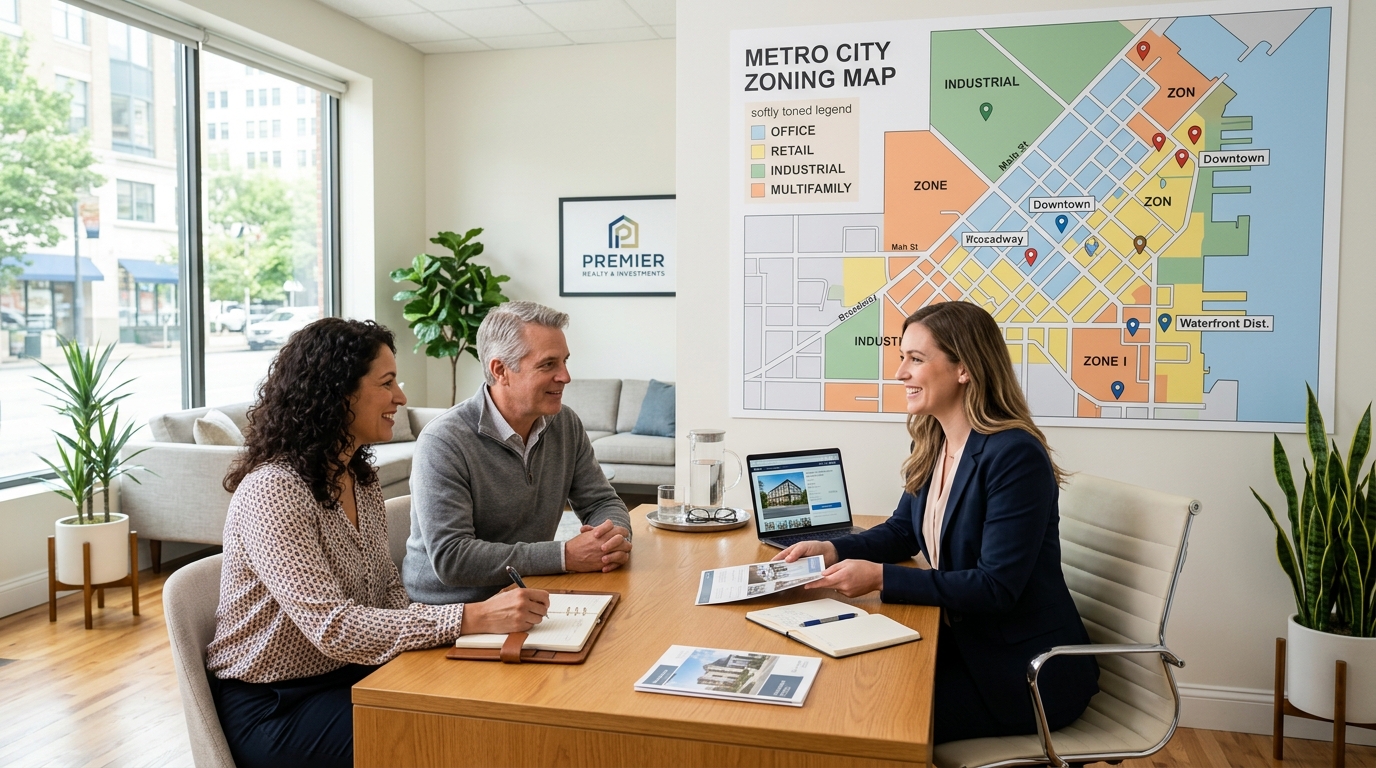
Land is also a commercial real estate asset class. This includes infill land (empty urban lots that used to be developed), brownfield land (former industrial sites with possible environmental issues), agricultural land (used for farming), and undeveloped land waiting for future construction. City zoning codes determine what can be built on any given plot of land, which is why location and local planning rules matter so much in land investment.
Land can be a slow-moving investment, but in growing cities, raw land can appreciate dramatically. Just be aware that without any building on it, there is no immediate rental income, so patience and planning are key.
Conclusion: Which Commercial Property Type Is Right for You?
We covered a lot of ground here. Commercial real estate is much more than just office towers and shopping malls. From multifamily apartments to industrial warehouses, from boutique hotels to raw land parcels, each property type brings its own mix of income potential, risk, and management demands.
The “four food groups” (office, retail, industrial, multifamily) give you a solid foundation to start from. Beyond those, hospitality, special purpose, mixed-use, and land offer more specialized paths that can fit specific investment strategies.
My honest take? Start with the type that matches your risk tolerance and knowledge level. If you are new to investing, multifamily or industrial are often easier to understand. If you have more experience, retail and office can offer bigger upside with the right location and tenant mix.
I would love to hear which property type you are most curious about. Drop your thoughts and let us know what questions you still have.
Frequently Asked Questions (FAQs)
What are the main types of commercial real estate?
The main types of commercial real estate are office, retail, industrial, and multifamily. These are often called the “four food groups” of CRE. Beyond these, you also have hospitality (hotels), special purpose buildings (hospitals, schools), mixed-use properties, and land.
Is an apartment building considered commercial real estate?
Yes, once a residential building has five or more units, it is generally classified as commercial real estate. This is because its main purpose shifts from providing personal housing to generating rental income as an investment. Duplexes and triplexes can go either way depending on the lender or local rules.
What is the difference between Class A, B, and C commercial properties?
Class A properties are the newest, best-located, and most expensive. They attract top-tier tenants and command the highest rents. Class B properties are older but still well-maintained. Class C properties are older and may need upgrades. Class D buildings are in poor condition and often need major work or demolition.
Which type of commercial real estate is best for beginners?
Most beginners find multifamily (apartment buildings) or industrial properties easier to start with. Multifamily offers steady rental demand and is easier to understand. Industrial properties often come with long leases and low maintenance needs. Office and retail can be more complex and riskier for new investors because they are more sensitive to economic changes.
How long are commercial real estate leases?
Commercial real estate leases are typically much longer than residential leases. Retail and office leases often run five to ten years. Industrial leases can be just as long. Multifamily leases are usually shorter, often one year, but the building as a whole is still treated as a commercial asset. Longer leases mean more predictable cash flow for property owners.
