If you want to know where Louisville is headed, don’t just look at the skyline. Look at the streets. The city’s fastest-growing commercial corridors are telling a big story right now, and smart business owners, investors, and renters are paying close attention.
The top 10 fastest-growing commercial corridors in Louisville are not just places with new shops. They are neighborhoods going through real change. Old warehouses are becoming trendy offices. Empty lots are turning into mixed-use buildings. And businesses that opened just a few years ago are now pulling in long lines of customers every weekend.
I have spent time following Louisville’s commercial real estate market, and honestly, the growth happening right now is unlike anything I have seen in years. Some of these corridors have surprised even long-time locals. Let me take you through all ten of them.
Top 10 Fastest-Growing Commercial Corridors in Louisville
Why These Corridors Are Growing So Fast
Louisville’s GDP for the Louisville/Jefferson County MSA reached $97.7 billion by the end of 2024, and the city attracted over $8 billion in private investment in recent years. That money has to go somewhere. And a big chunk of it is flowing right into these ten corridors.
Things like zoning changes, infrastructure investment, and retail vacancy rates falling to just 3.5% (its third-lowest mark since 2006 per Marcus & Millichap) have made Louisville a very attractive city for commercial development and business expansion.
What Makes a Corridor “Fastest-Growing”?
A fast-growing commercial corridor is not just a busy road. It is a stretch of land where new businesses are opening, property values are rising, foot traffic is going up, and developers are competing to build. Factors like walkability, transit access, mixed-use development, and business-friendly incentives all play a role.
#1 NuLu (East Market Street)
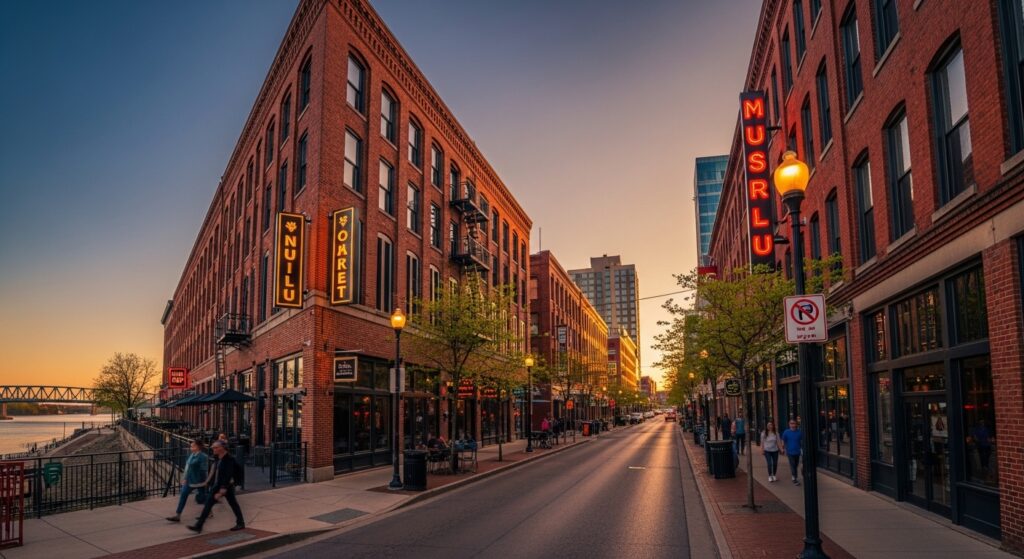
NuLu is the name everyone in Louisville talks about. It stands for “New Louisville,” and that name fits perfectly. This stretch along East Market Street used to be old warehouses and empty buildings. Now it is packed with art galleries, chef-driven restaurants, boutique shops, and boutique hotels.
A $255 million mixed-use development called the NuLu Crossing project was proposed for a long-vacant lot on Main Street in 2025. The plan includes public parking, apartments, retail, and office space in an eight-story building. Mayor Craig Greenberg called NuLu “one of the most exciting, energetic neighborhoods in our city.”
The funny part? I remember walking through NuLu about eight years ago and thinking it felt a little too quiet. The buildings had character, but the businesses were scattered. Now, on a Saturday afternoon, you practically have to squeeze through the crowd. Multi-family units near NuLu’s entertainment corridor lease 22% faster than city averages, and that says it all.
#2 Butchertown
Just next door to NuLu, Butchertown has been having its own moment. This neighborhood has historic homes, converted warehouses, and a growing reputation for craft breweries and independent restaurants. Butchertown saw a 22% median price jump after new restaurants and art spaces opened nearby.
One big win for this corridor is the 23-acre, $60 million Butchertown Market Garden project, which turned what used to be a landfill near Waterfront Park into a community green space. That kind of urban revitalization brings foot traffic and raises the value of every shop on the block.
Historic homes here are being converted into condos and stylish office spaces. Young professionals are moving in. Businesses are following. It is that simple cycle of growth that makes Butchertown one of the most exciting commercial corridors in Louisville right now.
#3 Shelbyville Road / Hurstbourne Corridor
The Hurstbourne and Shelbyville Road Corridor is one of Louisville’s most established and in-demand office and retail zones. It sits centrally between the city’s biggest suburban neighborhoods, which means it gets traffic from all directions. The area is lined with some of the nation’s most popular chain retailers as well as local service businesses and healthcare offices.
According to the Louisville Commercial Real Estate Guide, this corridor is home to “some of the city’s longest-standing and most in-demand office properties.” East-end suburbs like Hurstbourne, Lyndon, and Middletown are leading retail absorption thanks to Publix and Kroger expansions, while experiential concepts like Ace Pickleball Club are filling larger retail spaces.
Household incomes near I-265 exceed $90,000, which is exactly why grocery-anchored power centers along this stretch keep performing so well even when other parts of the city face vacancies.
#4 Bardstown Road (The Highlands)
Most locals just call it “the road.” Bardstown Road in the Highlands is commonly known as Louisville’s “restaurant row.” It is where some of the city’s most beloved local businesses got their start. The corridor is a mix of independent restaurants, vintage shops, coffee roasters, and bars that keep customers coming back week after week.
The Kentucky Bourbon Trail now draws over 2.1 million visitors annually, and corridors like Bardstown Road benefit directly. Historic storefronts are being converted into bourbon tasting rooms and branded experience shops. That tourism flow has added a whole new layer of commercial energy to this already busy street.
To be fair, parking can be a nightmare on weekends. But that is kind of a good problem to have. It means people want to be there.
#5 Old Henry Road Corridor (East Louisville)
The Old Henry Road Corridor is described as “Louisville’s most recently developed office park and business community.” It sits between major intersections and is just minutes from some of the city’s most affluent neighborhoods. This is a corridor that is newer but growing fast, attracting professional service firms, medical offices, and tech-adjacent businesses.
Between Brownsboro Road and Old Henry lies both industrial parks and suburban neighborhoods, conveniently placed near major interstates. That mix of industrial access and residential proximity makes it perfect for businesses that need both a professional address and quick logistics connections. I know a few small business owners who relocated here from downtown just to get the space they needed at a price that made sense.
#6 Dixie Highway (Southwest Louisville)
Dixie Highway is going through a real makeover. The city’s Dixie Highway Corridor Master Plan and ongoing big-box repositioning are changing what this stretch looks like. Vacated Kmart and Sears spaces along Dixie Highway are being subdivided into multi-tenant spaces housing fitness studios, medical retail, and entertainment concepts. Often, at a basis 40% below replacement cost, which makes these deals very attractive to smaller operators.
Louisville Metro has also been working on a Broadway All the Way transportation project that will improve street design and transit access through connected corridors, benefiting the broader southwest area. When streets get safer and easier to travel, businesses benefit. It is that simple.
#7 Jefferson Riverport International (Riverport)
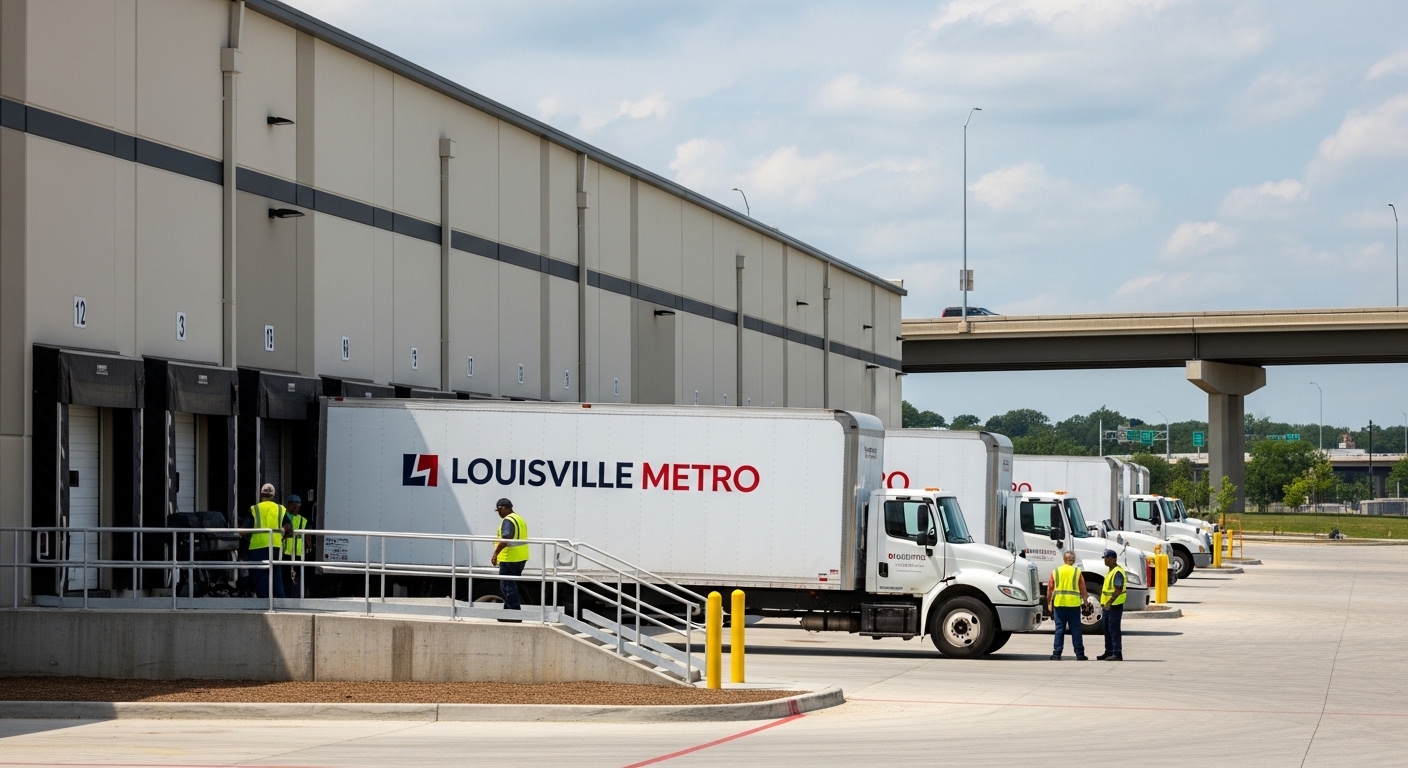
Riverport is Louisville’s powerhouse for industrial and logistics commercial growth. The park spans over 2,000 acres and is home to more than 120 companies employing over 6,500 people. It has road, rail, river, and air access, sitting just minutes from UPS Worldport, the largest automated package handling facility on the planet.
The Louisville Riverport Authority launched a major Master Plan in early 2026 to modernize the area and strengthen its role in global trade. With Louisville’s industrial vacancy rate at just 3.8% and new tenants like CRG & STAG Industrial breaking ground on a 500,000+ square-foot warehouse nearby, this corridor is nowhere near done growing. Jefferson Riverport International also benefits from Opportunity Zone incentives, making it even more attractive for developers.
#8 St. Matthews / Frankfort Avenue
St. Matthews is one of the most popular suburban commercial hubs in all of Louisville. With Mall St. Matthews and Oxmoor Mall offering nearly 200 stores combined, plus a thriving restaurant scene on Frankfort Avenue, this corridor draws shoppers from across the metro area. The retail vacancy rate across Louisville’s east-end suburbs, which includes St. Matthews, remains very tight.
What I find interesting about this corridor is how it mixes national chains with genuinely local spots. You can walk from a big-box grocery store to a tiny family-owned bakery within the same block. That variety is what keeps foot traffic strong all week, not just on weekends.
#9 Springhurst / Northeast Louisville
Northeast Louisville has one of the city’s best suburban retail offerings. The Paddock Shops, an outdoor lifestyle center, anchors this corridor with dining, shopping, and service options. Nearby Springhurst Crossings adds more retail density, and the whole area benefits from some of Louisville’s most affluent residential neighborhoods nearby.
Lyndon, tucked just south, adds boutique retail energy through spots like Lyndon Yard and Westport Village. These are the kinds of places where locally-owned stores can still thrive next to national brands. Developers are already filing for ground-lease projects in this part of town, which signals confident long-term growth expectations.
#10 Blankenbaker / Jeffersontown (East Louisville Industrial Zone)
Blankenbaker in the Jeffersontown area is described as “one of the city’s most sprawling industrial and business parks.” It is the kind of corridor that does not always get glamorous press coverage, but quietly supports thousands of jobs and businesses that keep Louisville’s economy moving. Companies here benefit from easy interstate access and strong logistics connectivity.
Foxconn is investing $174 million into a new Jefferson County manufacturing plant that will bring 180 jobs. GE Appliances is reshoring manufacturing from China to Louisville, adding 800 jobs at Appliance Park. Those kinds of announcements ripple out into corridors like Blankenbaker, creating demand for support businesses, warehousing, staffing firms, and commercial services nearby.
Conclusion
The top 10 fastest-growing commercial corridors in Louisville show a city that is not slowing down. Whether you are a business owner looking for your next location, an investor watching where commercial real estate is heading, or just someone curious about where Louisville is going next, these corridors tell you everything you need to know.
From the creative energy of NuLu and Butchertown to the industrial strength of Riverport and Blankenbaker, Louisville has growth happening at every level of the market. With $8 billion in private investment, record tourism revenue of $4.4 billion in 2024, and retail vacancies near historic lows, the numbers back up what you can see with your own eyes walking down these streets.
My personal take? The corridors that mix residential living, dining, and office space together are the ones that will keep growing the longest. Mixed-use development is not just a trend. In Louisville’s best corridors right now, it is becoming the standard. I’d love to hear which corridor you think is the most exciting. Drop your thoughts, and let’s talk about Derby City growth.
Frequently Asked Questions
What is the fastest-growing commercial corridor in Louisville right now?
NuLu (East Market Street) is widely seen as Louisville’s fastest-growing commercial corridor. It has seen a $255 million mixed-use development proposed in 2025 and continues to attract new restaurants, boutique hotels, retail, and office tenants. Multi-family units near NuLu lease 22% faster than the city average, which shows how strong demand is in the area.
Is Louisville a good city for commercial real estate investment?
Yes. Louisville has been ranked a Top 5 U.S. Metro for Economic Development by Site Selection Magazine and its retail vacancy rate fell to just 3.5% in 2024. The city also attracted over $8 billion in private investment in recent years and recorded a GDP of $97.7 billion for the Louisville/Jefferson County MSA by end of 2024. These are strong signals for investors looking at commercial real estate in the city.
Which Louisville corridors are best for small businesses?
Bardstown Road in the Highlands, St. Matthews, and Frankfort Avenue are some of the best spots for small businesses. These areas have strong foot traffic, loyal local customer bases, and a culture that celebrates independent shops and restaurants. NuLu and Butchertown are also strong options if you are targeting a younger, trend-conscious demographic.
What is driving commercial growth along Dixie Highway?
Dixie Highway is growing because of big-box repositioning. Old Kmart and Sears stores are being converted into multi-tenant spaces for fitness studios, medical retail, and entertainment businesses, often at prices well below new construction costs. The city’s ongoing transportation improvement projects and the Dixie Highway Corridor Master Plan are also making the area more accessible and appealing.
How does Louisville’s logistics industry affect commercial corridor growth?
Louisville’s role as a logistics hub has a direct effect on commercial corridor growth. The presence of UPS Worldport, major interstates like I-64, I-65, and I-71, and the Port of Louisville creates constant demand for warehousing, distribution centers, and support businesses. Corridors like Riverport and Blankenbaker have grown directly because of this demand, and new investments like Foxconn’s $174 million plant and GE Appliances’ reshoring of 800 jobs are only adding more fuel to that growth.
