Tenant trends 2026 in Louisville are not what they looked like five years ago. Businesses are smarter now. They know what they want. And if a space doesn’t offer it, they simply move on.
Why Louisville’s Commercial Market Is Changing Fast
Louisville is not the same city it was in 2020. The business crowd here has grown. New companies are coming in. Older ones are rethinking their spaces. And what everyone wants from a commercial space has changed a lot.
I was talking to a building owner near downtown Louisville last year. He said something that stuck with me: “Five years ago, tenants just asked how much the rent was. Now they ask about the WiFi speed, the parking, and whether there’s a rooftop.”
That says it all.
Downtown Louisville ended 2025 with 411,600 square feet of yearly leasing activity, showing that businesses still see real value in the area. That’s not a small number. It tells you people are still signing leases. But they are being picky about where.
The future of commercial real estate in Louisville is shaped by evolving tenant needs, tighter capital and shifting space usage. Businesses want more for their money now. They want spaces that work for how they actually operate today, not how offices looked ten years ago.
The Rise of Flexible Office Space in Louisville
If there is one trend that defines 2025 in Louisville, it is this: businesses want flexibility.
Long, locked-in leases scare people. Startups don’t know how fast they’ll grow. Small companies don’t want to be stuck paying for space they don’t use. Even bigger firms are cutting down their footprints.
According to Cushman and Wakefield, 55% of global occupiers now use flexible office solutions, with 17% planning to increase their use in the near future.That number includes many businesses right here in Louisville.
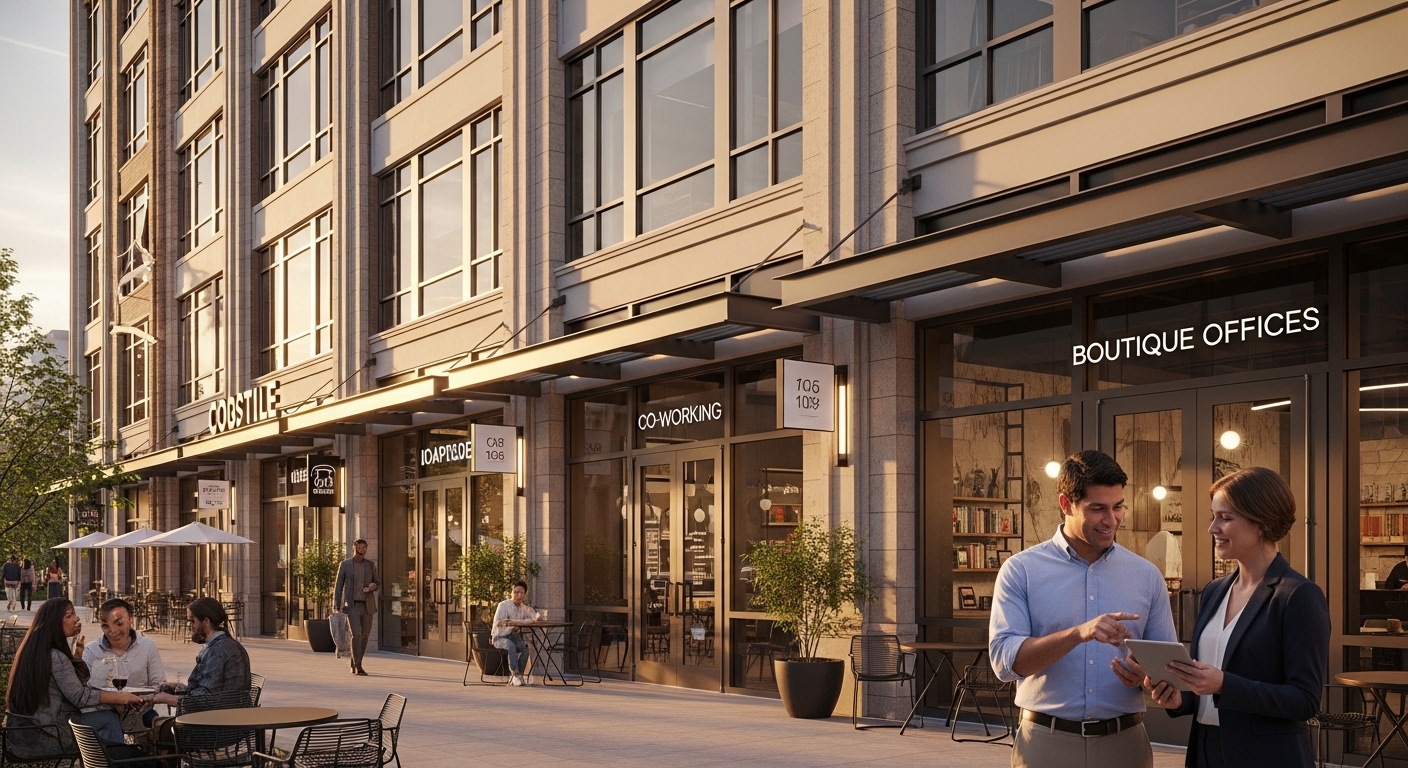
Coworking spaces, serviced offices and short-term leases are booming. On East Witherspoon Street in downtown Louisville, businesses can now find fully equipped flexible offices, meeting rooms and coworking desks with good lighting and everything they need to get work done.
I’ve seen this play out personally. A friend who runs a small marketing agency in Louisville downsized from a full office suite to a shared coworking space in 2024. His rent dropped by 40%. His team was just as productive. And he got to use a conference room whenever he needed it, without paying for one full time.
Older buildings without amenities, natural light or flexible layouts are struggling to attract tenants. Vacancy in these types of assets isn’t just a phase. It’s structural. Landlords who refuse to modernize are losing tenants fast.
What Tenants Really Want: Amenities That Matter
Here is a truth most landlords still haven’t fully accepted: tenants are not just renting square footage anymore. They are renting an experience.
Think about it. When someone walks into a building, they feel it right away. Is it bright? Does it smell fresh? Are there places to sit and have a quick chat? Does the coffee machine work?
These things sound small. But they matter.
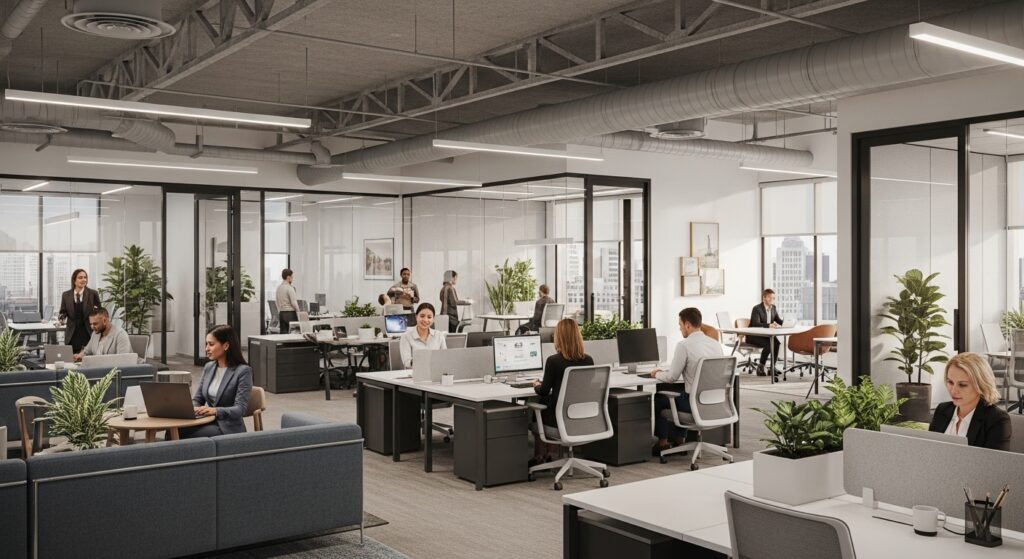
The office trends for 2025 focus on flexible, inclusive and motivating environments that put the wellbeing and productivity of employees first. This is called “resimercial design,” which blends residential comfort with commercial function. Open floor plans, natural light, soft seating and social areas are now part of what good commercial spaces look like.
Premium amenities that enhance collaboration and productivity now include free coffee, parking, meeting rooms and private offices. A space without these basics will struggle to keep tenants for long.
Businesses in Louisville’s NuLu, East Market District and Highlands neighborhoods want spaces that feel alive. They want to walk out their office door and be near coffee shops, restaurants and parks. Easy access to downtown attractions, parks and local eateries now tops the wish list for many tenants. Shared courtyards, co-working areas and community lounges are becoming must-haves.
Technology Is Now a Must-Have, Not a Nice-to-Have
I once helped a friend look at a commercial space in Louisville’s East End. Nice building. Good location. But the WiFi was slow and there were no smart systems in place. We walked out in 20 minutes. That was three years ago. Today, that building is still half empty.
Technology is not optional anymore. It is a basic requirement.
The integration of AI, Internet of Things and PropTech is changing commercial real estate. AI-powered tools are making property management easier through predictive maintenance, energy optimization and better tenant services.
Smart thermostats, keyless entry and high-speed internet access are now major deciding factors when businesses choose a rental space. A building without these things feels outdated before a tenant even moves in.
Smart technology is a solution to many risks including rising utility costs, hybrid-work problems and growing security concerns. When a building uses smart systems, it saves money and makes life easier for everyone inside it.
According to a report by Jones Lang LaSalle (JLL), the total U.S. office inventory stands at approximately 4.8 billion square feet nationwide, and tenants everywhere are expecting more from each of those square feet. Louisville is no different.
For landlords, the message is simple: upgrade your tech or lose your tenants.
Green Buildings and Sustainability Drive Leasing Decisions
Sustainability used to be a “nice bonus.” Now it is a real factor in leasing decisions for Louisville businesses.
More companies care about the environment. They want to be in buildings that share those values. They also care about saving money on utility bills. Green buildings do both.
Sustainability and green buildings are top of mind in commercial real estate. More and more businesses require green initiatives and many are willing to pay extra for them. LEED certifications and similar standards are becoming the benchmark for sustainable development.
In Louisville’s commercial real estate market, incorporating sustainability and green practices is increasingly important, not just ethically, but economically. Properties emphasizing energy efficiency, sustainable construction and smart technology often enjoy higher long-term value and attract premium tenants.
Energy-efficient upgrades such as LED lighting, HVAC improvements and solar installations are eligible for significant tax incentives. Green building certifications can boost property appeal and lower operating costs.
Honestly, it makes total business sense. A tenant that pays lower utility bills is a happier tenant. A happier tenant stays longer. Longer leases mean fewer headaches for landlords. Everyone wins.
Industrial Spaces: Still the Strongest Sector in Louisville
If you want to know where Louisville’s commercial real estate is thriving most, look at the warehouses.
Industrial space is on fire right now. Online shopping keeps growing. Products need to be stored and shipped. And Louisville sits at the center of it all.
The industrial vacancy rate in Louisville dropped to 3.7% by the end of 2025. When vacancy sits below 5%, landlords have power. They can ask for higher rent and longer leases. Tenants don’t have many other choices.
Due to sustained logistics growth driven by UPS Worldport, Louisville’s industrial spaces remain robust, marked by rapid absorption of speculative properties.
UPS Worldport alone makes Louisville one of the biggest logistics hubs in the entire country. That keeps industrial demand high year after year.
Several forces support this sector: growth in online shopping, the need for faster delivery times, more focus on supply chain control and demand for smaller, well-located warehouses. These drivers are not short-term trends. They are habits that keep growing.
Businesses looking for distribution centers, last-mile delivery hubs and warehouse space will keep flocking to Louisville. And landlords with good industrial properties here have very little to worry about.
Retail Trends: Small Shops Near Neighborhoods Win
Big malls are struggling everywhere. But small retail is doing just fine in Louisville, especially in the right spots.
People don’t want to drive 45 minutes to buy something they need right now. They want a coffee shop around the corner. A gym nearby. A clinic down the street. Quick and easy wins every time.
Big box stores and giant malls struggle. Small shops near neighborhoods do just fine. People want convenience now. The eastern and northeastern suburbs of Louisville had the best retail performance this quarter. New shopping centers opened and existing ones filled empty spots with coffee shops, gyms and quick-service restaurants.Medical offices are doing really well too. Doctors, dentists and therapy centers took up space fast. People need health care no matter what the economy does. This is a trend I don’t see reversing anytime soon.
Rather than sprawling footprints, retail tenants want efficient layouts, outdoor space and locations near strong residential bases. Landlords who understand this shift are adjusting their offerings, and that is opening the door to renewed activity in the retail sector. If you own retail space in Louisville, location near a growing neighborhood is your biggest asset right now.
Location Still Matters: Louisville’s Hot Commercial Zones
Where your space sits in Louisville matters more than ever. Tenants are not just looking at price per square foot. They are looking at the neighborhood, the vibe and what’s around them.
Downtown Louisville is known for its bustling business district with a mix of modern high-rise buildings and historic structures converted into contemporary office spaces. The East Market District, known as NuLu, attracts businesses looking for a unique and vibrant environment. The East End offers spacious office parks, corporate campuses and modern commercial developments with easy access to major highways. The Highlands is famous for its eclectic mix of locally-owned shops, restaurants and a thriving arts scene.
NuLu and East Market District are known for their eclectic charm, growing tourism and boutique retail spaces. The Highlands provides stable rental yields from mixed-use properties that appeal to a younger demographic and small businesses.
A study by the Urban Land Institute notes that location-driven demand remains one of the strongest forces in commercial leasing decisions. When a neighborhood grows, the commercial spaces within it grow too.
Louisville’s suburban areas are also growing fast. Companies moving to suburban spaces wanted room to grow. They signed longer leases, often five to seven years. That shows confidence.
Conclusion
Tenant trends 2025 in Louisville tell a clear story. Businesses want flexible spaces, smart technology, green features and great locations. They want short-term lease options. They want buildings that feel good to work in. And they are not afraid to walk away from spaces that don’t deliver.
For landlords and investors, this is both a challenge and a real opportunity. The buildings that adapt will win. The ones that don’t will sit empty.
Louisville is a strong market. The data backs that up. The overall vacancy rate in Louisville’s industrial market dropped to 3.7%. Retail real estate continues to perform remarkably well in Louisville’s eastern and northeastern suburbs. The bones of this city’s commercial market are solid.
If you are looking to lease, invest or reposition a commercial property in Louisville in 2025, pay attention to what tenants actually want. Give them flexibility, tech and a space they enjoy coming back to every day. That is how you stay ahead.
I’d love to hear your thoughts. Are you seeing these same trends in Louisville?
FAQs
What do Louisville tenants want most in commercial spaces in 2025?
Louisville tenants in 2025 want flexibility above everything else. They want short lease terms, smart technology like high-speed internet and keyless entry, open and bright layouts and amenities like meeting rooms and parking. Green features and sustainability also rank high on the list.
Is the office market in Louisville doing well in 2025?
It’s doing okay, but selectively. Buildings with modern amenities, natural light and flexible layouts are doing well. Older buildings that haven’t been updated are struggling with high vacancy rates. The suburban office market is performing better than downtown in many cases.
Why is Louisville’s industrial sector so strong?
Louisville is home to UPS Worldport, one of the largest air freight hubs in the world. That makes it a top logistics and distribution city. Online shopping keeps demand for warehouses high, and the industrial vacancy rate sits around 3.7%, which is very low. That gives landlords real power in this sector.
What neighborhoods in Louisville are best for commercial tenants?
NuLu and the East Market District are great for creative offices and boutique retail. The Highlands works well for small businesses and mixed-use spaces. The East End offers corporate campuses and modern office parks. Downtown is still active but more selective. Suburbs in the eastern and northeastern parts of Louisville are growing fast for retail and medical offices.
Are green buildings worth the investment for Louisville landlords?
Yes, they are. Green buildings attract better tenants, keep them longer and often command higher rents. Upgrades like LED lighting, smart HVAC systems and solar panels also qualify for tax incentives. Energy-efficient buildings cost less to run and are becoming the standard that business tenants expect, not a bonus.
