

How to evaluate a commercial property before making an offer is the one skill that can save you from a very expensive mistake. I’ve seen buyers rush an offer on a building that looked great, only to find crumbling HVAC systems, bad zoning, and zero income. The right steps up front change everything.
Buying a commercial property is not like buying a house. The stakes are much higher. You are not just picking a place you like you are making a business decision that will affect your money for years. A smart investor always checks the numbers, the building, and the market before they ever write an offer.
This guide walks you through each key step in a simple, clear way. Whether you are looking at an office building, a retail center, or an industrial space, these steps work for all of them.
Why Evaluating a Commercial Property Before Making an Offer Matters
The Real Cost of Skipping the Evaluation
Most people think an offer is the starting point. It is not. What comes before the offer is what protects your money. If you skip the evaluation, you might end up buying a property that costs more to fix than it earns. That is a bad deal, no matter how good the location looks.
According to data from the National Association of Realtors (NAR), commercial real estate deals often involve due diligence periods of 30 to 90 days. Lenders also usually need a Debt Service Coverage Ratio (DSCR) of at least 1.25 before they approve a loan. These numbers exist because the risks are real.
I once spoke with an investor who skipped the inspection step on a warehouse. He thought the building looked solid from the outside. Two months after closing, he found out the roof needed a full replacement. That was a $180,000 surprise nobody wants.
What Smart Investors Always Check First
Smart investors follow a clear order. They look at the market and location, then the financials, then the physical condition, and finally the legal details. They do not skip steps and they do not rush. Each part of the evaluation builds on the last one.
The good news is that you do not need to be an expert in all of these areas. You can hire inspectors, appraisers, and attorneys. But you do need to know what questions to ask and what numbers to look at. That is what this guide will show you.
Step 1: Analyze the Market and Location
How Location Affects Commercial Property Value
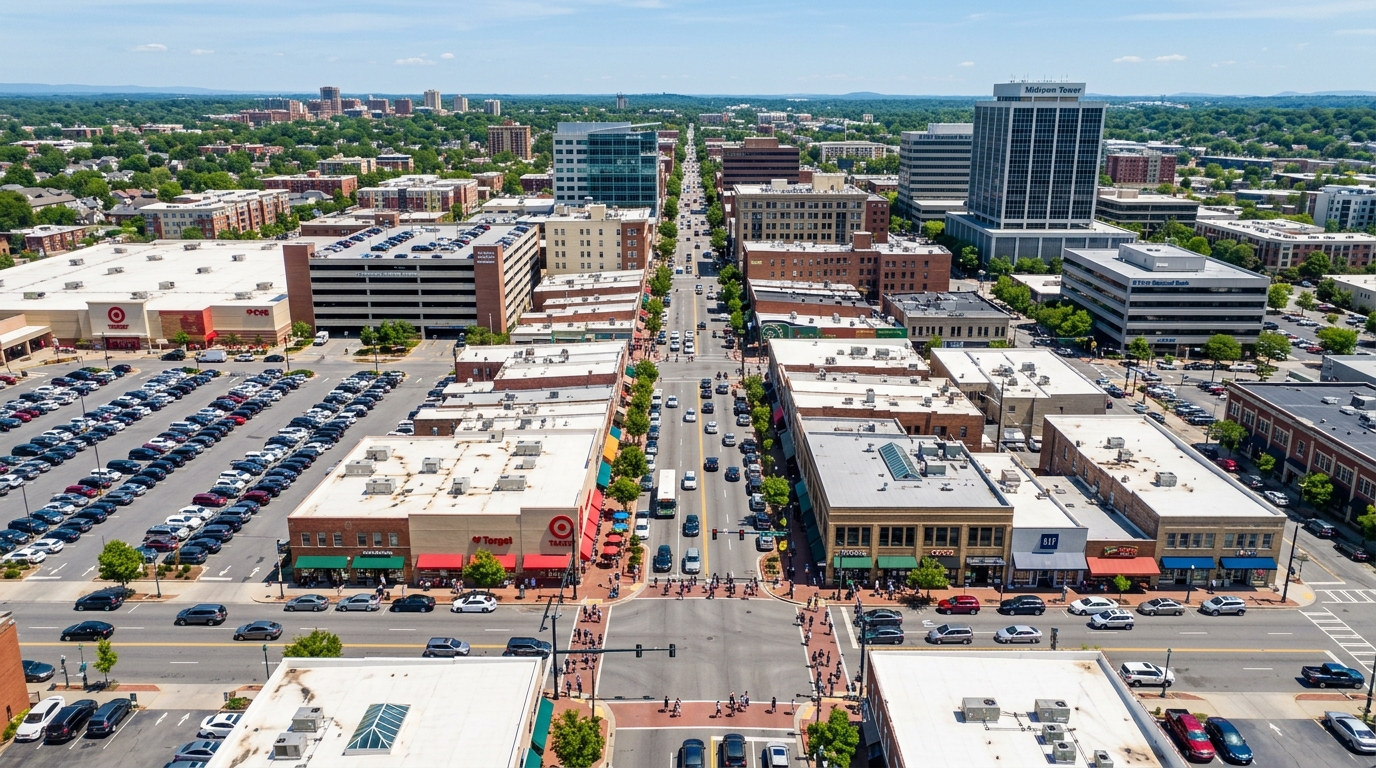
You already know the old saying, location, location, location. But in commercial real estate, location means much more than just a nice street. It means proximity to transportation, nearby businesses, foot traffic, and how easy it is for customers or workers to get there.
For example, a retail property near a busy shopping center will attract more tenants than one tucked away on a side street. An office building close to public transit tends to command higher rental rates. These are real differences that show up directly in the income a property can earn.
Look at the area’s vacancy and occupancy rates. If many buildings nearby are empty, that is a signal that demand is low. If spaces are being leased fast, that is a good sign. Local brokers and online databases like CoStar or LoopNet can give you this data.
Reading Market Trends and Economic Drivers
Beyond the street the property sits on, you need to understand the bigger picture. Is the local economy growing? Are businesses moving into the area or leaving? Are there new employers, hospitals, or distribution hubs nearby?
Market cycles in commercial real estate typically last 7 to 10 years. Knowing where the market is in that cycle helps you decide if you are buying at a good time or at the top of the market. Demographic shifts also matter if more people are moving into an area, and demand for commercial space usually follows.
Honestly, this step takes time. I would spend at least a week just driving around the target area, talking to local business owners, and reading city planning reports. You learn things that no database will ever tell you.
Step 2: Review the Financial Performance
How to Calculate Net Operating Income (NOI)
The net operating income (NOI) is the most important number in commercial real estate. It tells you how much money the property makes after you pay all the operating costs but before paying the mortgage.
The formula is simple:
| Step | What It Means |
| Total Rental Income | All rent is collected when fully leased |
| minus Vacancy Allowance | Expected empty units or spaces |
| = Effective Gross Income (EGI) | Realistic income after vacancies |
| minus Operating Expenses | Taxes, insurance, maintenance, management |
| = Net Operating Income (NOI) | Your core profit number |
Once you have the NOI, you can use it to find the capitalization rate (cap rate). The cap rate formula is: NOI divided by the asking price, multiplied by 100. A higher cap rate usually means a better return, but it can also mean higher risk. According to ELIFIN Realty, your focus should always be on income yield over property appreciation.
Understanding Cap Rate, DSCR, and Cash Flow
The debt service coverage ratio (DSCR) tells lenders if the property earns enough to cover the mortgage payments. A DSCR of 1.25 means the property earns 25% more than what is needed to pay the loan. Most banks will not lend below this number.
Cash flow is what is left after the mortgage is paid. This is the money that goes into your pocket. Always calculate this before making an offer. A property with a good NOI but a heavy loan can still leave you with negative cash flow every month.
Also, look at the gross rent multiplier (GRM) it is a fast way to compare properties. GRM equals the property price divided by the annual gross rental income. Most good deals have a GRM between 4 and 7, though this changes by market and property type.
Step 3: Inspect the Physical Condition of the Property
What a Commercial Property Inspection Must Cover
Numbers on paper are great. But a building inspection tells you the truth about what you are actually buying. Before you make an offer, hire a qualified commercial inspector or engineer. They will look at things you cannot see from a quick walkthrough.
Here is what must be checked:
- Foundation and roof cracks, leaks, or structural movement
- HVAC systems age, condition, and expected replacement cost
- Plumbing and electrical capacity and code compliance
- Environmental hazards asbestos, mold, or soil contamination
- ADA compliance accessibility requirements under federal law
Many buyers also order a Phase I Environmental Site Assessment before closing. This checks for any pollution or hazardous materials on or near the property. If problems are found, it can kill the deal or at least give you room to renegotiate.
Estimating Capital Expenditure (CapEx) Needs
After the inspection, make a list of everything that needs to be fixed or replaced in the next 5 years. This is called capital expenditure or CapEx. A new roof might cost $80,000. Replacing an old HVAC might cost $50,000. These costs should lower the price you are willing to pay.
Most experienced investors build the CapEx cost into their offer. If the property needs $200,000 in work and the seller is asking $1 million, you might offer $800,000 and explain why. Good sellers understand this math. Bad sellers do not and that tells you something too.
Step 4: Check Zoning, Permits, and Legal Details
Why Zoning Can Make or Break Your Deal
Zoning is something many first-time buyers overlook and it can be a very painful lesson. Even if a building looks perfect for your plans, the local government may not allow your intended use. Zoning laws control what types of businesses can operate in a space.
Before making an offer, confirm that the property is zoned for your specific use. Also check for setback rules, height limits, floor-area ratios, and any planned changes to the zoning in that area. A property that is zoned for mixed-use or has flexible zoning is often more valuable because it gives you more options.
Also review any easements on the property. An easement gives someone else the right to use part of your land, like a shared driveway or a utility corridor. These can limit what you do with the space.
Reviewing Permits, Leases, and Title History
Ask for all building permits from the past 10 years. If the seller made improvements without pulling the right permits, you could be held responsible after closing. This is a legal and financial trap that catches many buyers off guard.
If the property has existing tenants, review all their leases carefully. Look at the lease terms, the rent amounts, any rent escalation clauses, and when leases expire. A building with long-term leases from creditworthy tenants is far more valuable than one with short-term or month-to-month agreements.
Run a full title search to check for liens, unpaid taxes, or ownership disputes. This is usually done by a real estate attorney or a title company. Do not skip this step. A clean title is one of the most important things you can have going into closing.
Step 5: Use the Right Valuation Method
Income Approach vs. Sales Comparison vs. Cost Approach
There are three main ways to value a commercial property. Smart investors use all three and compare the results.
The income approach is the most common method. It uses the NOI and cap rate to determine value. This is best for properties that already have tenants and earn income. The formula is: Value = NOI divided by Cap Rate.
The sales comparison approach looks at recent sales of similar properties in the same area. Real estate appraisers call these comparable sales or “comps.” This method works best when there are enough recent sales to compare. According to the Robert Weiler Company, appraisers look for properties sold in the last 6 to 12 months for the most accurate data.
The cost approach adds up the land value and the cost to rebuild the structure, then subtracts any depreciation. This is best for unique buildings like hospitals, schools, or new construction where there are few comparable sales.
Using Price Per Square Foot and GRM as Quick Filters
Price per square foot (PSF) is the fastest way to compare properties side by side. You divide the total price by the total square footage. If one building costs $200 per square foot and a comparable one is $140 per square foot, you know which one needs a closer look.
Use PSF and GRM as screening tools first. If a property passes those quick filters, then you do the deeper analysis with NOI, cap rate, and full due diligence. This saves you from wasting time on deals that will never work financially.
Step 6: Assess Tenant Quality and Lease Stability
How to Evaluate Existing Tenants Before You Buy
If the property already has tenants, you need to understand who they are and how stable they are. A building full of long-term tenants with strong credit is worth much more than one with struggling small businesses on month-to-month leases.
Ask for a current rent roll. This is a document that lists every tenant, their monthly rent, their lease start and end dates, and any special terms. Study it carefully. Look for leases that are expiring soon. If 60% of your tenants leave in the next year, your income drops fast.
Also look at the lease structure. A triple net lease (NNN) means the tenant pays taxes, insurance, and maintenance on top of rent. This is great for owners because it reduces your expenses. A gross lease means you pay most of those costs. The lease type directly affects how much you actually earn.
What High Tenant Turnover Really Signals
High turnover in a commercial property is a red flag. It could mean the rents are too high for the market. It could mean the building has problems that drive tenants away. It could also mean the location is not as strong as the listing makes it sound.
Ask the seller why tenants have left. Talk to current tenants if you can. Ask them if they plan to renew. Their answers will tell you more than any document. I have heard investors say they learned the most about a building in a 10-minute chat with the business owner on the second floor.
Step 7: Run Full Due Diligence Before Making an Offer
What the Due Diligence Period Actually Covers
The due diligence period is the time after your offer is accepted but before you close. During this window typically 30 to 90 days you have the right to investigate everything. If you find something serious, you can renegotiate or walk away.
But here is the thing smart buyers do a lot of due diligence BEFORE they even make the offer. Why? Because it strengthens your negotiating position and helps you set the right price from the start. You do not want to fall in love with a property and then discover problems after you are already committed.
During due diligence, collect and review: income and expense statements, tax records, operating budgets, rent rolls, environmental reports, inspection reports, and all lease agreements. The more complete your file, the better your decision will be.
Building Your Offer Price Based on the Data
Once you have all this information, building your offer price becomes logical not emotional. You take the property’s true value (based on income and comps), subtract the cost of needed repairs and upgrades, factor in your financing terms, and arrive at a number that makes the deal work for you.
Also think about the contingencies you include in your offer. A financing contingency protects you if your loan falls through. An inspection contingency lets you back out if the building has serious problems. An earnest money deposit shows the seller you are serious without putting all your cash at risk before closing.
Your offer should include a letter of intent (LOI) that outlines the price, terms, contingencies, and proposed closing timeline. A real estate attorney can help you draft this in a way that protects you while still being attractive to the seller.
Pro Tip: According to the National Association of Realtors, commercial property deals that go through a structured due diligence process are significantly less likely to fall apart after closing. Taking the extra time upfront saves money, stress, and legal headaches later.
Conclusion
Learning how to evaluate a commercial property before making an offer is not something you do once and forget. It is a process, and every deal teaches you something new. The steps above give you a clear framework: study the market, check the financials, inspect the building, verify the legal details, value the property correctly, and review the tenants.
None of these steps is optional. Skip even one, and you leave yourself open to a costly mistake. But follow them all, and you walk into every negotiation with confidence, knowing exactly what the property is worth and what risks you are taking on.
Have you already started looking at a commercial property? I would love to hear which step felt the hardest for you. Drop a comment below or reach out with your question might just help someone else too.
Frequently Asked Questions
What is the most important thing to check when evaluating a commercial property?
The most important thing is the financial performance, specifically the net operating income (NOI) and the cap rate. These two numbers tell you how much the property earns and whether the asking price makes sense. Without these, you cannot know if you are getting a good deal or paying too much.
How long does it take to evaluate a commercial property before making an offer?
It can take anywhere from a few days to several weeks, depending on how complex the property is. For a simple retail space, a basic evaluation might take 5 to 7 days. For a larger building with many tenants and complicated finances, you might spend 3 to 4 weeks before you are ready to make a confident offer.
Do I need to hire a commercial real estate broker to evaluate a property?
You do not always need one, but it helps a lot, especially if you are new to commercial real estate. A good broker knows the local market, understands comparable sales, and can spot problems you might miss. They also have access to databases like CoStar that give you detailed vacancy rates and market trends. Think of them as a guide, not just a salesperson.
What is a good cap rate for a commercial property?
A “good” cap rate depends on the market, the property type, and your risk comfort level. In major cities, cap rates for office buildings or retail centers can be as low as 4% to 5%. In smaller markets or for industrial properties, cap rates of 6% to 9% are more common. The key is to compare the cap rate to similar properties in the same area, not to a national average.
What happens if I find problems during the inspection after making an offer?
If your offer includes an inspection contingency, and it should, you have options. You can ask the seller to lower the price to cover the cost of repairs. You can ask them to fix the problems before closing. Or if the issues are serious enough, you can walk away and get your earnest money deposit back. This is why having the right contingencies in your offer is so important. Never make an offer without them.
