
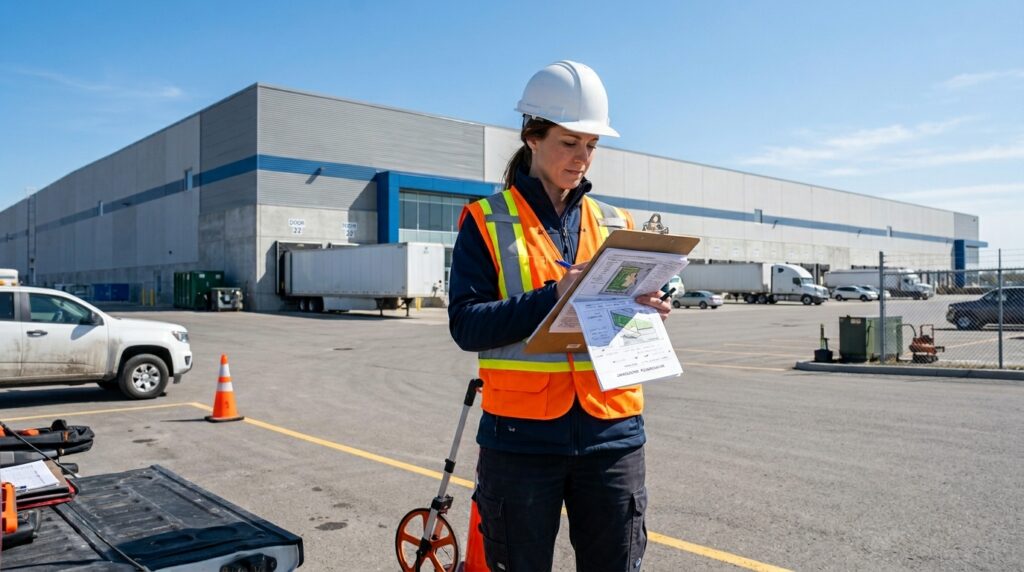
Buying a commercial property without a phase 1 environmental assessment is a bit like buying a used car without checking under the hood. You might get lucky. But you might also drive off the lot with a very expensive problem you did not see coming.
What Is a Phase 1 Environmental Assessment for Commercial Property?
The Simple Definition You Actually Need
A phase 1 environmental assessment commercial property report is a study that looks at the history and current condition of a property. The goal is to find out if there is any environmental contamination or if there could be. It does not involve drilling or testing the soil. It is all about records and visual inspection.
The official name is a Phase I Environmental Site Assessment, or Phase I ESA. It is the very first step in environmental due diligence before a commercial real estate transaction. Think of it as your background check on the land itself.
A qualified environmental professional (EP) performs the work. They look at what the property was used for in the past, what is happening on it right now, and what might be going on with the soil or groundwater below it.
What Does Phase 1 Actually Look For?
The main thing an EP is hunting for is called a recognized environmental condition, or REC. A REC is any sign that hazardous substances or petroleum products may have contaminated the property, whether in the past or right now.
Think about a piece of land that used to be a dry cleaning facility 30 years ago. Those old businesses used chemical solvents that could have soaked into the ground. Or maybe a gas station once had an underground storage tank (UST) on site that was never properly removed. These are exactly the kinds of things a Phase I ESA is designed to catch.
Common things looked at include old aerial photos, fire insurance maps, building permits, title records, environmental database searches, and a walk-through of the property itself.
Why You Need One Before Buying Commercial Property
Protection from CERCLA Liability
Here is a situation I find scary. You buy a commercial property. A year later, regulators show up and say the land is contaminated. Under a federal law called CERCLA (the Comprehensive Environmental Response, Compensation, and Liability Act), you could be held responsible for the cleanup even if you did not cause the problem.
That cleanup could cost tens of thousands, or even hundreds of thousands of dollars. The previous owner is long gone. You are the one holding the bill.
But there is a way to protect yourself. If you complete a Phase I ESA that meets the ASTM E1527-21 standard before buying, you can qualify for what is called the innocent landowner defense (ILD). This is a legal protection under CERCLA that says, in simple terms: “I did my homework. I did not know about this contamination.”
According to the U.S. Environmental Protection Agency (EPA), completing a proper Phase I ESA following the ASTM E1527-21 standard satisfies the All Appropriate Inquiries (AAI) rule required for CERCLA liability protections.
Lenders Require It Too
Even if you were willing to skip the assessment, your lender probably will not let you. Most banks and financial institutions require a Phase I ESA before they approve a commercial property loan. This is especially true for SBA-backed loans.
Honestly, that requirement exists for a good reason. A bank does not want to hold a mortgage on land that might be worth far less than the loan amount because of hidden contamination. And you should not want that either.
I remember hearing about a buyer who skipped the assessment to save a little money upfront. The short version: an old leaking underground fuel tank turned a promising warehouse deal into a six-figure cleanup nightmare. The “savings” turned into the most expensive decision of that buyer’s year. Do not be that person.
The Phase I ESA Process Step by Step
What the Environmental Professional Actually Does
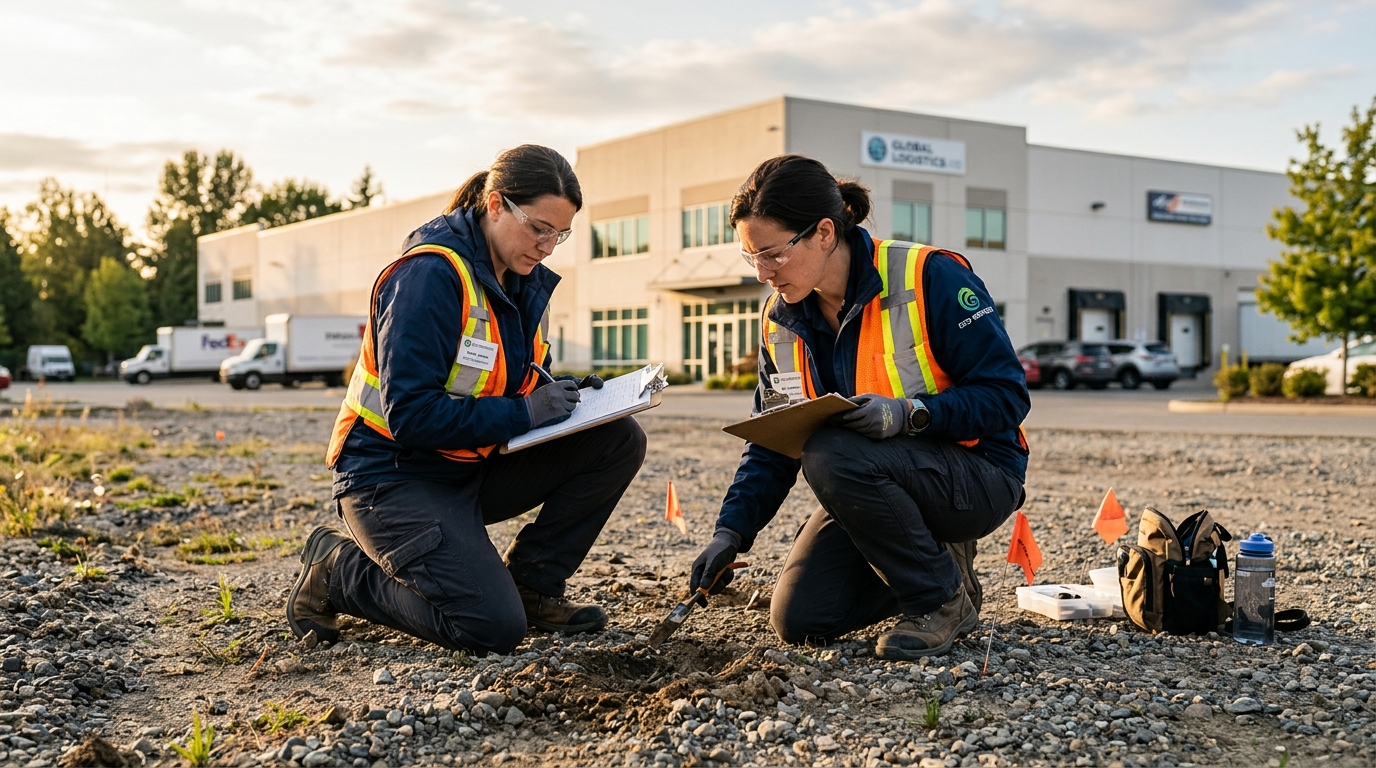
A lot of people picture someone in a hard hat digging up dirt. That is actually a Phase II ESA, which only happens if the Phase I finds problems. Phase I is all about research and observation.
- Records Review:The EP digs into historical documents. This includes oldaerial photographs,topographic maps,fire department records,reverse street directories,floodplain maps, andoil and gas maps. They also searchenvironmental databasesfor any past incidents, spills, or regulatory actions near the site.
- Interviews:The EP speaks with the current property owner, tenants, and anyone who knows the property’s history well. These conversations can uncover past uses that do not show up in any official record.
- On-Site Inspection:The EP walks the property and nearby areas. They look for signs like discolored soil, dead or sick vegetation, evidence of buried tanks, drums, chemical storage, and unusual smells.
- Report Writing:Everything is compiled into a formal report. The report states whether any RECs were found and what, if anything, should be done next.
The whole process typically takes 2 to 4 weeks, depending on the size of the property, how easy the records are to find, and how complex the site history is.
What Happens If the Phase I Finds a Problem?
If the EP identifies RECs, the next step is usually a Phase II ESA. That is where physical testing begins, things like soil sampling and groundwater testing. If contamination is confirmed, a Phase III ESA covers the actual cleanup, also called remediation.
Finding a REC does not automatically mean the deal is dead. Sometimes buyers use it as negotiating power to lower the purchase price. Other times, the contamination is minor and manageable. And sometimes, yes, it is bad enough to walk away.
The key point is this: knowing is always better than not knowing. You want to find out before you buy, not after.
How Much Does a Phase 1 Environmental Assessment Cost?
Real Cost Ranges for 2025
This is the number most people want right away. So here it is.
| Property Type | Typical Cost Range |
| Small commercial (retail, office) | $1,800 – $2,500 |
| Mid-size (warehouse, strip mall) | $2,500 – $3,500 |
| Large or complex site | $4,000 – $6,000+ |
| Industrial or high-risk sites | $5,000 and above |
Source: SKA Environment (2024-2025) and AEI Consultants report that a standard Phase I ESA in 2024-2025 ranges from $1,800 to $5,000+ depending on site size and complexity.
A few things affect where on that scale your assessment lands: how big the property is, whether it is in a city or rural area, how complex the history of use is, and how easy the records are to access.
One more thing worth knowing: Phase I costs rose by roughly 11% between 2018 and 2023, partly because the updated ASTM E1527-21 standard added more research requirements. So older quotes you may have seen online are likely a little low now.
Is the Cost Worth It?
Most people I have talked to who skipped a Phase I and then discovered contamination would say the answer is a very obvious yes. A $2,000 assessment versus a $150,000 soil cleanup is not a hard math problem.
Even if you are not required by a lender to get one, the protection it gives you, both financial and legal, makes it one of the better investments you can make before a purchase.
Who Needs a Phase I ESA and When
Properties That Typically Require One
A phase 1 environmental assessment commercial property is needed most often in these situations:
- Buying or selling any commercial real estate, including hotels, warehouses, shopping malls, and office buildings
- Any commercial property transaction involving a bank loan
- Properties that were once used for industries like lumber treatment, electroplating, dry cleaning, or gas stations
- Properties located next to industrial or commercial operations
- Brownfields redevelopment projects
- Refinancing a commercial property
- Properties with existing environmental liens
To be fair, even a plain office building with no obvious risk history can benefit from a Phase I assessment. You never know what was on a piece of land 50 years ago.
How Long Is a Phase I ESA Valid?
This is a question a lot of buyers miss. A Phase I ESA is generally considered valid for 180 days from when the key parts of the work were completed. After that, parts of the report may need to be updated to stay compliant with the AAI rule.
If your deal drags on for six months or more, check with your environmental professional about whether an update is needed. A stale report could cost you your CERCLA protections.
Quick tip: All components like interviews, site visits, and record searches must be completed or updated within 180 days of the date you acquire the property. According to the EPA’s All Appropriate Inquiries rule, this is a hard requirement for CERCLA liability protection.
The ASTM E1527-21 Standard: What Changed and Why It Matters
Understanding the Current Federal Standard
As of February 13, 2024, only Phase I reports done under ASTM E1527-21 are recognized by the EPA for CERCLA liability protections. The older E1527-13 standard no longer counts.
The new standard brought some meaningful changes. It requires a more thorough review of adjoining properties and their history, not just the subject property. It also strengthens the research required on environmental liens going back to 1980. And it gives clearer rules for how an EP must identify and classify RECs.
One newer addition worth knowing about: the standard now asks environmental professionals to consider emerging contaminants like PFAS (per- and polyfluoroalkyl substances) when relevant. These chemicals, sometimes called “forever chemicals,” are a growing area of concern in environmental science right now.
What Qualifies as an Environmental Professional?
Not just anyone can sign off on a Phase I ESA. The person doing the work must meet specific qualifications under ASTM E1527-21 to be called an environmental professional (EP). This usually means a licensed engineer or scientist with relevant experience in environmental assessment.
When you hire someone, ask directly: “Do you meet the EP definition under ASTM E1527-21?” If they hesitate or seem unsure, that is your sign to look elsewhere. Also make sure they carry errors and omissions (E&O) insurance. That protects you if something is missed in the report.
Conclusion
A phase 1 environmental assessment commercial property is not just paperwork. It is your first real line of defense against some very expensive surprises. It tells you what you are actually buying, helps you meet lender requirements, and gives you legal protection under federal law.
The process takes 2 to 4 weeks and costs somewhere between $1,800 and $5,000+ depending on your property. That is a small number compared to what cleanup can cost if something is found after the fact.
If you are buying, refinancing, or developing a commercial property, get the Phase I ESA done. Find a qualified environmental professional who follows the ASTM E1527-21 standard, ask smart questions, and read the report carefully. You will be glad you did.
Have you gone through a Phase I ESA on a property before? I would love to hear how it went for you.
Frequently Asked Questions
What is the difference between a Phase 1 and Phase 2 environmental assessment?
A Phase I ESA is a records review and visual inspection to find potential environmental concerns. It does not involve any physical testing. A Phase II ESA comes next only if the Phase I finds RECs. Phase II includes actual testing of soil and groundwater samples to confirm whether contamination is present.
Do I need a Phase 1 ESA if I am paying cash and not using a lender?
No lender means no one is forcing you to get one. But that does not mean you should skip it. If contamination is found after you buy the property, you are responsible for cleanup costs under CERCLA. A Phase I ESA is the only way to earn the “innocent landowner defense” and protect yourself legally, even in a cash purchase.
How long does a Phase 1 environmental site assessment take?
Most Phase I ESAs are completed in 2 to 4 weeks. Larger or more complex properties can take longer, especially if historical records are hard to find. Some firms offer rush services for an added fee if you need results faster.
Can a Phase 1 ESA kill a real estate deal?
A Phase I ESA by itself does not kill a deal. What it does is give you information. If RECs are found, you can use that information to renegotiate the price, ask the seller to handle cleanup first, or decide to walk away. Some buyers see RECs as an opportunity to get a better deal on a property they can clean up themselves.
What types of commercial properties most often need a Phase 1 ESA?
Any commercial property can benefit from one, but the types most likely to have issues include former gas stations, dry cleaning facilities, auto repair shops, industrial manufacturing sites, lumber treatment yards, and properties near known contaminated sites. That said, even a simple office building on land with an unknown past history warrants a check.
