
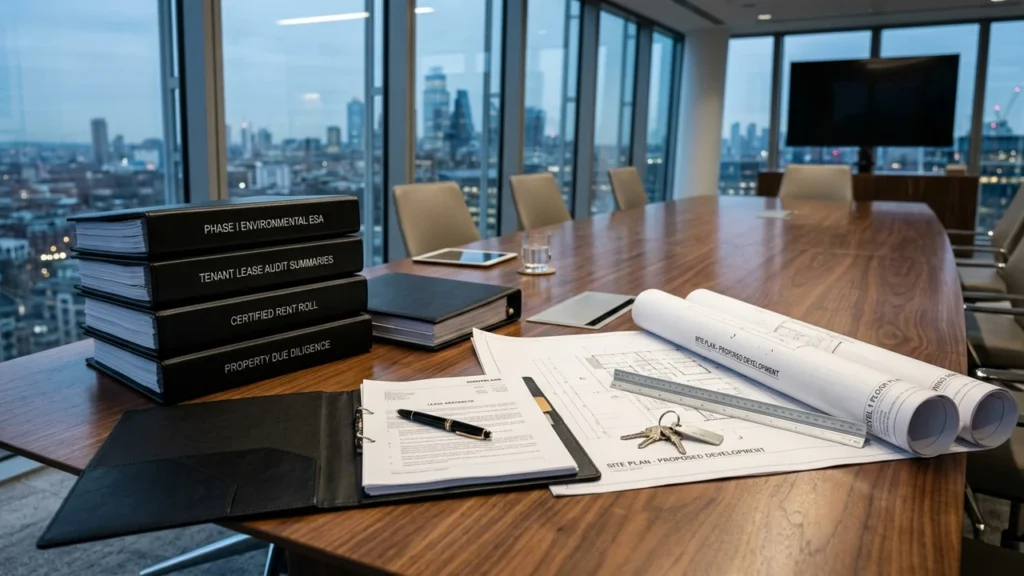
Selling a commercial building? Then get ready. The moment a buyer says “yes,” they start digging into every corner of your property. This part is called due diligence, and it can make or break your deal. Many sellers feel blindsided by the flood of requests. But you don’t have to.
I’ve helped many owners sell commercial property across Louisville and Jefferson County. The sellers who win are the ones who know what’s coming. This guide walks you through every buyer due diligence request in plain words. You’ll learn what buyers ask for, why they ask, and how to stay in control from the first offer to closing day.
What Is Buyer Due Diligence in a Commercial Property Sale?
Buyer due diligence is the buyer’s homework. After you accept an offer, the buyer checks if the property is really worth the price. They look at your money records, your leases, the building itself, and the land under it. Think of it like a home inspection, but much bigger and much deeper. The buyer wants proof that what you said matches what is real.
This step usually starts after both sides sign a purchase contract or a letter of intent. In the deals I’ve handled, the due diligence period runs about 30 to 60 days for most mid-size properties. During this window, the buyer can walk away if they find something bad. That is why sellers feel nervous. Your deal is not fully safe until this period ends.
Due diligence covers three big buckets. There is financial review, where they check rent, income, and expenses. There is physical inspection, where they check the roof, walls, and systems. And there is legal and title review, where they check zoning, liens, and ownership. Each bucket has its own list of requests. A smart seller prepares all three long before the first buyer shows up.
Here is the key thing to know. Due diligence is normal. It is not a sign that the buyer distrusts you. Even friendly buyers do it because their bank and their lawyer require it. Your job is not to fight it. Your job is to make it smooth, fast, and boring. A boring due diligence period is a happy one.
Why Due Diligence Matters More for Sellers Than You Think
In my professional experience, I’ve seen more deals die during due diligence than at any other stage. Sellers think the hard part is finding a buyer. It’s not. The hard part is keeping that buyer after they start looking under the hood. Roughly 1 in 5 deals I’ve watched fall apart do so because a seller wasn’t ready for the buyer’s questions.
Here is why this stage carries so much weight. Every missing document plants a seed of doubt. A buyer who waits two weeks for a simple rent roll starts to wonder what else you’re hiding. Delays feel like red flags, even when nothing is wrong. Speed builds trust. Slowness kills it. I tell every client the same thing: the file you can’t find fast is the file that scares buyers most.
Due diligence also sets the tone for price re-negotiation. When a buyer finds a surprise, like an old roof or a shaky lease, they come back asking for a discount. In the deals I’ve seen, these surprise credits often run 5% to 10% of the sale price. That’s real money leaving your pocket. Fix the problem before listing, and you keep that cash. Let the buyer find it first, and you lose leverage fast.
There’s one more reason this matters. A clean, well-organized due diligence process makes buyers move faster. When your documents are ready and honest, banks approve loans quicker and closings happen sooner. If you want to sell your building or your sell your business in Louisville without long delays, tight preparation is your best friend. Good records don’t just protect your price. They protect your timeline too.
The Due Diligence Timeline: What Happens and When
Understanding the order of events helps you plan. Due diligence does not happen all at once. It moves through clear stages, and each stage has its own requests. When you know what comes next, you can prepare documents ahead of time instead of scrambling. In the deals I’ve managed, sellers who map the timeline early close about 20% faster than those who react late.
The first stage is the letter of intent (LOI) stage. This is a short document where the buyer shows serious interest and lays out rough terms. It is usually not binding, but it starts the clock. Once the LOI is signed, the buyer begins early requests, like asking for your income statements and rent roll. This is your first test. A slow reply here signals trouble ahead.
Next comes the contract and contingency period. After both sides sign the purchase agreement, the formal due diligence window opens. This is when inspections, environmental checks, and title review all happen. The buyer relies on contract contingencies, which are safety clauses that let them exit if something fails. You can learn more about how these clauses work in this guide to commercial real estate contract contingencies.
Here is a simple table showing how the stages usually flow:
| Stage | What Happens | Typical Time |
|---|---|---|
| Letter of Intent | Buyer shows interest, early doc requests begin | 1 to 2 weeks |
| Purchase Contract Signed | Formal due diligence window opens | Day 0 |
| Inspection & Environmental | Physical checks, Phase 1 reports | Weeks 1 to 4 |
| Title & Legal Review | Liens, zoning, and survey checks | Weeks 2 to 5 |
| Financing Approval | Buyer’s bank finishes loan review | Weeks 3 to 7 |
| Closing | Final signatures, money changes hands | Day 45 to 60 |
The last stage is financing and final approval. The buyer’s lender does its own review, which often overlaps with the inspection stage. Banks want appraisals, clean title, and proof of steady income before they release money. In my experience, lender delays add 1 to 2 extra weeks to many deals. Keep your paperwork ready so you never become the reason a loan stalls.
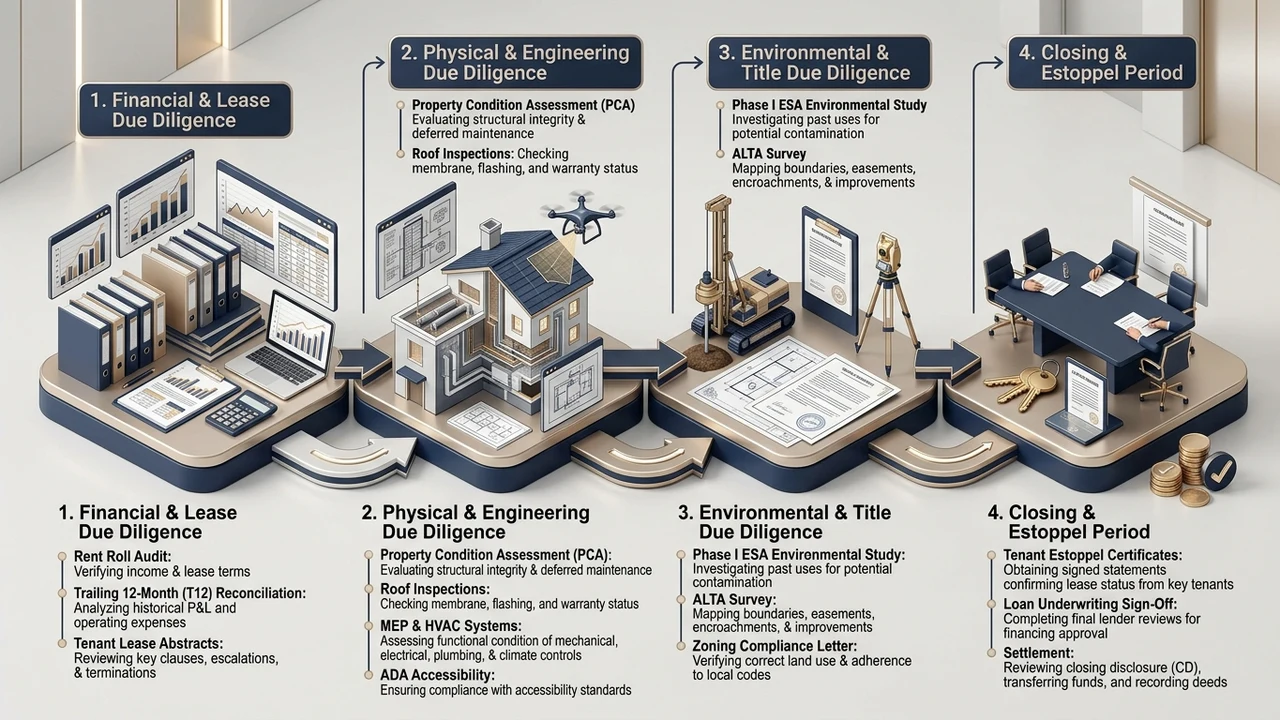
Documents Buyers Will Ask For (Get These Ready)
I’ve handled cases exactly like this before, where a seller lost a strong buyer simply because the paperwork was a mess. The buyer asked for three years of tax returns, and the seller could only find one. That gap alone cost them almost 3 weeks and shook the buyer’s trust. Get your documents ready before you list. This one habit prevents most due diligence headaches.
Buyers want proof, not promises. They will ask for financial records first, because money is what they are really buying. This includes profit and loss statements, rent rolls, and operating expense reports. Most buyers request at least 2 to 3 years of history so they can spot trends. If your income jumps around a lot, be ready to explain why in simple, honest terms.
Then come the lease and tenant documents. If your building has renters, the buyer needs every lease, every amendment, and a record of who pays on time. They also want an estoppel certificate, which is a signed note from each tenant confirming their rent and terms. Missing or messy leases are a top deal-killer. Before you list, review your leases carefully using this walkthrough on how to evaluate tenant leases before buying property.
Below is a checklist of the papers most buyers request, grouped by type:
| Document Type | What Buyers Want | Why It Matters |
|---|---|---|
| Financial | P&L, rent roll, tax returns (2 – 3 years) | Proves income is real |
| Leases | All leases, amendments, estoppels | Confirms tenant income |
| Physical | Roof, HVAC, and repair records | Shows building condition |
| Legal | Title, survey, zoning letters | Confirms clean ownership |
| Utility | Water, power, and tax bills | Shows true running costs |
The last group is property and legal records. This means your title documents, land survey, zoning letters, and any permits for past work. Buyers also want utility bills and property tax records to check the true cost of running the building. In the files I’ve reviewed, sellers who hand over a full document packet up front cut buyer questions by more than half. Organized paperwork is quiet power.
Common Buyer Due Diligence Requests, Explained
Not all requests are about paper. Many involve people walking your property, testing systems, and studying the land. These physical and legal checks often cause the most stress because they can uncover hidden problems. Knowing what each check does helps you stay calm and ready. Let’s break down the three you’ll see most often.
Property Inspection Requests
The buyer will hire an inspector to study the building’s bones. They check the roof, the HVAC system, plumbing, wiring, and the foundation. This is normal, and you should welcome it. A clean inspection speeds up the deal, while a bad one invites price cuts. In the sales I’ve guided, roof and HVAC issues trigger close to 40% of all repair requests.
Get ahead of this. Do your own pre-listing inspection before any buyer shows up. That way you fix small problems on your own terms, not under pressure. A helpful starting point is this commercial property inspection checklist, which lists what most inspectors look for. When you know the weak spots early, you control the story instead of reacting to it.
Environmental Assessment Requests
For many commercial properties, buyers order a Phase 1 Environmental Site Assessment. This is a study that checks if the land or building has pollution risks, like old fuel tanks or chemical spills. Lenders often require it before they approve a loan. If the Phase 1 finds a concern, the buyer may order a deeper Phase 2 test, which costs more time and money. You can read how this process works in this guide to the Phase 1 environmental assessment for commercial property.
Zoning and Title Requests
Buyers must confirm the property is zoned for their planned use. A restaurant buyer, for example, needs zoning that allows food service. They also order a title search to make sure no hidden liens or ownership claims exist. In Jefferson County, zoning rules can be tricky, so many buyers ask sellers to confirm the current use is legal. If you have zoning worries, our zoning help for commercial property service can sort it out before it stalls your sale.
How to Get Your Property Ready Before You List
I’ve seen this pattern many times in my work: the best price goes to the seller who prepares, not the seller who reacts. Preparation is quiet, but it pays loud. When I audit a property before listing, I find that fixing issues early saves owners an average of 8% to 12% compared to letting buyers negotiate those same issues later. That gap is your reward for doing the work first.
Start with a full document folder, both paper and digital. Gather your leases, financials, tax records, permits, and repair receipts in one place. Scan everything so you can share files in minutes, not days. In today’s market, more than 70% of serious buyers expect a digital data room, which is just a shared online folder. Speed of access is now part of how buyers judge a seller.
Next, walk your property with fresh eyes, like a buyer would. Look for peeling paint, water stains, cracked pavement, and worn signs. These small things shape first impressions and plant doubt. Then check your leases for expiring terms or tenants behind on rent. A building that is 90% leased with steady tenants sells for far more than one with empty units and shaky renters.
Finally, get your numbers straight and honest. Buyers and their banks will test every figure you give. If your reported income does not match your bank deposits, trust breaks fast. Understanding your building’s real performance also helps, and this commercial property cash flow analysis guide can help you see your property the way a buyer will. Honest, clean numbers close deals. Fuzzy numbers kill them.
Red Flags That Scare Buyers Away (and How to Fix Them)
Some problems send buyers running. The good news is that most are fixable if you catch them early. Knowing these red flags gives you a chance to solve them before they cost you the deal. In my work, the same handful of issues show up again and again during due diligence.
Here are the most common red flags and simple ways to handle each one:
- Messy or missing financials. Fix: rebuild clean records with an accountant before listing.
- Expiring leases with no renewals. Fix: talk to tenants early and lock in extensions.
- Deferred roof or HVAC repairs. Fix: repair now or price the fix into your asking number.
- Zoning that doesn’t match current use. Fix: get a zoning letter or confirm legal status first.
- Old environmental concerns. Fix: order your own Phase 1 report before the buyer does.
- Title liens or unpaid taxes. Fix: clear these with your title company before closing.
The scariest red flag is a surprise. When a buyer uncovers a problem you never mentioned, they assume there are more. That single surprise can cost you the deal or a big price cut. In the sales I’ve watched, undisclosed problems lead to renegotiation in about 6 out of 10 cases. Honesty up front is cheaper than a discount later.
Here is a quick table of red flags, why they worry buyers, and your best fix:
| Red Flag | Why It Scares Buyers | Best Fix |
|---|---|---|
| Missing financials | Hints at hidden losses | Rebuild clean records early |
| Expiring leases | Threatens future income | Renew tenants before listing |
| Old roof or HVAC | Signals big future costs | Repair or adjust price |
| Zoning mismatch | Blocks buyer’s planned use | Confirm legal use up front |
| Title liens | Delays or stops closing | Clear with title company |
Address these before you list, and you turn scary surprises into non-events. A buyer who sees you already fixed the common problems relaxes. That trust often means fewer price fights and a smoother path to closing. Fixing a $4,000 roof issue early can save you a $20,000 price cut later. The math almost always favors the prepared seller.
How to Protect Your Deal During Due Diligence
In my professional experience, I’ve found that protecting a deal is less about legal muscle and more about clear rules set early. The sellers who guard their deals best do it with smart contract terms, not last-minute fights. Setting a firm due diligence deadline, often 30 to 45 days, keeps buyers from dragging things out forever. A clear clock protects your time and your leverage.
Use earnest money wisely. This is the deposit a buyer puts down to show they are serious. A larger deposit, sometimes 1% to 3% of the price, keeps buyers committed through the review period. If the deposit becomes non-refundable after due diligence ends, buyers think twice before walking away over small issues. This one term separates casual shoppers from real buyers.
Now we reach the legal side that carries real weight. Federal law shapes environmental due diligence in ways many sellers never learn until it’s too late. Under the All Appropriate Inquiries rule, buyers must investigate a property’s environmental past to earn liability protection. According to the U.S. Environmental Protection Agency, key steps of this inquiry must be “conducted or updated within 180 days before acquiring ownership of a property” (EPA All Appropriate Inquiries). That 180-day rule is why buyers push hard on environmental timing.
This law exists for a serious reason. The EPA explains that under CERCLA, also called Superfund, “persons may be held strictly liable for cleaning up hazardous substances” on property they own now or owned in the past. To gain safe-harbor status as a bona fide prospective purchaser, buyers must meet strict federal conditions (EPA Bona Fide Prospective Purchasers). As a seller, knowing this helps you understand why a Phase 1 report is non-negotiable for most buyers. It’s not distrust. It’s the law protecting them from your property’s history.

Keep your side of the deal moving too. Respond to every request within 24 to 48 hours, even if the answer is “I’ll have that by Friday.” Silence breeds suspicion. When both the timeline and the paperwork stay tight, buyers feel confident and stay in. If you want expert help steering the review period without losing price power, our team can guide you through it, and this guide on how to negotiate commercial property price shows how to hold your ground.
Mistakes Sellers Make During Due Diligence
Even smart sellers stumble in the same spots. The formal rules behind due diligence are set in federal regulation, specifically 40 CFR Part 312, which lays out the standards for these environmental inquiries (Cornell Law LII, 40 CFR Part 312). When sellers ignore how serious these steps are, they create delays that cost them dearly. In the deals I’ve watched go sideways, most failures trace back to a small set of avoidable mistakes.
The biggest mistake is hiding problems. Some sellers think a hidden leak or a quiet lease dispute won’t surface. It always does. Buyers hire experts whose whole job is finding these things. When they do, the seller looks dishonest, and trust collapses. In my experience, honesty up front costs far less than a broken deal, which can set your sale back 2 to 3 months.
The second mistake is slow responses. When you take a week to send a simple document, buyers assume the worst. Speed signals confidence. Another common error is refusing all repair requests out of pride. Smart sellers pick their battles, fixing cheap items and holding firm on costly ones. Flexibility on small things keeps the deal alive.
Here are the top mistakes sellers make, and how to avoid each:
- Hiding known problems. Disclose early and control the story yourself.
- Slow document delivery. Reply within 24 to 48 hours, every time.
- Weak or missing leases. Organize and renew before listing.
- No pre-listing inspection. Find issues before the buyer does.
- Fighting every repair. Fix small items, negotiate the big ones.
- Guessing at zoning or title. Confirm the facts before questions come.
The final mistake is going it alone. Commercial due diligence is complex, and one missed detail can cost you thousands. A skilled broker keeps the process organized, spots trouble early, and keeps buyers moving toward closing. In the sales I’ve guided, sellers with strong professional support close around 25% more often than those who try to manage everything solo. The right help pays for itself.
Final Thoughts: Turn Due Diligence Into Your Advantage
Due diligence is not the enemy. It is your chance to prove your property is worth every dollar. When you prepare early, share honest records, and respond fast, you turn a stressful stage into a smooth one. The sellers who win are simply the sellers who were ready. That can be you.
Start today by gathering your documents, checking your leases, and fixing the small problems buyers always find. Do the homework before the buyer asks, and you keep both your price and your peace of mind. If you’re planning to sell a commercial building and want a partner who knows Louisville inside and out, reach out. We can help you prepare, price, and close with confidence.
Have you sold a commercial property before, or is this your first time? I’d love to hear what part of the process worries you most. Every deal teaches something new, and the more you know going in, the stronger your position. Preparation beats luck every single time.
Frequently Asked Questions
1. How long does the due diligence period usually last for commercial property?
Most due diligence periods run 30 to 60 days, depending on the size and type of property. Larger or more complex buildings may need more time for inspections and environmental checks. As a seller, you can often set the length in the contract. A shorter, clearly defined window keeps buyers focused and protects your timeline.
2. Can a buyer back out during due diligence?
Yes. During the due diligence window, buyers usually can walk away for almost any reason and often keep their deposit, depending on your contract terms. This is why strong contract contingencies and a solid earnest money deposit matter so much. Once the period ends and contingencies are removed, the deal becomes much harder for a buyer to exit. Setting clear deadlines protects you here.
3. What documents should I prepare before listing my commercial property?
Gather 2 to 3 years of financial records, all leases and amendments, tax and utility bills, title documents, surveys, zoning letters, and repair receipts. Put everything in a digital folder so you can share it fast. Having these ready before you list builds buyer trust and speeds up the whole sale. Slow paperwork is one of the top reasons deals stall.
4. Do I need a Phase 1 environmental report to sell?
You are usually not required to provide one, but the buyer’s lender almost always will require it. A Phase 1 Environmental Site Assessment checks for pollution risks and helps buyers earn federal liability protection under EPA rules. Ordering your own report early lets you catch and address problems before a buyer does. That control can save your deal and your price.
5. Should I fix problems before listing or let the buyer negotiate them?
Fix the small, cheap problems yourself before listing. In my experience, a $4,000 repair done early often prevents a $20,000 price cut later. For big-ticket items, you can either repair them or adjust your asking price up front and disclose the issue. Either way, surprises hurt you most, so honesty and early action almost always win.
