

Closing costs buying commercial property in Kentucky can surprise even experienced investors if they are not ready for them. I once watched a business owner nearly miss closing because he had no idea he owed $18,000 in fees the week before signing. This guide breaks down every fee you need to know — so that does not happen to you.
What Are Closing Costs for Commercial Property in Kentucky?
Closing costs are all the extra fees you pay at the end of a property deal. They are not part of the purchase price. They are paid on top of it.
When you buy commercial property in Kentucky, these costs cover things like the title search, appraisal fee, recording fee, attorney fees, and more. Both the buyer and the seller pay some of these costs, though the split is different for every deal.
How Commercial Closing Costs Differ from Residential
Most people know about closing costs from buying a house. But commercial real estate is a different world.
With a house, you might need one home inspection and a basic title check. With commercial property, you could need a half-dozen specialized reports before a lender even agrees to fund the loan. Things like Phase I environmental assessments, tenant lease reviews, and structural inspections are standard in commercial deals but almost never come up in a home purchase.
The fees are also bigger. A commercial appraisal alone can cost $2,000 or more — compared to $300 to $600 for a home. The attorney fees are higher too, and the title insurance is calculated based on a much larger property value.
Honestly, the biggest difference is complexity. Commercial closings take longer and cost more. But once you know what to expect, you can budget for it with confidence.
How Much Should You Budget in Total?
Here is the short answer: plan for 2% to 5% of the purchase price in closing costs as the buyer.
So if you are buying a commercial building in Louisville or Lexington for $1,000,000, expect roughly $20,000 to $50,000 in closing costs. That range is wide because every deal is different. A simple, single-tenant warehouse with clean environmental history will cost less to close. A multi-tenant retail center needing environmental work and SBA financing will cost more.
The seller’s side typically runs 4% to 8% of the sale price, mostly because of broker commissions.
Buyer Closing Costs When Buying Commercial Property in Kentucky
As the buyer, you are responsible for most of the costs tied to financing and due diligence. Let me walk you through each one.
Loan Origination, Appraisal, and Lender Fees
Your lender will charge a loan origination fee for processing your loan. This is usually 0.5% to 1% of the loan amount. On a $800,000 loan, that is $4,000 to $8,000 right there.
You will also need a commercial appraisal. Lenders require this to confirm the fair market value of the property. Commercial appraisals must meet USPAP standards — that stands for Uniform Standards of Professional Appraisal Practice. Expect to pay anywhere from $2,000 to $5,000 depending on the property size and complexity.
Other lender fees include underwriting fees, credit report fees, and sometimes a wire transfer fee. These are usually smaller — but they add up. Budget $500 to $1,500 for these combined.
If you are using an SBA 7(a) loan or an SBA 504 loan, there are extra fees on top of the standard ones. According to the U.S. Small Business Administration, for fiscal year 2026, the upfront guarantee fee is 0.50% of the loan amount, plus an ongoing annual service fee of about 0.21%. (Source: U.S. Small Business Administration)
Title Insurance and Attorney Fees in Kentucky
Title insurance protects you if someone later claims ownership of the property or if there is a problem with the title that was missed during the title search. In commercial real estate, you typically need two policies: a lender’s title insurance policy (required by your bank) and an owner’s title insurance policy (to protect you personally).
In Kentucky, the buyer usually pays for both. The cost varies by property value but is typically around 0.38% of the purchase price for title services combined.
Now, about attorneys. Kentucky does require a licensed attorney to handle real estate closings. This is different from some other states. Your closing attorney will handle all the legal paperwork, the deed preparation, and the actual transfer of property ownership. For commercial deals, attorney fees vary widely based on complexity. Simple transactions might cost $1,000 to $2,500. More complex ones can run $3,000 or higher.
I always tell people: do not skip the attorney. The money you spend on a good real estate lawyer is small compared to what a bad closing can cost you.
Due Diligence Costs: The Part Most Buyers Miss
This is the section most online guides skip or barely mention. But due diligence costs are one of the biggest parts of buying commercial real estate in Kentucky — and the buyer pays for almost all of them.
Phase I Environmental Assessment and Inspection Costs
Almost every commercial lender in the country requires a Phase I Environmental Site Assessment before they will fund your loan. This report reviews historical records, does a site visit, and checks regulatory databases to look for signs of contamination or environmental problems.
According to the U.S. Environmental Protection Agency, completing a Phase I also gives you what is called the “all appropriate inquiries” defense under CERCLA — which can protect you from being held responsible for contamination that happened before you bought the property. (Source: U.S. EPA)
A basic Phase I typically costs $2,000 to $4,000. If the property has a complicated environmental history, costs can go above $6,000. If the Phase I raises red flags, you may also need a Phase II assessment, which involves actual soil or groundwater testing — and that costs significantly more.
On top of environmental work, you will likely need a structural inspection of the building. This checks the roof, foundation, HVAC systems, plumbing, and electrical. Costs can range from a few hundred dollars to several thousand depending on the property size.
Survey Fees and Tenant Lease Reviews
A property survey confirms the exact boundary lines of the land. Lenders often require this. Survey fees in Kentucky typically run $370 to $760 depending on lot size and complexity.
If the building has tenants, you will also need a tenant lease review. This means going through all existing leases to understand what rights the current tenants have, what rents they pay, and whether any leases expire soon. Your attorney or a commercial real estate specialist handles this — and it adds to your closing costs.
When I talk to first-time commercial buyers, this is where their eyes go wide. They planned for the down payment but not for the $10,000 to $15,000 in due diligence they owe before the loan even closes.
Seller Closing Costs on Commercial Property in Kentucky
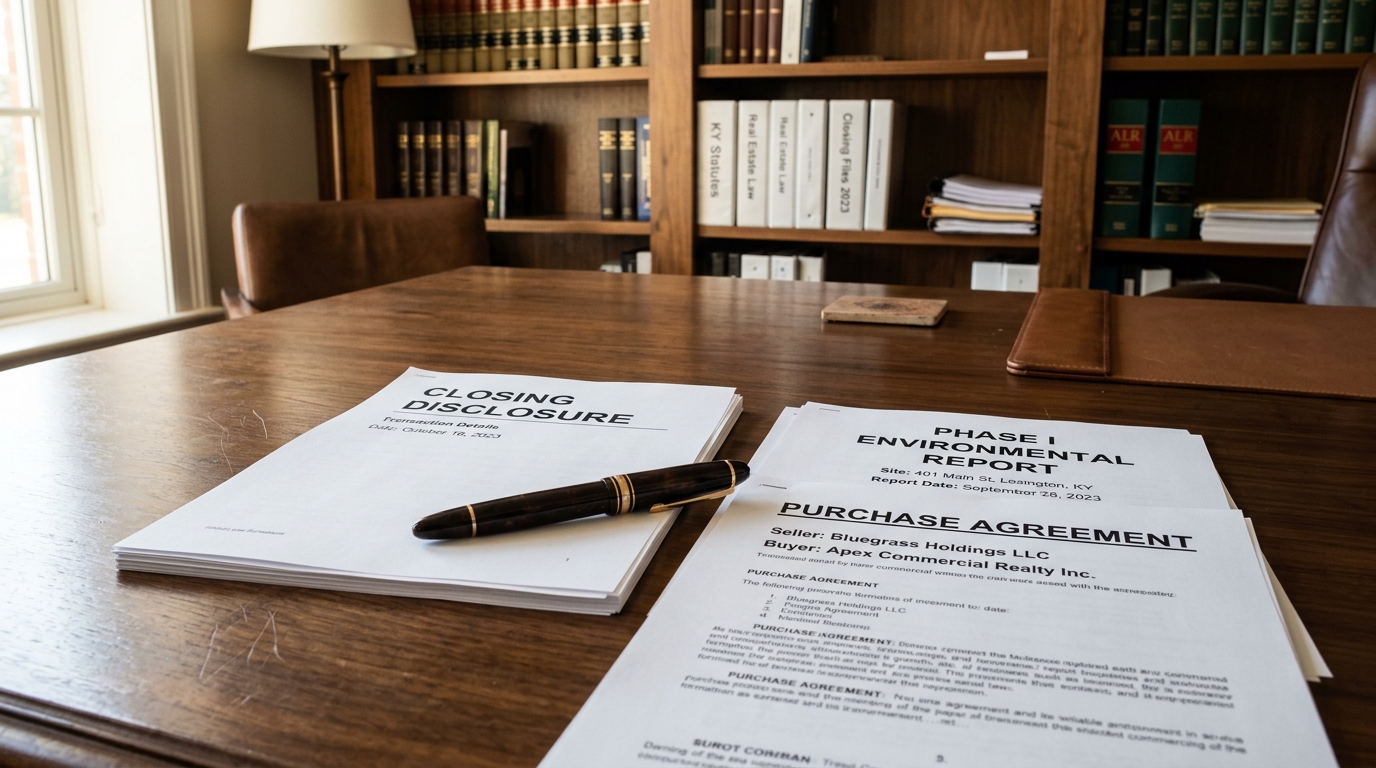
If you are the seller — or if you are buying from someone and want to understand their costs — here is what the other side typically pays.
Transfer Tax and Recording Fees in Kentucky
Kentucky charges a real estate transfer tax of $0.50 per $500 of the property’s sale price under KRS 142.050. This is the seller’s responsibility. So on a $1,000,000 commercial property, the transfer tax comes to $1,000.
This is actually one of the lowest transfer tax rates in the country. States like New York or California charge far more. That helps keep Kentucky competitive for commercial investors.
The recording fee is the cost to officially record the new deed with the county. In Kentucky, recording fees are typically around $50 for residential deals but can be slightly higher for commercial transactions depending on the number of pages in the document.
The seller also usually pays for deed preparation — the cost of having the attorney prepare the new deed. This typically runs $300 to $500.
Broker Commission and Other Seller Expenses
The biggest cost for most sellers is the real estate broker commission. In commercial real estate, commissions are negotiated, but they typically run 4% to 6% of the sale price. On a $1,000,000 property, that is $40,000 to $60,000 — by far the largest single expense.
Sellers may also owe prorated property taxes up to the day of closing. Kentucky’s property tax rates are generally below the national average, but you still pay your share.
If the property has any outstanding liens or judgments against it, those must be paid off at closing too before the title can be transferred clean.
Who Pays What at Closing? Buyer vs Seller Breakdown
Here is a simple side-by-side look at who typically pays what in a Kentucky commercial real estate closing:
Buyer Typically Pays:
- Loan origination fee (0.5%–1% of loan)
- Commercial appraisal ($2,000–$5,000)
- Phase I environmental assessment ($2,000–$4,000)
- Structural inspection ($500–$3,000)
- Survey fee ($370–$760)
- Title insurance — lender’s and owner’s policies
- Attorney (closing) fees ($1,000–$3,000+)
- Recording fees (portion)
- Tenant lease review (if applicable)
- Underwriting and lender fees ($500–$1,500)
Seller Typically Pays:
- Broker commission (4%–6% of sale price)
- Transfer tax ($0.50 per $500 of value)
- Deed preparation fee ($300–$500)
- Seller’s attorney fees
- Prorated property taxes
- Payoff of any existing mortgage or liens
Negotiable vs Non-Negotiable Closing Costs
Some costs are set by law and cannot be changed. The Kentucky transfer tax rate is fixed. Recording fees are set by the county. You cannot negotiate those away.
But many other costs are negotiable. Broker commissions are always negotiable. Who pays for title insurance can be negotiated. In a deal where a seller is highly motivated, they may agree to cover part of the buyer’s due diligence costs or even some lender fees. It all depends on the agreement you reach in the purchase contract.
How Market Conditions Affect Who Pays
In a seller’s market — when there are many buyers competing for few properties — the seller has more power. Buyers end up paying their full share of costs and sometimes even take on costs the seller would normally cover.
In a buyer’s market, it flips. A motivated seller might offer to pay a portion of the buyer’s closing costs just to get the deal done. I have seen sellers in slower Kentucky markets agree to cover the Phase I environmental assessment cost just to keep buyers at the table.
This is why working with an experienced commercial real estate attorney and a good broker matters. They know the current market and can help you negotiate what is really possible.
Tips to Reduce Your Closing Costs in Kentucky
Closing costs are real, but there are smart ways to keep them under control.
Smart Ways Buyers Can Save at the Closing Table
First, shop your lender. Not every lender charges the same origination fee or underwriting costs. Getting quotes from two or three commercial lenders before you commit can save you thousands.
Second, negotiate seller concessions early. If you are in a slower market, ask the seller to contribute toward your closing costs as part of the offer. This needs to be written into the purchase agreement from the start.
Third, set aside a contingency budget of about 5% to 10% of your estimated closing costs. Commercial deals can throw up surprises — an unexpected environmental issue, extra pages in the deed, a last-minute survey update. Having a cushion means you are not scrambling the week before closing.
Fourth, hire an experienced Kentucky commercial real estate attorney early. They will spot issues before they become expensive problems and help you structure the deal in a way that protects your interests.
When to Use an SBA Loan for Commercial Property
If you are a business owner buying the property for your own business use, an SBA 504 loan or SBA 7(a) loan might be a good fit. These loans often come with lower down payments — sometimes as low as 10% — which frees up cash for closing costs.
The trade-off is that SBA loans come with their own fee structure. The guaranty fee, the CDC processing fees, and the requirement for a full USPAP appraisal all add to your closing costs. But if the lower down payment helps your cash flow, it can still be worth it.
According to the U.S. Small Business Administration, for fiscal year 2026, manufacturers under NAICS sectors 31 through 33 get both the guaranty fee and the annual service fee waived entirely. If you are in manufacturing, that is a significant saving. (Source: U.S. Small Business Administration)
Conclusion
Closing costs buying commercial property in Kentucky add up faster than most buyers expect. As a buyer, plan for 2% to 5% of your purchase price in fees — plus due diligence costs that can easily reach $10,000 to $20,000 on their own. Sellers should budget for broker commissions, the Kentucky transfer tax, and deed preparation.
The good news is that Kentucky has one of the lowest transfer tax rates in the country, and many costs are negotiable. Work with a licensed Kentucky real estate attorney, understand exactly what you are paying before closing day, and build a contingency fund. If you do those three things, you will walk into that closing table with confidence and no nasty surprises.
Have questions about your specific deal? I would love to hear what you are working on — drop your question in the comments below.
Frequently Asked Questions
How much are closing costs when buying commercial property in Kentucky?
Buyers typically pay 2% to 5% of the purchase price in closing costs when buying commercial property in Kentucky. On a $1,000,000 property, that is $20,000 to $50,000. This range includes loan origination fees, appraisal costs, title insurance, attorney fees, and due diligence expenses. The exact amount depends on the property type, how you are financing the deal, and what you negotiate with the seller.
Who pays closing costs in a commercial real estate deal in Kentucky?
Both the buyer and the seller pay closing costs, but they cover different things. The buyer typically pays for due diligence (environmental assessments, inspections, surveys), lender fees (origination, underwriting, appraisal), title insurance, and attorney fees. The seller usually pays the broker commission (4%–6%), the Kentucky real estate transfer tax ($0.50 per $500), deed preparation, and prorated property taxes.
Is a Phase I environmental assessment required when buying commercial property in Kentucky?
Yes, almost every commercial lender in Kentucky requires a Phase I Environmental Site Assessment before funding the loan. Even if you are paying cash, it is strongly recommended. A Phase I costs $2,000 to $4,000 on average. It protects you from liability for any environmental contamination that existed before you bought the property.
What is Kentucky’s real estate transfer tax for commercial property?
Kentucky charges a transfer tax of $0.50 per $500 of the property’s sale price, as set by KRS 142.050. This applies to commercial property the same way it applies to residential property. On a $1,000,000 commercial sale, the transfer tax is $1,000. This cost is normally paid by the seller, though it can be negotiated.
Do I need a real estate attorney to close on commercial property in Kentucky?
Yes. Kentucky law requires a licensed attorney to conduct real estate closings. This applies to both residential and commercial transactions. For a commercial deal, having your own attorney — not just the closing attorney — is highly recommended. A good commercial real estate attorney will review the purchase contract, check title issues, handle deed preparation, and protect your interests throughout the process.
